Grace of Kings
Grace of Kings - Full Book Summary and Recap
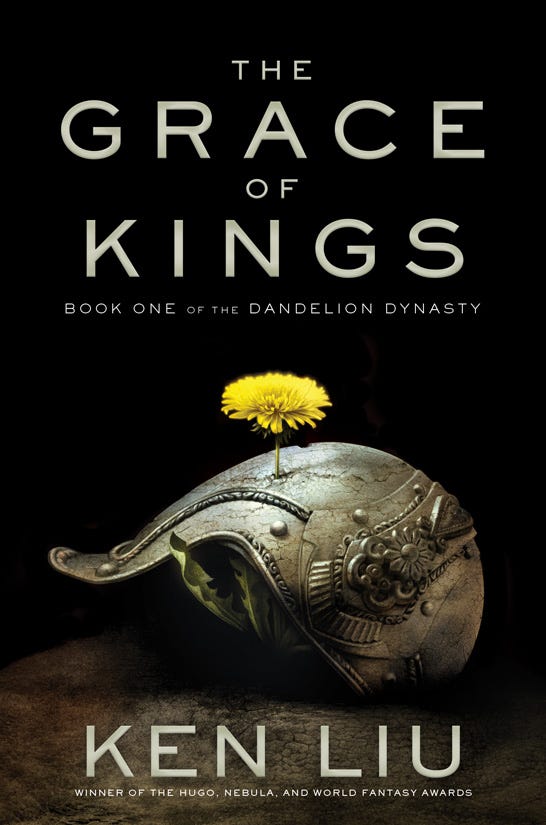
Okay, fellow fantasy fanatics, buckle up! Today we’re diving headfirst into a book that seriously blew my mind: Ken Liu’s _ The Grace of Kings_. This isn’t just another epic fantasy; it’s the cornerstone of the Dandelion Dynasty series and the book that basically coined the term “silkpunk.” Imagine epic battles, political backstabbing, gods meddling in mortal affairs, and fantastical technology based on silk, bamboo, and bio-engineering. Yeah, it’s that cool. Get comfy, grab a drink, because we’re going deep!
Plot Synopsis (Full Spoilers Ahead!)
Alright, let’s break down this massive story. Seriously, spoilers are everywhere from here on out, so consider yourself warned!
The story unfolds in the Islands of Dara , a sprawling archipelago inspired by East Asian history and mythology, particularly the Chu-Han Contention following the fall of the Qin Dynasty in China. The islands were once seven distinct Tiro states, each with its own king, culture, and patron deity. However, Mapidéré , formerly King Réon of the state of Xana, used his technologically advanced airships (think giant, oar-propelled zeppelins initially, later using lighter-than-air gas) to conquer the other six states (Cocru, Amu, Haan, Rima, Faça, Gan) and forge them into a unified Empire.
-
The Spark: We open fourteen years into Mapidéré’s reign. He’s touring Cocru, showcasing the empire’s might. During the procession, a daring assassination attempt occurs. A lone man, Luan Zya , attacks the Emperor’s massive mobile Throne Pagoda using a giant, man-carrying battle kite, launching firebombs. The attempt fails thanks to the Emperor’s loyal Captain of the Guard, but it shakes the Emperor and signals deep-seated resentment, particularly from the conquered Haanese (Luan Zya’s homeland). We see this event through the eyes of two young boys skipping school: the clever, mischievous Kuni Garu and his more cautious friend Rin Coda. Kuni is thrilled by the audacity, noting it proves the Emperor is just a man.
-
Enter the Heroes: We’re introduced to our two protagonists, who couldn’t be more different.
-
Kuni Garu: A charming, clever, low-born rogue from Cocru. He starts as a street kid, prefers drinking and scheming to studying, but possesses innate charisma and a sharp mind for understanding people. He’s a pragmatist, often morally flexible, but fundamentally decent and driven by a desire for a better, fairer world (and maybe a bit of glory).
-
Mata Zyndu: The last scion of a noble house from Cocru, famed for its generals. His family was wiped out by Mapidéré after his father, Duke Dazu Zyndu (a brilliant general nicknamed “the Bearded Tortoise”), was betrayed and killed. Mata is physically imposing (nearly eight feet tall!), honorable to a fault, driven by duty, legacy, and vengeance. He has unique double-pupiled eyes, granting him enhanced sight, a mark of divine attention. He’s raised in secret by his uncle Phin.
-
-
The Emperor’s Decline & Fall: Seven years after the kite attack, the Empire is groaning under Mapidéré’s harsh rule, massive conscription projects (like the Mausoleum and the underwater Grand Tunnels), and the suppression of old cultures. Mapidéré himself is aging, paranoid, and obsessed with achieving immortality through alchemical means, which are ruining his health. While touring Écofi Island, he falls fatally ill. His childhood friend and Chatelain, Goran Pira (who secretly hates Mapidéré for past wrongs involving a woman named Maing), conspires with the ambitious Prime Minister Lügo Crupo. They forge an imperial decree naming Mapidéré’s younger, easily manipulated son Loshi as heir, bypassing the elder Crown Prince Pulo. They send the decree with poison to Pulo and his mentor, General Gotha Tonyeti (the conqueror of Cocru), forcing them into suicide. Mapidéré dies, and the twelve-year-old Loshi ascends the throne as Emperor Erishi , with Crupo as Regent and Pira as Chief Augur.
-
Seeds of Rebellion: Discontent is simmering. In Cocru, famine and harsh taxes bite deep. A failed corvée delivery due to bad weather leads Huno Krima and Zopa Shigin to find a “prophecy” hidden inside a fish (planted by themselves, initially) declaring “Huno Krima Will Be King.” This sparks a rebellion in the city of Napi. They gain momentum, eventually finding the true heir to the Cocru throne, the shepherd Thufi , and installing him as King.
-
The Unlikely Alliance: Kuni Garu, initially a low-level prison guard (a job he took to marry his love, Jia Matiza ), finds himself adrift after his prisoners desert to join the rebels. He decides to become an “honorable bandit” in the mountains. Mata Zyndu, hearing of the rebellion, kills the local Xana commander occupying his ancestral castle in Tunoa and raises his family’s banner, rallying loyalists. Kuni and Mata eventually meet. Despite their vastly different backgrounds and philosophies (Kuni’s pragmatism vs. Mata’s rigid honor), they form a deep, unlikely friendship and alliance, becoming the twin pillars of the rebellion in the south.
-
Rise of the Rebels: The rebellion spreads like wildfire. Other Tiro states re-emerge. King Dalo of Gan, King Shilué of Faça, and the government-in-exile of Haan (led by King Cosugi) rally. Even Rima is briefly restored under King Jizu (grandson of the last king). The rebels gain significant ground, especially in Cocru. King Thufi calls a Grand Council of War and declares himself Princeps (first among equals) to lead the united effort.
-
The Empire Strikes Back: Regent Crupo, initially dismissive, is finally forced to act. He appoints the meticulous Minister of the Treasury, Kindo Marana , as Marshal, despite his lack of military experience. Marana proves surprisingly effective. He rebuilds the navy and air force. Meanwhile, General Tanno Namen (an old, respected Xana veteran) leads the Imperial army.
-
Betrayal and Defeat: The rebel alliance is fragile. King Shilué of Faça is treacherous. King Dalo of Gan is easily swayed by self-interest. Marana uses diplomacy and threats to break the alliance before the crucial Battle of Wolf’s Paw (Gan’s island stronghold). He defeats the Amu navy at the Battle of Arulugi, securing the west. Princess Kikomi of Amu, forced into a terrible choice by Marana, assassinates Mata’s uncle, Marshal Phin Zyndu, sowing discord between Cocru and Amu, before being killed herself. Namen crushes the Rima revival, leading to King Jizu’s sacrificial suicide.
-
The Battle of Wolf’s Paw: Facing the full might of the Imperial armada and army, the rebels under General Roma (a cautious logistician) are betrayed. Faça holds back, Gan switches sides. The rebel navy is destroyed. General Roma is killed. Just as all seems lost, Mata Zyndu arrives with his contingent. In an act of incredible, almost suicidal bravery, he rallies the remaining troops, burns their ships, and leads a desperate charge against Marana and Namen’s vastly superior forces. His berserker fury turns the tide, shattering the Imperial army. Marana and Namen are captured; Namen takes his own life. Mata stands victorious but brutalized, the undisputed Hegemon of the former rebel states.
-
The Rift: While Mata is fighting at Wolf’s Paw, Kuni Garu, guided by the genius strategist Luan Zya (the kite assassin!), uses captured crubens (giant, whale-like creatures, adapted into mechanical submarines by Luan) to launch a surprise invasion of Rui (Xana’s home island) and then a daring raid on the Imperial capital, Pan. He captures the boy Emperor Erishi and the scheming Prime Minister Pira (who he executes). Kuni declares himself King of Géfica (the rich heartland of the former empire), fulfilling Thufi’s earlier promise.
-
Clash of Brothers: Mata sees Kuni’s actions as a profound betrayal—stealing the glory and the prize while Mata bled for the cause. Kuni sees his actions as necessary to end the war quickly and establish a new, potentially better order than Mata’s rigid, honor-bound rule. Communication breaks down. Mata, consolidating his power, strips Kuni of potential allies and exiles him to the remote island of Dasu, keeping Jia and their children hostage in Cocru.
-
The Stalemate & Final Gambit: Years pass. Kuni, aided by Jia’s letters (containing hidden messages), the brilliant administrator Cogo Yelu, the cunning spymaster Rin Coda, the inventor Luan Zya, and the newly appointed female Marshal Gin Mazoti , builds Dasu into a surprising power. He uses innovative tactics (like the mechanical crubens and a female-led air force) to conquer Rui, Haan, Rima, and Faça. Mata, bogged down in suppressing revolts and dealing with the opportunistic King Mocri of Gan (who replaced Dalo), finds his resources dwindling. The two rivals face each other across the Liru River. Mata tries to provoke Kuni into a duel; Kuni refuses. Mata attempts to execute Kuni’s captured father, but Kuni calls his bluff with chilling resolve.
-
The End: Facing Mata’s superior force in a final confrontation near Zudi, Kuni and his advisers (especially Luan Zya and Kuni’s second wife, the illusionist Risana ) devise a plan. They use Mata’s own sense of honor against him, staging air duels where Mata easily defeats Xana champions (actually Dasu soldiers). Mata believes he has proven his superiority. Kuni then stages a surprise attack from the sky using airships (while Mata’s forces are distracted by straw dummy soldiers), overwhelming Mata’s garrison in Zudi. Kuni’s mother dies during this time. Jia is rescued by the bandit Puma Yemu (now allied with Kuni). In a final act, Jia uses her influence (and perhaps Otho Krin, her steward and maybe lover) to ensure Mata cannot rally his forces. Mata, facing defeat and betrayed (in his eyes) by Kuni and even his own men (influenced by Risana’s subtle magic and Jia’s network), leads a final, doomed charge with his last loyal riders. He is killed. Ratho Miro, his loyal guard, commits suicide beside him.
-
Aftermath: Kuni Garu stands victorious, but the cost is immense. The gods themselves seem to acknowledge the shift in power during Mata’s funeral. Kuni is poised to become Emperor, but the book ends before his coronation, hinting at the challenges ahead and the moral weight of his actions. The Dandelion has overcome the Chrysanthemum, but the empire is scarred and the future uncertain.
Character Analysis
Man, the characters here are deep. Liu doesn’t do simple heroes and villains.
-
Kuni Garu (The Dandelion ): Kuni is just fascinating. He starts as this seemingly lazy, charming scoundrel, but grows into an incredibly effective leader.
-
Strengths: Charisma, empathy, pragmatism, strategic thinking (especially political/social), ability to inspire loyalty from unexpected quarters, adaptability. He sees potential where others see none.
-
Flaws: Can be morally ambiguous, manipulative (though often for good ends), prone to self-doubt, initially lacks discipline, his pragmatism sometimes borders on ruthlessness (like the sacking of Pan). His desire to be liked is a core motivator.
-
Arc: His journey from street rat to potential Emperor is epic. He learns the weight of responsibility, the cost of power, and the difficulty of maintaining ideals in the face of harsh reality. The final chapters show him wrestling with the morality of his victory.
-
-
Mata Zyndu (The Chrysanthemum ): The tragic hero. You feel for Mata, even when he’s terrifying.
-
Strengths: Unmatched martial prowess, immense courage, sense of honor and duty, loyalty (initially), inspires awe and devotion in his soldiers.
-
Flaws: Rigidly bound by tradition and honor, prideful, hot-tempered, suspicious, struggles with trust (especially after betrayals), lacks political flexibility, can be incredibly cruel when he feels wronged or when pursuing his vision of “order.”
-
Arc: Mata’s arc is heartbreaking. He’s burdened by legacy and loss. His attempts to restore a perceived golden age lead him down a path of brutality and isolation. His inability to adapt or trust ultimately leads to his downfall.
-
-
Jia Matiza: Kuni’s first wife, a skilled herbalist and daughter of a rancher. She’s intelligent, resourceful, and fiercely loyal to Kuni, but also independent.
- Role: Provides emotional grounding for Kuni, offers wise counsel, represents the importance of home and family, but also shows resilience and adaptability in the face of political machinations and Kuni’s flaws. Her secret affair with Otho Krin adds complexity.
-
Luan Zya: The Haanese strategist and inventor. The kite assassin!
- Role: Represents intellect, innovation, and a different kind of rebellion (focused on technology and planning). He’s the catalyst for Kuni’s final victory, the mastermind behind the mechanical crubens. His journey from vengeance-seeker to pragmatic nation-builder is compelling.
-
Gin Mazoti: The orphan-turned-thief-turned-Marshal. Absolutely brilliant character.
- Role: Challenges gender roles, embodies cunning strategy over brute force, represents meritocracy. Her rise from the streets to commanding armies is incredible. Her relationship with Luan Zya adds another layer.
-
Key Relationships:
- Kuni & Mata: The heart of the novel. Their friendship, alliance, and eventual tragic sundering drive the central conflict. They are foils – pragmatism vs. idealism, commoner vs. noble, flexibility vs. rigidity.
- Kuni & Jia: Provides Kuni’s emotional anchor. Their relationship faces immense strain but endures, showing the complexities of love amidst war and politics.
- Mata & Phin: Mata’s connection to his past and the burden of his lineage. Phin’s death deeply affects Mata.
- Mata & Kikomi: A brief, intense connection built on shared tragedy and misunderstanding, ultimately ending in betrayal and death.
Thematic Resonance
This book is packed with big ideas:
-
The Nature of Power: How is power gained? How should it be wielded? Kuni gains power through charisma and understanding people; Mata through martial might and legacy. The empire under Mapidéré, Crupo, and Pira shows power’s corrupting influence.
-
Leadership Styles: Kuni’s adaptable, people-focused leadership contrasts sharply with Mata’s honor-bound, top-down command. The book explores the strengths and weaknesses of both.
-
Revolution and Its Cost: The rebellion starts with noble ideals but quickly gets messy. Liu doesn’t shy away from the brutality, betrayals, and moral compromises involved in overthrowing a regime and building a new order.
-
Tradition vs. Innovation: Mata represents adherence to old codes and restoring a perceived past glory. Kuni (and characters like Luan Zya and Gin Mazoti) represents adaptation, new ideas, and forging a different future, often using unconventional means (silkpunk tech!).
-
The Role of History and Myth: Characters are constantly invoking past heroes and legends (like the Zyndu legacy). The book questions how history is written, how myths shape actions, and whether the past is a guide or a prison.
-
Friendship, Loyalty, and Betrayal: The central Kuni/Mata relationship embodies this. Loyalties shift constantly, alliances break, and personal feelings clash with political necessity.
-
Gods and Mortals: The gods of Dara aren’t distant; they have distinct personalities, interfere (subtly or overtly), and their favor (or perceived favor) influences mortal actions. Their own squabbles mirror the human conflicts.
World-Building Deep Dive
The world of Dara is a character in itself. Liu blends familiar epic fantasy tropes with unique East Asian inspirations and his signature “silkpunk” aesthetic.
-
Geography: A vast archipelago with diverse islands, reminiscent of East and Southeast Asia. Key locations include the mainland-like Big Island (housing Cocru, Rima, Faça, Haan, Gan, and the Imperial heartland Géfica/Pan), the Xana home islands (Rui, Dasu), island states like Amu (Arulugi), and remote places like Tan Adü.
-
History & Politics: The foundational myth of Daraméa and her children (the gods), the Ano settlement, the rise and fall of the Tiro states, Mapidéré’s conquest creating the Xana Empire, and the subsequent rebellion form the backdrop. The political system shifts from the feudal-like Tiro system to Imperial rule, and then fractures again.
-
Silkpunk Technology: This is the standout feature! Instead of steampunk’s brass and steam, we get technology derived from organic materials and inspired by East Asian engineering traditions.
-
Airships: Giant vessels lifted initially by hot air/swamp gas, then by lighter-than-air gas (found only near Mount Kiji), propelled by massive silk-and-bamboo oars or kite sails.
-
Battle Kites: Huge, steerable kites capable of carrying warriors and bombs.
-
Mechanical Crubens: Luan Zya’s genius invention – submarine-like vessels disguised as giant sea monsters, powered by geothermal vents and capable of stealthy naval warfare. underwater boats
-
Other Tech: Includes advanced siege engines, sophisticated engineering (dams, canals), possibly early forms of bio-engineering (implied with some materials).
-
-
Gods & Mythology: The Pantheon of Dara is active and interventionist. Each major state has a patron god/goddess with specific domains (air, sea, war, agriculture, etc.) and animal aspects ( pawi ). Their interactions and rivalries directly impact the mortal world.
-
Culture: Diverse cultures based on the former Tiro states, with distinct accents, customs, and philosophies (e.g., Haan’s scholarly focus, Cocru’s martial tradition, Gan’s mercantile spirit, Amu’s elegance). The Empire attempted to impose Xana culture, leading to resentment.
Genre Context & Comparisons
The Grace of Kings firmly plants its flag in the epic fantasy genre but revitalizes it with the unique silkpunk aesthetic.
-
Epic Fantasy: It has the scale, scope, political intrigue, large cast, and world-altering conflicts reminiscent of giants like George R.R. Martin’s A Song of Ice and Fire or Robert Jordan’s The Wheel of Time. The focus on flawed leaders, morally grey areas, and the devastating cost of war certainly echoes ASoIaF.
-
Silkpunk: This is Liu’s signature contribution. It’s a non-Western take on “-punk” genres (like steampunk/cyberpunk). Instead of Victorian England or futuristic dystopias, the inspiration is East Asian history and mythology, with technology emphasizing natural materials like silk, bamboo, paper, wood, and animal products (feathers, sinew). It feels both ancient and futuristic, organic and engineered.
-
Comparisons:
-
ASoIaF: Shares the political complexity, gritty realism (despite gods), and focus on flawed characters vying for power. However, Grace of Kings has a more optimistic undertone (sometimes!) and a very different technological and cultural base.
-
Romance of the Three Kingdoms: The historical inspiration is clear. The dynamic between Kuni Garu and Mata Zyndu strongly evokes the rivalry between Liu Bang and Xiang Yu during the Chu-Han Contention (the historical basis for Romance ). The focus on strategy, shifting alliances, and larger-than-life heroes feels very similar.
-
Other Silkpunk/Asian-Inspired Fantasy: Liu arguably pioneered the term, but it fits alongside works like R.F. Kuang’s The Poppy War (though much darker), Fonda Lee’s Green Bone Saga (more modern, urban fantasy), or Shelley Parker-Chan’s She Who Became the Sun (historical fantasy with mythic elements), all exploring non-Western settings and themes.
-
Influences & Inspirations
While only Ken Liu knows for sure, several influences seem likely:
-
Chinese History: Primarily the Chu-Han Contention (206–202 BC), the interregnum between the Qin and Han dynasties. The Kuni/Mata dynamic mirrors Liu Bang (commoner founder of Han) and Xiang Yu (noble warrior). Mapidéré’s unification echoes Qin Shi Huang.
-
Classical Chinese Literature: The epic scope, focus on strategy and governance, and philosophical musings recall classics like Romance of the Three Kingdoms and Water Margin. The narrative style sometimes adopts a slightly detached, historical tone common in these works.
-
Pingshu: Explicitly mentioned in the dedication, this traditional Chinese form of oral storytelling, often focusing on historical epics, likely influenced the narrative structure and pacing.
-
Wuxia: While not strictly wuxia, the focus on martial prowess (especially Mata), honor codes, and larger-than-life heroes shares some DNA with the genre.
-
Western Epic Fantasy: Liu is clearly familiar with the genre’s tropes and structures, which he uses as a foundation before adding his unique elements.
-
Engineering & Science: Liu’s background (programmer, lawyer, tech consultant) informs the detailed, plausible-feeling designs of the silkpunk technology.
Key Takeaways
-
Silkpunk is Awesome: The Grace of Kings introduces a fresh, fascinating aesthetic blending organic materials and ingenious engineering in a non-Western setting.
-
Leadership is Complex: There’s no single “right” way to lead. Kuni’s pragmatism and Mata’s honor both have strengths and catastrophic weaknesses.
-
Revolution is Messy: Overthrowing tyranny doesn’t automatically lead to utopia. Ideals clash, compromises are made, and new problems arise.
-
Friendship vs. Duty: The central tragedy explores how political ambition and differing ideologies can shatter even the strongest bonds.
-
History & Myth Matter: The past constantly shapes the present, and the stories we tell ourselves (and believe) have real power.
-
Innovation Can Come from Anywhere: Talent isn’t limited by birth or station; Kuni, Luan Zya, and Gin Mazoti prove that commoners and outsiders can change the world.
-
Gods Aren’t Simple: The deities of Dara are active players with their own agendas, adding a layer of mythic depth and uncertainty to mortal affairs.
Wrapping It Up
Phew! Okay, that was a lot, but The Grace of Kings IS a lot of book, in the best possible way. Ken Liu has crafted an intricate, intelligent, and deeply moving epic. It’s got the massive scale and political maneuvering fantasy fans crave, but the unique silkpunk world-building and the complex, morally nuanced characters make it feel utterly fresh. The Kuni/Mata dynamic is one for the ages – heartbreaking and thought-provoking.
If you love epic fantasy that makes you think, if you’re intrigued by non-Western settings, or if you just want to read about battles involving giant battle kites and mechanical sea monsters (and who doesn’t?), you need to pick this up. It’s the start of something truly special. Highly, highly recommended! Go dive into the world of Dara! You won’t regret it.