Legend
Legend - Full Plot Summary and Recap
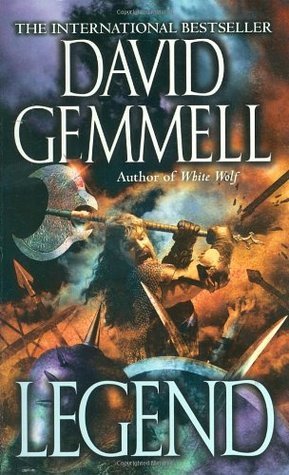
Alright, fantasy fanatics and fellow adventurers! Gather ‘round the digital campfire, because today we’re diving headfirst into a classic that punches you in the gut, lifts your spirits, and then just might punch you again for good measure. We’re talking about David Gemmell’s legendary “Legend.” And believe me, this one lives up to its name and then some!
This isn’t just a book; it’s an experience. It’s gritty, it’s glorious, and it asks some truly profound questions about what it means to be a hero, a coward, or just a human trying to survive. So, buckle up, because we’re going full-spoiler ahead! If you haven’t read it yet, go fix that immediately, then come back. Seriously, I’ll wait.
… You back? Good. Let’s do this!
Plot Synopsis: The Epic Stand ⚔️
“Legend” kicks off by throwing us right into the fire, literally, as the Drenai herald Bartellus nervously visits the Nadir Lord Ulric. Ulric, a conqueror who’s just sacked Gulgothir (leaving a chilling mound of human hands as a trophy), makes it crystal clear: treaties are out, war is in. He rips the head off a chicken, drenching a Drenai robe in blood, and declares the omens “not pleasant.” War is coming, and it’s coming for the Drenai Empire.
Enter Rek, our initially cynical and self-proclaimed coward. He’s found refuge with his kind-hearted foster father, Horeb, an innkeeper who loves to tell tales of the legendary Druss. Rek is haunted by his past, a moment of fear in battle that he can’t shake, and he dismisses the grim prophecies of a blind seer about “the earl and the legend” meeting at “the wall.” He just wants to run, like he always has.
But fate, as it often does in these tales, has other plans. Traveling through the dangerous Graven Forest, a place controlled by the brutal outlaw Reinard, Rek stumbles upon a woman in armor fighting for her life against Reinard’s men. This is Virae, daughter of Earl Delnar of Dros Delnoch. Rek, despite his fear, and thanks to a sudden, almost berserker-like “baresark” rage (a fearless, uncontrollable fighting frenzy born from extreme terror), helps her. He saves her life, repeatedly, though initially he’s a reluctant, almost resentful hero. Their journey together slowly chips away at his cynicism, and he begins to feel something new for her.
Virae’s mission is to seek aid from the mysterious Temple of The Thirty, an order of warrior-priests known for their incredible fighting skills and, more unsettlingly, their psychic abilities. Led by the serene Abbot Vintar and the albino Serbitar, The Thirty agree to join the Drenai cause, but not before subtly testing Rek’s worthiness. It’s here that Rek’s baresark rage is fully unleashed in a mind-to-mind confrontation with Menahem, one of The Thirty. The priests reveal their astral projection abilities, with Serbitar even having glimpsed glimpses of future tragedies. On their journey by ship to Dros Purdol, Rek and Virae quickly tie the knot, solidifying their bond just as the shadow of war looms larger. This is a whirlwind romance, but it feels earned amidst the mounting tension.
Meanwhile, the true legend arrives. Druss, the legendary Captain of the Axe, now a weary 60-year-old, has accepted a desperate plea from his dying friend, Earl Delnar. Druss is past his prime, battling a crippling knee injury and an arthritic back, but his spirit is unyielding. He’s had his own dark encounters with “Death,” who appears to him as a taunting, sibilant voice in the mountains. Arriving at the formidable Dros Delnoch, Druss finds a fortress crippled by low morale, lax discipline, and a leadership vacuum under Gan Orrin, the politically appointed, deeply insecure nephew of Drenai leader Abalayn.
Druss, with typical bluntness, takes charge. He immediately institutes a brutal, unforgiving training regimen, pushing the men to their breaking points. He forces the demolition of civilian buildings between the outer walls to create “killing grounds,” a move that sparks outrage among the populace but is militarily sound. He also orders the blocking of gate tunnels, transforming Delnoch into a series of deathtraps for the attacking Nadir. His methods are harsh, but they begin to forge a new fighting spirit. He even publicly executes a deserter, Dorian, demonstrating his resolve.
The war of wills escalates. Ulric sends a herald to demand surrender, offering a bloodless takeover. Druss responds with a blistering, insulting defiance, effectively slamming the gates shut. Ulric, however, has spies within Delnoch. Serbitar, through his psychic abilities, uncovers a plot to assassinate Druss, orchestrated by the innkeeper Musar and the Drenai officer Dun Mendar. Druss is indeed poisoned at a banquet, barely surviving thanks to the assistance of a baker’s quick thinking. Later, he’s ambushed by Mendar and other assassins, but even weakened, he defeats them, killing Mendar and confirming the treachery. Musar, cornered, poisons his own family and himself.
Earl Delnar eventually succumbs to his cancer, and Rek, by right of marriage, unexpectedly becomes the new Earl of Dros Delnoch. Serbitar’s psychic probes reveal another grim detail: the Musif well, a crucial water source, has been poisoned by the traitor. The Thirty, pushing their powers to the limit, manage a collective astral projection to warn the Drenai soldiers at the well just as they are about to drink, averting a catastrophic mass poisoning. This display of “magic” both saves lives and terrifies the soldiers, reinforcing the otherworldly reputation of The Thirty.
The Nadir army, an overwhelming force of hundreds of thousands, finally arrives. The first clashes are brutal. Ulric employs massive siege towers and ballistae, but Druss’s preparations prove devastatingly effective. Bowman, a charismatic outlaw archer Druss had recruited earlier (along with 600 of his men, offered pardons and gold for their service), proves his worth, unleashing a rain of oil-soaked arrows that turn the Nadir siege towers into infernos. The Thirty fight with incredible, almost inhuman precision, baffling the Nadir.
However, victory comes at a terrible cost. During a fierce assault on Kania, Wall Three, Virae, fighting bravely alongside Rek, is struck by an arrow intended for him. It’s a fatal wound. She dies in Rek’s arms, her last thoughts a desperate plea for someone to look after her “romantic fool” husband. Rek is utterly shattered, falling into a deep despair and contemplating suicide. Druss, finding him with a dagger to his wrist, offers comfort, sharing his own grief over the loss of his wife, Rowena, decades ago.
In a poignant moment, Serbitar leads a grief-stricken Rek to a hidden, magical chamber beneath the Keep—Egel’s secret vault. There, Rek discovers the bronze armor and golden sword of Egel, the first Earl of Bronze, magically protected. Rek, as the rightful successor, is able to touch and claim them. Serbitar reveals that Virae’s body, too, was placed in a crystal within the vault (a secret arrangement made by Vintar before her death, foreseeing this outcome). Her body is healed, seemingly preserved, though her life force is faint. This is a fragile, mystical hope amidst the overwhelming despair.
The siege grinds on. Druss, though gravely wounded in a duel with Ulric’s champion, Nogusha (who used a poisoned blade), refuses to yield. He kills Nogusha but is himself dying from the poison. Caessa, a skilled healer and archer from Bowman’s band (whose own dark past involved killing men who desired her, but who finds a protective, almost filial bond with Druss), tends to him but cannot save him. Druss, now a blue, gangrenous hulk, insists on being taken to the final wall, Geddon, for a last stand.
Morale is at rock bottom. Rek receives a forged message from Abalayn (arranged by the traitor Bricklyn, a city elder) ordering surrender. Rek confronts Bricklyn, revealing he knows about the deception and the impending arrival of Magnus Woundweaver’s reinforcements (50,000 men!) and, shockingly, 3,000 Sathuli warriors – the Drenai’s bitter enemies. Bricklyn flees to Ulric, only to be executed for his failure. Rek, Hogun, Orrin, and Bowman prepare for the final, desperate battle.
Just as the Nadir are about to overwhelm the final gate tunnel, a truly miraculous (or mystical) event occurs. Druss, Serbitar, and the fallen members of The Thirty appear as ghostly, translucent figures within the tunnel, terrifying the Nadir and driving them back. Orrin and the surviving Drenai witness this impossible sight.
Then, the true shocker! From within the very gates of Delnoch, Joachim Sathuli and 3,000 white-robed Sathuli warriors pour forth, attacking the Nadir from the rear. Joachim, whose life Rek had spared and befriended in the Graven Forest, has chosen to honor his word, despite the long-standing enmity between their peoples. This unexpected, ferocious counter-attack, driven by honor and a shared hatred of Ulric’s expansion, throws the Nadir into chaos, turning their certain victory into a rout.
In a moment of pivotal irony, Ulric receives news of a civil war back in his own kingdom. His nephew Jahingir has rebelled. With his empire threatened, Ulric makes a pragmatic decision: he withdraws his vast army, leaving the Drenai, battered but unbroken, in possession of Delnoch. He has a final, respectful conversation with Rek, acknowledging the Drenai’s unexpected victory and promising to return in the “Spring.”
The epilogue ties up the loose ends: Ulric dies fighting his nephew. Rek becomes a celebrated hero, rebuilding Delnoch with Virae (who has seemingly recovered fully from her fatal wound through the crystal’s magic, allowing them to have a family). Orrin, now a seasoned warrior, becomes a respected military leader. Bowman, ever the wanderer, continues his adventures, eventually dying fighting the Nadir in Ventria. “Legend” ends not just with survival, but with new life, new legends, and the continuation of humanity, even after facing the abyss.
Character Analysis 🎭
Gemmell’s characters are the beating heart of “Legend.” They’re flawed, they’re complex, and they feel incredibly real, even the larger-than-life ones.
- Druss the Legend: Oh, where to begin with the big guy? Druss is the quintessential aging hero. He’s a mountain of a man, with a battle-axe for a soul, and a grim determination to die in a final, glorious stand.
- Strengths: Unwavering courage, tactical genius (especially in defense), legendary fighting prowess, and an unparalleled ability to inspire men. He’s got that old-school, uncompromising moral code.
- Flaws: He’s weary, physically breaking down, and perhaps a bit too eager for death. He carries the immense burden of his own legend, constantly having to live up to an impossible ideal. His social skills are… ahem… limited.
- Arc: From a man tired of life and waiting for death, he finds renewed purpose in defending Delnoch, not just for the Drenai, but for the principle of fighting against impossible odds. His battle with Nogusha and subsequent death, while tragic, is a triumphant end to his long, hard life, as he dies fighting for what he believes in.
- Rek (Regnak): Our “Coward-Hero,” as Virae so aptly names him. Rek is the everyman thrust into heroism.
- Strengths: Incredibly intelligent, perceptive, and adaptable. He possesses a rare “baresark” rage that makes him terrifying in combat. Most importantly, he has a deep capacity for love and loyalty.
- Flaws: He’s a cynic, haunted by past cowardice, and prone to self-pity. He tries to run from his fears and responsibilities.
- Arc: He transforms from a self-proclaimed coward into a true leader, the Earl of Bronze. His journey is about accepting his innate courage, even when it manifests in terrifying ways, and learning to fight for something (Virae, his adopted people) bigger than himself. His internal struggle makes him incredibly relatable.
- Virae: The fiery, independent daughter of Earl Delnar.
- Strengths: Courageous, principled, skilled warrior, and fiercely loyal. She represents the Drenai spirit.
- Flaws: A bit stubborn and initially dismissive of Rek’s emotional complexities. She struggles with her identity as a woman in a warrior’s world.
- Arc: She initially scoffs at Rek, but comes to love and respect him deeply, seeing past his flaws to his inherent worth. Her death is a brutal, heart-wrenching turning point, yet her subsequent mystical “return” in the crystal emphasizes the enduring power of love and hope.
- Serbitar (of The Thirty): The albino warrior-priest, a profound and enigmatic figure.
- Strengths: Immense psychic powers (mind-reading, astral projection, precognition), exceptional combat skills (surgical precision), and unwavering dedication to his Order’s principles.
- Flaws: Can be aloof, struggles with the emotional weight of his visions, and carries the burden of his past (father’s attempt to kill him).
- Arc: He grapples with the terrifying nature of his abilities and the bleakness of the future, but ultimately dedicates himself to the cause, becoming a vital strategic asset and a spiritual anchor for Rek. His love for Vintar and his fellow priests grounds him.
- Ulric: The primary antagonist, but far from a one-dimensional villain.
- Strengths: Brilliant strategist, charismatic leader, and a man of his word (when it suits him). He genuinely cares for his people and aims to build a lasting empire.
- Flaws: Ruthless, utterly pragmatic, and capable of horrific brutality. He believes history is written by the victors and is willing to erase or sully opposing legends.
- Arc: He’s on a path of relentless conquest, but his encounter with Druss and the unexpected Drenai resistance, combined with internal betrayal within his own empire, forces him to re-evaluate and ultimately retreat. He becomes a complex foil, admiring his enemies even as he seeks to destroy them.
- Bowman: The witty, philosophical outlaw archer.
- Strengths: Exceptional archer, keen intellect, and a surprisingly deep well of loyalty and honor hidden beneath his cynical exterior.
- Flaws: Cynical, a bit of a rogue, and haunted by a dark secret (the accidental deaths of his father and brother, compounded by his secret elation at his tyrannical father’s death).
- Arc: He initially joins for mercenary reasons but finds himself drawn into the heroic struggle and forms deep bonds with Druss and Hogun. His transformation from a self-serving outlaw to a principled fighter is subtle but powerful.
- Orrin: Abalayn’s nephew, initially a despised and incompetent Gan.
- Strengths: Willingness to learn, a surprising capacity for courage when pushed, and a desire to prove himself.
- Flaws: Insecure, initially overwhelmed by responsibility, and a stickler for rules to compensate for his perceived inadequacy.
- Arc: He undergoes a remarkable transformation, shedding his courtier’s pretense and becoming a genuinely respected warrior through sheer grit and determination, guided by Druss’s tough love. He’s proof that heroism isn’t always born, but forged in the fires of adversity.
Thematic Resonance 🤯
“Legend” isn’t just about swords and sorcery; it’s a deep dive into what makes us human when everything’s on the line.
- The Nature of Heroism and Cowardice:
- This is the big one. Gemmell constantly challenges the traditional definitions. Rek, the self-proclaimed coward, performs incredible acts of bravery, often driven by a terror of fear itself. Druss, the legendary hero, admits to his own physical frailties and fear of dotage. The book suggests that true heroism isn’t the absence of fear, but the ability to act despite it.
- Orrin’s journey from incompetent, fearful leader to a respected warrior is a powerful testament to this.
- Legacy and Myth-Making:
- The novel explores how legends are built, twisted, and endure. Druss is constantly battling his own myth, the “Legend” that demands an impossible perfection. The book shows the human cost behind these grand tales, and the desire to “be remembered.”
- Ulric, too, is a myth-maker, aiming to craft history in his image and erase or taint opposing legends.
- The Cost of War:
- Beyond the thrilling combat, Gemmell unflinchingly portrays the brutal realities: the fear, the exhaustion, the mutilation, the sheer volume of anonymous dead, and the psychological toll on survivors. The evacuation of civilians and the desperation of those fleeing highlights the human suffering.
- Love, Loss, and Redemption:
- Rek and Virae’s fierce, quick love story is central, with Virae’s death (and mystical preservation) serving as the emotional anchor for Rek’s transformation.
- Druss’s enduring grief for Rowena, even after decades, shows the lasting impact of loss on even the strongest individuals.
- Bowman’s struggle with his past and eventual choice to fight for others reflects a powerful journey towards redemption.
- Duty vs. Survival:
- The choice to stay and fight at Delnoch versus fleeing to survive is a recurring moral dilemma. Characters like Gilad and Bregan grapple with this, representing the ordinary men forced to make extraordinary choices. Rek’s decision to allow desertion is a controversial but deeply human one, recognizing the value of life beyond the battlefield.
World-Building Deep Dive 🗺️
Gemmell’s world-building in “Legend” is classic high fantasy, serving the narrative without getting bogged down in excessive detail. It feels lived-in and real.
- Setting: The core setting is the Drenai Empire, particularly the formidable Dros Delnoch, a massive fortress city spanning the Delnoch Pass in the mountains.
- Dros Delnoch: A marvel of ancient engineering, designed by Egel, the “Earl of Bronze.” It boasts six concentric walls, each formidable, but its strength has been compromised by civilian expansion (buildings in the “killing grounds”) and recent neglect. Druss’s re-fortification efforts, like clearing the killing grounds and blocking gate tunnels, are crucial to its defense.
- Geography: The Drenai lands are bordered by mountains, plains (Sentran Plain), and the northern steppes (Nadir territory). Trade routes are vital, making control of passes like Delnoch critical.
- Political Systems:
- Drenai Empire: Once a conquering power (six centuries prior), it’s now somewhat complacent and decadent, led by the aging Abalayn. There’s tension between military command (like Earl Delnar) and political appointments (Gan Orrin). City Elders also hold power, often prioritizing trade and peace over defense.
- Nadir Tribes: Unified under Ulric, they operate under a brutal, expansionist system, often incorporating conquered tribes or destroying those who resist. Their internal politics, as seen with Jahingir’s rebellion, are fluid and often violent.
- Cultures and Peoples:
- Drenai: Descendants of conquerors, now valuing civilization, trade, and law. They’ve grown soft but retain a core of resilience and honor.
- Nadir: Fierce, nomadic warrior tribes from the northern steppes. They live for war and plunder, and their concept of “stranger” equals “enemy.” They are pragmatic and value strength above all.
- Sathuli: Another warrior culture, traditionally enemies of the Drenai, also residing in the mountains. They have a complex code of honor, as shown by Joachim.
- The Thirty: A unique order of warrior-priests with psychic abilities, dedicated to their own philosophical principles and the “Source.” They are aloof and mystical, offering their services to those deemed worthy for payment, which funds their next temple.
- Magic System: This is where things get interesting without becoming overly complex.
- Psychic Abilities (The Thirty): Primarily mind-reading, astral projection (“speaking” or “traveling” to see distant events/futures), and telepathy. They use these to gain intelligence, influence events (like Grussin’s change of heart), and even mystically preserve Virae.
- Nadir Shamanism: Nosta Khan uses dark magic, including demon summoning and mind attacks (as seen in his attempts on Rek and Druss). This acts as a counterpoint to The Thirty’s more “pure” or “neutral” powers.
- Egel’s Magic: The crystal preservation of Virae and the magical armor/sword of Egel suggest ancient, almost forgotten magical constructs tied to specific bloodlines or heroic destiny.
- Technology: Generally low-fantasy/medieval. Swords, axes, bows, siege engines, basic ships. The focus is on military strategy and human combat rather than technological marvels.
Genre Context & Comparisons 🧭
“Legend” is an absolute cornerstone of heroic fantasy, often cited as a prime example of the subgenre.
- Heroic Fantasy/Grimdark precursor: Gemmell is a master of heroic fantasy, focusing on the individual hero against impossible odds. While not explicitly “grimdark” in its moral ambiguity, it certainly has a gritty, no-holds-barred approach to war and its consequences, predating much of the modern grimdark movement. It paved the way for later, darker fantasy, but always maintained a core of hope and heroism.
- Archetypal Characters: Druss is the archetype of the aging, legendary warrior, a figure seen in countless fantasy novels (and some sci-fi, too!). Rek is the reluctant hero, a character arc that resonates deeply.
- Comparisons:
- Tolkien (but darker): While lacking Tolkien’s intricate world-building scale, Gemmell captures the epic “last stand” feel. Less pastoral, more brutal.
- Robert E. Howard (Conan) meets historical fiction: It has the raw, visceral combat of Howard, but with more psychological depth and a clearer sense of strategy and historical-feeling conflict.
- Early Grimdark (without the cynicism): Similar to early works of George R.R. Martin or Joe Abercrombie in its unflinching portrayal of war, but Gemmell’s ultimate message is one of enduring hope, courage, and the value of human connection, rather than pervasive cynicism.
- Battle of Thermopylae: The entire premise of a small, doomed force holding a pass against a massive invasion immediately brings to mind the Spartan stand, albeit with more fantasy elements.
Influences & Inspirations 🌟
Speculating on influences is always fun, and with Gemmell, it’s clear he pulled from a rich tapestry of history and mythology.
- Ancient Warfare & Sieges: The detailed descriptions of siege tactics, military discipline, and the sheer brutality of hand-to-hand combat strongly suggest a deep study of ancient and medieval warfare. The focus on psychology and morale in battle is reminiscent of historical accounts.
- Arthurian Legend/Chivalry: Though subverted by the gritty reality, there’s an undercurrent of chivalric ideals (honor, loyalty, protecting the weak) that Rek and Druss embody in their own ways, clashing with the ruthless pragmatism of Ulric.
- Philosophical Concepts: The discussions around fate, free will, the meaning of life and death, and the nature of heroism, particularly through Serbitar and Bowman, show philosophical leanings. The idea of “The Source” and astral projection touches on Eastern mysticism.
- Personal Experiences (potentially): Gemmell himself had a tough background. The raw, emotional honesty, especially in the portrayal of fear and the psychological toll of violence, feels deeply personal.
- Biblical/Mythological Archetypes: The concept of “legend” itself, the grand epic struggle between overwhelming darkness and a glimmer of light, resonates with many foundational myths and biblical narratives. Druss as a quasi-divine, unstoppable force harkens back to figures like Hercules or Samson.
Key Takeaways
- Heroism isn’t the absence of fear, but the triumph over it. Rek’s journey is a masterclass in this.
- Legends are forged in the crucible of impossible odds. Druss embodies this, even in his twilight years.
- Even in the darkest times, human connection and love endure. Rek and Virae’s story is a beautiful testament.
- War is brutal, but humanity’s spirit is unyielding. Gemmell doesn’t shy from the gore, but always emphasizes resilience.
- Unexpected alliances can turn the tide. The Sathuli arriving to aid the Drenai is a brilliant, shocking twist.
- The greatest victories often come from the most desperate stands. Delnoch’s survival is proof.
Wrapping It Up
Whew! What a ride, right? “Legend” isn’t just a fantasy novel; it’s a raw, emotional epic that will stay with you long after you turn the last page. David Gemmell, in his debut, crafted a story that redefined heroic fantasy. It’s got all the thrilling action you could ever want, but it’s the profound exploration of human nature, courage, and sacrifice that truly elevates it. If you haven’t experienced the power of Druss the Legend, Rek the Coward-Hero, and the desperate stand at Dros Delnoch, you owe it to yourself.