Magician
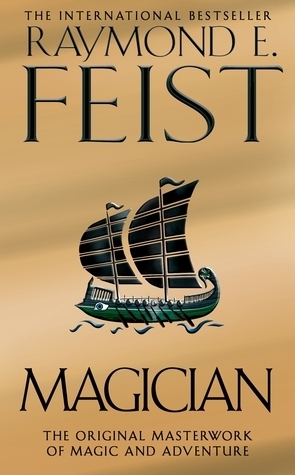
Alright folks, buckle up! Today we’re diving deep into a cornerstone of epic fantasy, a book that launched a thousand campaigns (both D&D and literary!) – Raymond E. Feist’s Magician, specifically the Author’s Preferred Edition. If you haven’t read this one, seriously, what are you waiting for? And if you have, get ready to nod along, because we’re about to geek out. This is the kind of “ripping yarn,” as Feist himself calls it, that got many of us hooked on the genre in the first place.
Plot Synopsis: A Tale of Two Worlds 🌪️
Man, where to even begin with this beast of a story? “Magician” isn’t just one plot; it’s an epic tapestry woven across years and worlds.
Our story kicks off in the sleepy coastal town of Crydee, in the Kingdom of the Isles. We meet our two main lads:
- Pug: An orphan, small for his age, a bit of a dreamer, and not particularly skilled at anything traditionally “manly.” He’s got a good heart, though, and a knack for getting into scrapes, like nearly drowning during a storm while gathering seafood for the castle cook, Megar. He’s saved by Meecham, a franklin in the service of the magician Kulgan.
- Tomas: Pug’s best friend, tall, strong, and a natural at most physical tasks. He’s the son of Megar, the castle cook, and Magya.
The big event looming is the Choosing, where boys of age are selected for apprenticeship. Tomas is a shoo-in for Swordmaster Fannon. Pug, however, is an anxious mess. After a series of comical mishaps and a near-rejection, Pug is unexpectedly chosen by Kulgan, the Duke’s magician, much to the surprise of everyone, including Pug himself. This happens after Kulgan witnesses Pug’s innate (though uncontrolled) magical ability when Pug uses a crystal scrying orb at Kulgan’s cottage.
Life as apprentices begins. Tomas excels as a soldier-in-training. Pug, on the other hand, struggles immensely with the traditional forms of magic Kulgan tries to teach him. He can grasp theory, but the practical application eludes him, as if a block exists in his mind. His only notable magical success comes during an outing with Princess Carline, when trolls attack them. In a moment of sheer terror, Pug unconsciously unleashes a powerful spell, incapacitating the trolls. This event earns him the rank of Squire and the estate of Forest Deep from Duke Borric.
Meanwhile, a strange, alien ship wrecks near Crydee. The sole survivor is a warrior from an unknown land, speaking an unknown tongue. Father Tully, the castle priest, uses a dangerous mind-link to learn that the soldier, Xomich, is from an empire called Tsuranuanni on another world, Kelewan. This world is connected to Midkemia by a rift, a magical tear in space-time. This is the first inkling of the massive conflict to come – the Riftwar.
The Tsurani, as these otherworldly invaders are called, begin to make their presence known. They are a highly militaristic society, lacking metal but possessing advanced techniques for hardening wood and leather. They also have their own powerful magicians, the Great Ones, who are held in awe and are “outside the law.”
A Tsurani scouting party is discovered, and the Kingdom forces, led by Duke Borric, realize the threat is serious. During a daring raid on a Tsurani-held valley to discover the nature of the rift, a younger Pug, Meecham (Kulgan’s man), and Kulgan are part of a detachment. The plan is to observe the Tsurani rift machine.
- During the chaos, Kulgan’s horse is killed by a Tsurani magician. Pug, trying to save his master, helps Kulgan onto his own horse, sending him away.
- Pug attempts to capture the Tsurani magician but, in the ensuing struggle, the magician activates a device, and Pug is pulled through a shimmering distortion, vanishing from Midkemia. Meecham witnesses this.
This is where the book really splits its focus:
Pug’s Journey on Kelewan (becomes Milamber): Pug finds himself a slave on Kelewan. He endures years of brutal labor in a swamp camp, his Midkemian memories fading. His innate magical talent, however, doesn’t go unnoticed.
- He is eventually discovered by the Assembly of Magicians, the ruling body of Great Ones. He is taken from slavery and begins rigorous, often mentally torturous, training.
- His mind is systematically reshaped. He loses his memory of Pug and becomes Milamber. He excels in the Tsurani form of magic, the “Greater Path,” which is more intellectual and structured than Kulgan’s “Lesser Path” arts.
- He learns that the Tsurani are invading Midkemia primarily for metals, which are scarce on Kelewan. He also learns about the intricate Tsurani political system, the “Game of the Council,” where powerful families and clans vie for influence.
- Milamber falls in love with a fellow slave, Katala, and they have a son, William.
- His unique heritage (being from another world) gives him an unprecedented understanding and power over magic, drawing from the energies of both worlds.
- Hochopepa, a senior magician, becomes his mentor and protector within the Assembly, recognizing Milamber’s potential and the danger he poses.
- Eventually, Milamber’s disgust at the Tsurani’s cruelty, particularly during a gladiatorial game where Midkemian and Thuril prisoners are forced to fight, culminates in a massive display of power. He unleashes elemental fury on the Imperial Stadium, defying the Warlord Almecho.
- This act throws the Empire into chaos but also forces Milamber to flee Kelewan for his family’s safety. With the help of Fumita, another Great One, and the Shinzawai family (whose son, Kasumi, had befriended Pug/Milamber’s friend Laurie), Milamber, Katala, and William escape through the rift back to Midkemia.
Tomas’s Transformation on Midkemia: While Pug is on Kelewan, Tomas’s life takes a dramatically different turn. During the early days of the war, while fleeing from Dark Brother (moredhel) assassins in the ancient dwarven mines of Mac Mordain Cadal, Tomas becomes separated from Duke Borric’s party.
- Lost and alone, he stumbles upon the lair of an ancient, dying golden dragon named Rhuagh.
- Before dying, Rhuagh bequeaths Tomas a suit of brilliant white and gold armor and a matching sword, gifts left by the legendary sorcerer Macros the Black.
- Donning the armor, Tomas is transformed. He gains incredible strength, fighting prowess, and the ability to see in the dark. The armor seems to possess a will of its own, infusing him with the spirit of Ashen-Shugar, the last of the Valheru (the Dragon Lords), an ancient, god-like race who once ruled Midkemia.
- Tomas becomes a legendary warrior among the elves of Elvandar and the dwarves of the Grey Towers. He leads them in countless battles against the Tsurani.
- His human personality struggles against the powerful, alien consciousness of Ashen-Shugar. He becomes more distant, his eyes taking on an otherworldly glow.
- He falls in love with Aglaranna, the Elf Queen, and she with him, though their relationship is fraught with the danger of his transformation. The elven Spellweavers, led by Tathar, work to help Tomas maintain his humanity.
- The struggle culminates when Tomas, in a Valheru-induced battle rage, nearly slaughters helpless Tsurani prisoners. Only the intervention of Martin Longbow and Tomas’s own inner battle allow his human side to reassert control, breaking the Valheru’s full dominance. He remains a being of immense power but with his humanity, and love for Aglaranna, as an anchor. They marry, and she becomes pregnant with his child.
The War on Midkemia and Political Intrigue: The Riftwar rages for nearly a decade.
- Duke Borric leads the Armies of the West against the Tsurani foothold in the Grey Towers. The war becomes a brutal stalemate.
- On the Midkemian political front, King Rodric IV of the Isles descends into paranoia and madness, influenced by his cousin, the ambitious Guy du Bas-Tyra.
- Prince Erland of Krondor, Borric’s ally and the rightful power in the West, is sidelined and eventually imprisoned by Guy, who becomes Viceroy of Krondor.
- Arutha, Borric’s younger son, commands the garrison at Crydee. He proves to be a skilled and pragmatic leader, though often at odds with the more cautious Swordmaster Fannon. He forms key alliances with Martin Longbow (the Duke’s Huntmaster and, secretly, Borric’s illegitimate eldest son) and Amos Trask (a former pirate captain).
- Arutha, with Anita (Erland’s daughter), manages a daring escape from Krondor after Guy tries to force a marriage with Anita to secure his claim to the western throne.
- The war effort is hampered by political infighting in the Kingdom.
The Climax and Resolution: The Tsurani, reinforced by the return of the Blue Wheel Party to the Alliance for War on Kelewan, launch a massive offensive against Duke Borric’s main army.
- Duke Borric is mortally wounded in a heroic counterattack. King Rodric, leading the eastern Kingdom forces in a rash charge, is also fatally injured.
- On his deathbed, Borric acknowledges Martin Longbow as his eldest son. Rodric, in a moment of lucidity before dying, names Lyam (Borric’s second, now eldest legitimate, son) as his Heir.
- This sets up a succession crisis. Martin, as the true eldest conDoin, has the primary claim, but Lyam is the named Heir. Arutha fears civil war.
- Milamber (Pug) returns to Midkemia with his family just as this crisis unfolds.
- The Tsurani Emperor Ichindar, influenced by a peace faction on Kelewan (including Kasumi Shinzawai), comes to Midkemia to negotiate peace with Lyam.
- During the peace parley, Macros the Black (the ancient sorcerer who has been subtly guiding events on both worlds) manipulates Tomas into attacking the Tsurani, seemingly betraying the truce. This is a ruse.
- Macros reveals his plan: the rift itself is a danger, as it could be detected by the “Enemy” (a cosmic horror that destroyed humanity’s original homeworlds). He needs Pug’s immense power, combined with his own, to destroy the rift.
- Pug and Macros enter the rift. In a titanic magical struggle in the “place between,” they succeed in shattering the rift, severing the connection between Midkemia and Kelewan. Macros vanishes, his fate unknown. Pug is nearly killed but is pulled back by Kulgan.
- The remaining Tsurani on Midkemia, now stranded, surrender. Kasumi and his men are integrated into the LaMutian garrison to defend the northern borders of the Kingdom.
- At Lyam’s coronation, Martin publicly renounces his claim to the throne in favor of Lyam, averting civil war. Lyam becomes King. Arutha is named Prince of Krondor and heir presumptive. Martin is made Duke of Crydee. Pug is officially adopted into the conDoin family, becoming Prince Pug.
- Macros leaves his island and its vast library of magical knowledge to Pug and Kulgan, with the charge to found an academy of magic.
The book ends with the promise of a new era of peace and rebuilding, but with many threads still loose, hinting at future adventures and the enduring consequences of the Riftwar. Pug is reunited with Tomas, both men profoundly changed by their experiences.
Character Analysis: Heroes Forged in Fire 🔥
Feist excels at creating characters you genuinely care about, even when they’re flawed.
- Pug (Milamber): His journey is central. From an insecure orphan boy to a slave, and then to one of the most powerful magicians in existence, his arc is about discovering his true potential and grappling with immense power and responsibility.
- Strength: Resilience, innate magical talent, loyalty, a good heart that survives even the brutal Tsurani conditioning. His love for Katala becomes a crucial anchor.
- Flaw: Initially lacks confidence. As Milamber, he struggles with the alien Tsurani mindset and the emotional toll of his power, especially after the Imperial Games incident. His dual heritage (Midkemian soul, Tsurani training) creates internal conflict.
- Tomas: Pug’s counterpart. His transformation is more physical and instinctual. The Valheru armor grants him immense power but also threatens to consume his humanity.
- Strength: Bravery, physical prowess, deep loyalty to his friends and later to Aglaranna and the elves.
- Flaw: The battle lust and alien consciousness of Ashen-Shugar constantly war with his human nature. He becomes emotionally distant for a long period. His journey is about finding balance.
- Arutha conDoin: The pragmatic, often brooding, younger son of Duke Borric. He grows from a somewhat overshadowed prince into a capable military commander and leader.
- Strength: Intelligent, strategically minded, courageous, and deeply honorable, though less overtly so than Lyam. Develops a surprising capacity for compassion.
- Flaw: Can be overly stern and pessimistic. His internal struggles with duty and personal feelings (especially regarding Anita) are significant.
- Lyam conDoin: The golden-haired, good-natured elder son of Duke Borric. He’s the classic “noble prince” figure.
- Strength: Inspires loyalty and affection, brave, possesses a strong sense of honor and duty.
- Flaw: Perhaps too idealistic and initially less decisive than Arutha. His greatest test is the succession crisis, where his innate goodness is pitted against political pragmatism.
- Kulgan: The gruff but kindly magician of Crydee. He’s Pug’s first mentor and a loyal adviser to the conDoins.
- Strength: Wise, knowledgeable in the “Lesser Path” of magic, deeply caring despite his bluster. His belief in Pug is crucial.
- Flaw: Perhaps a bit set in his ways, initially underestimating Pug’s true potential and the nature of the Greater Path.
- Martin Longbow: The Duke’s Huntmaster, an orphan with a mysterious past and a close connection to the elves. Revealed to be Duke Borric’s illegitimate son.
- Strength: Unmatched woodsman and archer, loyal, possesses a quiet wisdom and a unique perspective, bridging human and elven worlds.
- Flaw: Aloof, carries the burden of his secret heritage, leading to a certain loneliness.
- Princess Carline: Duke Borric’s daughter. She matures significantly from a somewhat spoiled and petulant girl into a strong and compassionate young woman.
- Strength: Spirited, intelligent, develops great emotional resilience. Her relationships with Pug and later Roland are central to her growth.
- Flaw: Initially prone to temper and somewhat manipulative in her affections.
- Roland of Tulan: A young squire who becomes a close friend to the conDoin brothers and Pug.
- Strength: Brave, loyal, good-humored, skilled fighter.
- Flaw: Hot-headed, his unrequited love for Carline causes him (and Pug) considerable angst. His arc is ultimately tragic but shows his growth in maturity.
- Amos Trask: A former pirate captain who becomes an invaluable, if roguish, ally to Arutha.
- Strength: Resourceful, courageous, possesses a vast knowledge of the sea and the shadier side of life, surprisingly loyal.
- Flaw: A braggart and a scoundrel, but with a good heart beneath it all. His pragmatism often clashes with noble ideals.
- Kasumi of the Shinzawai: The Tsurani warrior noble who initially captures Pug (as a boy) but later becomes an emissary for peace.
- Strength: Honorable by Tsurani standards, skilled warrior, intelligent, and eventually open to understanding Midkemian ways.
- Flaw: Bound by the rigid Tsurani honor code, which initially makes him an enemy. His journey is one of broadening perspective.
- Hochopepa: The Tsurani Great One who becomes Milamber’s mentor and friend.
- Strength: Wise, politically astute, possesses a sense of humor rare among the Great Ones, and a pragmatic view of the Empire and the Assembly.
- Flaw: Perhaps too enmeshed in the “Game of the Council,” though he ultimately supports Milamber’s more radical views for the good of the Empire.
The relationships are key: Pug and Tomas’s enduring brotherhood, the complex dynamics between the conDoin siblings, Pug’s love for Katala versus his boyhood infatuation with Carline, Tomas’s epic romance with Aglaranna, and Arutha’s slowly blossoming feelings for Anita.
Thematic Resonance: More Than Just Swords & Sorcery 📜
“Magician” isn’t just an adventure; it’s packed with some hefty themes:
- Coming of Age/Self-Discovery: This is huge for both Pug and Tomas. Pug has to find his place and power in two vastly different worlds, ultimately forging a new identity as Milamber and then reconciling it with Pug. Tomas grapples with a power that threatens to erase him, learning to integrate the man and the Valheru.
- The Nature of Power: Magic, political power, military might – Feist explores how power is gained, wielded, and how it corrupts or ennobles. Pug’s journey as a Great One and the Tsurani “Game of the Council” are prime examples. Tomas’s Valheru power is a raw, almost uncontrollable force.
- Friendship and Loyalty: The bond between Pug and Tomas is the emotional core of the early book and resonates throughout. Loyalty to friends, family, and nation is constantly tested. Think of Meecham’s loyalty to Kulgan, or the soldiers’ loyalty to their lords.
- Cultural Clash and Understanding: The fundamental conflict between Midkemia and Kelewan highlights deep differences in societal values, honor codes, and perspectives on war and life. The eventual understanding reached by characters like Kasumi and Pug is crucial for peace.
- War and Its Cost: The Riftwar is brutal and long. Feist doesn’t shy away from the death, destruction, and emotional toll it takes on individuals and societies. The “senselessness” of it is a recurring point.
- Duty and Honor: Explored through various lenses – the Midkemian feudal code, the rigid Tsurani honor system, and the personal sense of duty that drives characters like Arutha, Lyam, and even Martin.
- Tradition vs. Change: Both Midkemian and Tsurani societies are bound by tradition. The war and the emergence of figures like Milamber act as catalysts for massive change, forcing both cultures to re-evaluate their ways. Milamber’s critiques of Tsurani stagnation are particularly pointed.
- The Greater Good vs. Personal Desire: Many characters face choices where they must sacrifice personal happiness or even lives for what they perceive as a greater cause (e.g., Macros, Lyam’s decision about the crown, Pug’s actions at the Imperial Games).
World-Building Deep Dive: Midkemia & Kelewan 🗺️
Feist lays some serious groundwork for his universe in this book.
Midkemia:
- Geography & Kingdoms: We primarily see the Kingdom of the Isles, a feudal society. Key locations include:
- Crydee: A remote western duchy, frontier territory.
- Krondor: Seat of the Prince of the West, a major city.
- Rillanon: The capital city of the Kingdom, an island.
- Elvandar: The hidden forest home of the elves.
- The Grey Towers & Stone Mountain: Homelands of the dwarves.
- Races:
- Humans: The dominant race, organized into kingdoms and duchies.
- Elves (Eledhel): Long-lived, magical, somewhat isolationist. Led by Queen Aglaranna. They have a deep connection to their forests.
- Dwarves: Stout, strong, master miners and craftsmen, fierce warriors. Divided into clans.
- Moredhel (Dark Elves/Brothers of the Dark Path): Antagonistic cousins of the elves, driven by a lust for power and remnants of Valheru magic.
- Goblins: Savage, numerous, often allied with the Moredhel.
- Magic System:
- The Lesser Path: Practiced by magicians like Kulgan. It’s more of an art, less systematized, relying on innate talent, scrolls, and devices. Focuses on practical spells, illusions, and some elemental control.
- Priestly Magic: Granted by devotion to various gods (e.g., Astalon the Builder, Ishap, Dala). Used for healing, protection, and sometimes offensive power.
- Valheru Magic: The ancient, incredibly potent magic of the Dragon Lords, channeled through artifacts like Tomas’s armor. Raw and primal.
- Politics: Feudal monarchy. The King rules, but powerful Dukes and a Congress of Lords hold significant sway. Succession is a major point of contention.
Kelewan (Tsuranuanni Empire):
- Geography & Empire: A hotter world with different flora and fauna (e.g., needra, cho-ja). The Tsuranuanni Empire is vast and powerful. Key locations include:
- The Holy City (Kentosani): Seat of the Emperor and the High Council.
- Jamar: A major port city.
- The Assembly: An island fortress-city, home to the Great Ones.
- Races:
- Tsurani: The dominant human race, highly structured and honor-bound. Appearances vary, some fair, some dark (like the “golden men”).
- Cho-ja: Intelligent, ant-like creatures who serve the Tsurani as allies, possessing their own hives and queens.
- Thun: Centaur-like nomadic creatures from the northern tundras, often hostile.
- Various other enslaved races brought through the rift during the “Escape.”
- Magic System (The Greater Path): Practiced by the Great Ones of the Assembly. Highly intellectual, systematic, and powerful. Focuses on controlling energies, teleportation (via patterns), and large-scale enchantments. The Assembly holds immense power and is “outside the law.”
- Politics & Society:
- The Emperor (Light of Heaven): A spiritual figurehead with immense traditional authority but little direct political power.
- The Warlord: The de facto military and political ruler, chosen from one of five Great Families.
- The High Council: Composed of lords from powerful clans, a hotbed of political maneuvering.
- The Game of the Council: The constant, often ruthless, struggle for power and influence among families, clans, and political parties (e.g., War Party, Blue Wheel Party). Honor, alliances, and face are paramount.
- Social Structure: Rigidly hierarchical. Nobles, warriors, freemen, and a large slave population (often captives from other worlds or disgraced Tsurani).
- Lack of Metals: A defining characteristic, driving their expansionist policies. They’ve developed advanced uses for treated wood, hide, and ceramics.
The Rift itself is a crucial world-building element, the magical tear connecting these two disparate universes and driving the central conflict. Macros later reveals rifts are inherently unstable and can attract a cosmic “Enemy.”
Genre Context & Comparisons 📚
“Magician” firmly plants its banner in the epic fantasy subgenre, and more specifically, it’s a foundational work of what some might call “Rift-based” or “portal” fantasy, though it’s far more complex than many later iterations.
- Epic Scope: It’s got it all – vast worlds, huge wars, ancient powers, destinies of nations hanging in the balance. The sheer scale of the story, spanning over a decade within its pages and crossing dimensions, is classic epic.
- Coming-of-Age: For Pug and Tomas, it’s a quintessential “hero’s journey” mixed with a coming-of-age narrative. They start as ordinary boys and are thrust into extraordinary circumstances that force them to grow and change profoundly.
- The “Farm Boy” Trope (Modified): Pug isn’t exactly a farm boy, but he’s an orphan of humble beginnings who discovers he has immense, world-altering potential. This is a beloved trope, and Feist handles it well by making Pug’s journey arduous and his power hard-won (especially on Kelewan).
- Good vs. Evil (with Nuance): While the Tsurani are initially presented as the antagonists, the narrative evolves. We see their own complex society, motivations (resource scarcity), and internal political struggles. Characters like Kasumi and Hochopepa provide a Tsurani perspective, showing they aren’t monolithic villains. The true “evil” is hinted at with the cosmic “Enemy” and the destructive potential of unchecked power (like the Valheru consciousness).
- Comparisons:
- J.R.R. Tolkien (“The Lord of the Rings”): While different in tone, “Magician” shares that sense of a deeply realized secondary world with its own history, races, and epic conflicts. However, Feist’s magic is generally more overt and systematized, especially the Tsurani Greater Path.
- Ursula K. Le Guin (“Earthsea Cycle”): There’s a touch of Le Guin in Pug’s magical training, particularly the emphasis on knowledge, balance, and the idea that true names hold power (a concept Milamber encounters in Tsurani magic).
- David Eddings (“The Belgariad”/“The Malloreon”): Feist’s more conversational prose and focus on a core group of developing characters might resonate with Eddings’ fans, though “Magician” is generally considered to have more depth in its world-building and thematic exploration.
- Dungeons & Dragons: As Feist mentions in the foreword, the book was born from a period of creative world-building, and you can feel that “game world” DNA. The varied races, distinct magic systems, and epic quests have a feel that aligns well with classic TTRPGs. This isn’t a criticism; it’s part of its charm and accessibility.
Feist’s willingness to span years and show the long-term consequences of events sets “Magician” apart from some fantasies that resolve conflicts more neatly or quickly. The dual narrative, following Pug and Tomas on their very different paths, is also a strong structural element.
Influences & Inspirations 💡
Reading Feist’s foreword to the revised edition is super insightful here!
- “Ripping Yarns”: Feist explicitly states his primary ambition was “spinning a good story, one that satisfied my sense of wonder, adventure, and whimsy.” This harks back to classic adventure literature.
- Ignorance of “Commercial Success”: He admits his “ignorance of what makes a commercially successful novel” led him to break rules of plotting, cover vast time spans, and juggle numerous characters – things that ultimately contributed to the book’s unique appeal and success.
- Personal History/Experience: While not overtly stated for this book in the text provided, many authors draw from their own lives. The dedication to his father, “In all ways, a magician,” is poignant and hints at personal inspiration. His time at UCSD is mentioned as the period he began writing.
- TTRPGs (Tabletop Role-Playing Games): Though not directly stated in the provided text as an influence on the writing process itself, the intricate world, diverse races, magic systems, and character progression strongly echo the creative environment of TTRPGs like Dungeons & Dragons, which were gaining huge popularity around the time Feist was writing. Many early fantasy authors of that era were involved in or influenced by this gaming subculture. The focus on adventure, distinct character roles (magician, warrior), and exploration of new lands feels very much in this vein.
- Classic Fantasy Tropes: Feist clearly draws from the well of established fantasy tropes (orphans with hidden destinies, epic wars, elves, dwarves, dark lords/ancient evils) but often puts his own spin on them. The Tsurani, for instance, are not typical “evil invaders” but a complex society with understandable (if aggressive) motivations.
- Real-World History/Cultures (Speculative): The Tsurani Empire, with its rigid honor code, emphasis on family and clan, and intricate political “Game of the Council,” feels like it could be inspired by romanticized or amalgamated aspects of historical East Asian cultures (e.g., feudal Japan with its samurai ethos, or imperial China with its bureaucracy and courtly intrigue). This is a common speculative practice for fantasy authors building alien societies. The focus on “face” and the consequences of dishonor are strong Tsurani traits.
The most direct influence Feist admits is his own desire to tell a grand, sprawling story without being constrained by conventional narrative structures. This freedom is a big part of what makes “Magician” so memorable.
Key Takeaways
So, after that massive info-dump, what are the big things to carry away from “Magician”?
- Friendship Endures: The bond between Pug and Tomas, despite worlds and transformations pulling them apart, is a powerful, heartwarming thread.
- Power Changes People: Whether it’s Pug’s magic or Tomas’s armor, immense power forces profound, often painful, personal evolution.
- Worlds Are Bigger Than You Think: The discovery of Kelewan and the rift shatters Midkemia’s understanding of the cosmos, much like it broadens the reader’s horizons.
- War Has No True Winners: Even in victory, the cost in lives, resources, and innocence is immense on both sides. Peace is hard-won and precious.
- Cultural Understanding is Key: The Tsurani are initially “the enemy,” but as Pug (and the reader) learns more about their society, a more nuanced understanding emerges, paving the way for peace.
- Destiny is Forged, Not Just Found: While Pug and Tomas seem “chosen,” their journeys are filled with hard choices, suffering, and active effort to become who they are.
- Sometimes, You Just Need a Good Story: Feist set out to write a “ripping yarn,” and he succeeded spectacularly, reminding us of the pure joy of epic adventure.
Wrapping It Up 🎁
Phew! “Magician” is a journey, and recapping it is almost as epic as reading it. This book is a genuine classic for a reason. It’s got the grand scope, the characters you root for (and sometimes want to shake), the intricate world-building, and the kind of magic that feels both wondrous and dangerous.
Feist’s “Author’s Preferred Edition” adds layers and depth, restoring material that enriches the characters and the world. If you’re looking for an entry point into classic epic fantasy, or a nostalgic reread of a beloved favorite, “Magician” delivers on all fronts. It’s a sprawling, messy, ambitious, and ultimately incredibly satisfying read that set the stage for a massive series.