Oathbringer
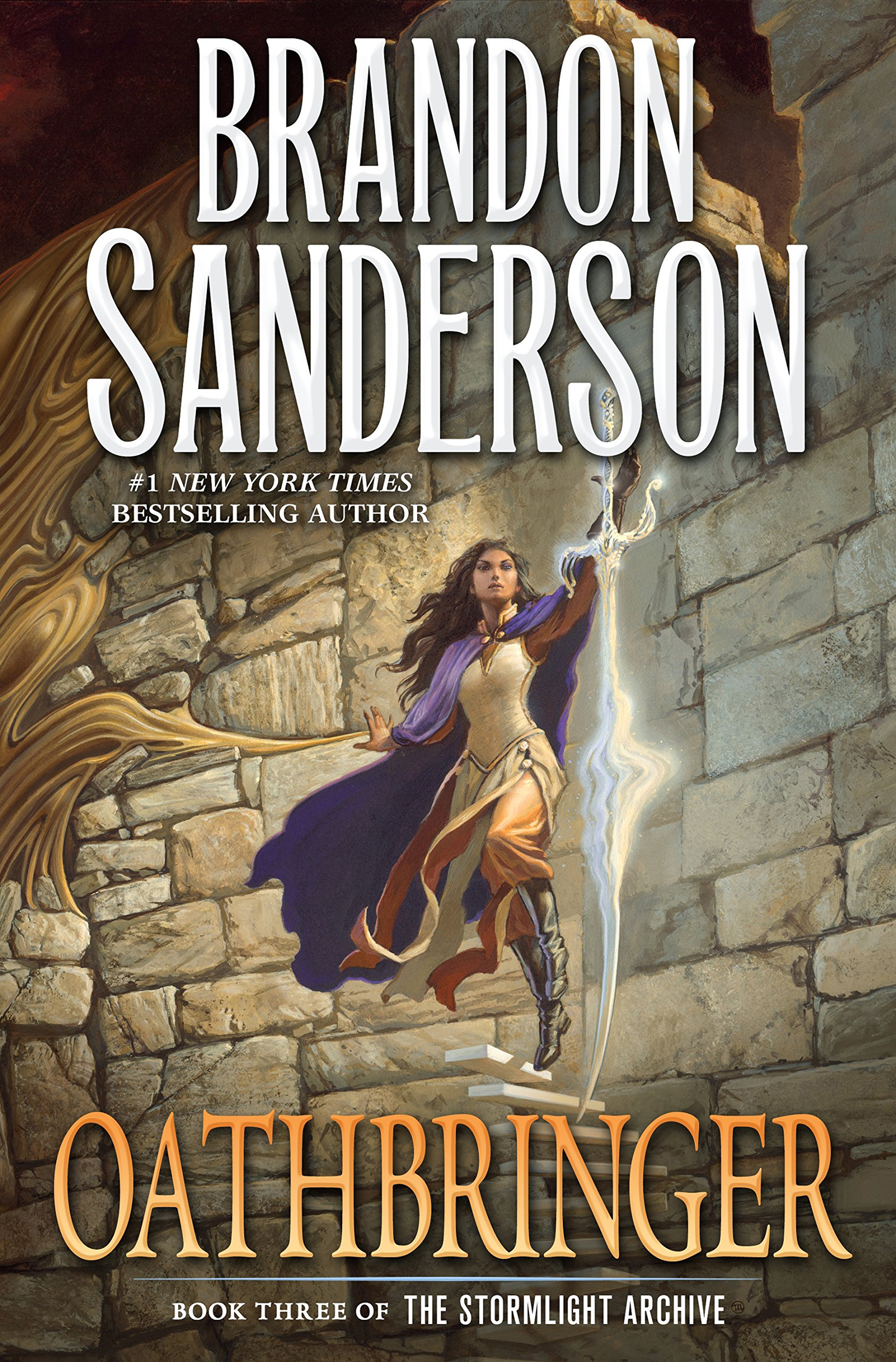
Alright, buckle up, Radiants and Roshar-wannabes, because your boy is BACK with a deep dive into a book that’s as massive as a chasmfiend and just as epic: Brandon Sanderson’s Oathbringer, the third behemoth in The Stormlight Archive! If you thought Words of Radiance was a wild ride, well, strap yourselves in tighter, because Sanderson cranks the Sanderlanche dial to eleven here. We’re talking world-shattering revelations, character arcs that’ll make your heart ache, and enough lore to fill the Urithiru library (if they could find it, that is!).
So grab your spheres, try not to attract any angerspren, and let’s get into it!
Plot Synopsis: The Everstorm Rages and Oaths Are Tested (Heavy Spoilers!) 🌪️
Man, where do I even begin with this one? Oathbringer picks up pretty much right after the cataclysmic events at Narak. Our heroes have found the legendary tower city of Urithiru, but it’s less “shiny new headquarters” and more “creepy, ancient, and possibly haunted mountain fortress.” And oh yeah, the Everstorm – that lovely backward-blowing tempest of red lightning and Voidbringer-awakening power – is now a recurring feature on Roshar. Fun times!
-
The Early Days in Urithiru:
- The book kicks off with Dalinar Kholin grappling with his new role as a Bondsmith, bonded to the Stormfather himself. He’s having visions of the past, trying to piece together what went wrong with the old Radiants and how to fight the coming Desolation.
- Meanwhile, Highprince Torol Sadeas, that slimy chull-turd, gets himself murdered right in the corridors of Urithiru. This throws a wrench in Dalinar’s attempts to unite the Alethi highprinces, as many immediately suspect Dalinar’s involvement. Adolin, his son, is tasked with the investigation, which, uh, gets complicated.
- Kaladin, our favorite brooding Windrunner, makes a desperate flight back to his hometown of Hearthstone. He’s racing against the Everstorm, hoping to save his parents. He does find them alive (and discovers he has an infant brother, Oroden!), and even finds a small stash of infused spheres, which is a huge deal since Stormlight is scarce. He learns the local parshmen didn’t attack but simply left. He then starts a journey to track them and understand their intentions, eventually joining a group led by Sah and Khen, teaching them survival skills while wrestling with his own conscience about who the real enemy is.
- Shallan Davar is a mess, folks. The truths she’s sworn as a Lightweaver – particularly about killing her mother – are tearing her apart. She’s relying more and more on her alter-egos, Veil (the streetwise spy) and Radiant (the composed scholar-warrior), to cope. She investigates Sadeas’s murder and a copycat killing, discovering a creepy Unmade named Re-Shephir (the Midnight Mother) lurking in the depths of Urithiru. She confronts and frightens it away, revealing a massive pillar of gemstones, the tower’s “heart.”
-
Diplomacy and Dalinar’s Past:
- Dalinar, now married to Navani (finally!), attempts to forge a coalition of monarchs. He uses his visions to try and sway Queen Fen of Thaylenah and the young Emperor Yanagawn of Azir, with mixed results. Fen is wary, and the Azish are masters of bureaucratic stonewalling. Only King Taravangian of Jah Keved/Kharbranth seems genuinely receptive.
- A huge chunk of the book delves into Dalinar’s brutal past through a series of flashbacks. We see him as the Blackthorn, Gavilar’s fearsome general, a man consumed by the Thrill (an addictive battle-lust). We witness his conquest of Alethkar, his arranged marriage to Evi (Adolin and Renarin’s mother), and the horrific burning of the city of Rathalas (the Rift). This event, where Evi tragically dies (a truth he’d suppressed via the Nightwatcher), is the source of his deepest pain. These memories returning are both a torment and a path to understanding himself.
- Elhokar, feeling inadequate, decides to lead a small, dangerous mission to reclaim Kholinar, which has fallen silent. He requests Kaladin and Shallan to accompany him.
-
The Kholinar Expedition:
- Kaladin flies Elhokar, Adolin, Shallan, and a few others to Kholinar, riding the edge of a highstorm. They find the city besieged by Voidbringers, and a strange darkness (another Unmade, Ashertmarn, the Heart of the Revel) corrupting the palace and its inhabitants, including Queen Aesudan. Spren are acting strangely, and fabrials malfunction.
- Shallan infiltrates the Cult of Moments, who worship Ashertmarn, hoping to reach the Oathgate platform. She discovers it’s overgrown by the Unmade, a pulsating black heart.
- The team attempts to storm the palace. It’s a desperate fight. Elhokar, in a moment of near-Radiance, is tragically killed by Moash, who has joined the parshmen/Fused. Moash, now Vyre, seems to be on a dark path, seeking vengeance.
- Shallan, in a confrontation with Sja-anat (another Unmade, the Taker of Secrets, who claims not to be their enemy) at the Kholinar Oathgate, activates the portal. However, due to Sja-anat’s “tampering” with the Oathgate’s spren, instead of Urithiru, the team (Kaladin, Shallan, Adolin, Azure – a mysterious swordswoman who joined them – and their spren) are transported to Shadesmar.
-
Shadesmar and Revelations:
- Trapped in the Cognitive Realm, the group journeys across the sea of beads. They encounter various spren, including the Reachers (lightspren) and their captain, Ico, who agrees to give them passage on his ship, Honor’s Path.
- We learn more about Shadesmar: land is water, water is land. Souls of objects are beads, souls of people are flames. Stormlight is scarce.
- Syl reveals she’s the “Ancient Daughter” and has a massive bounty on her head among honorspren for “abandoning” her duties. Azure is revealed to be hunting a specific Shardblade and its wielder (Vasher/Zahel and Nightblood).
- Kaladin, in a vision induced by a fortuneteller’s orb during a highstorm in Shadesmar, sees Dalinar in grave danger and the city of Thaylenah. He becomes convinced they must reach Thaylen City.
- The honorspren ship, Honor’s Path, takes them towards Lasting Integrity (the honorspren capital), but also in the general direction of Thaylen City’s Shadesmar reflection. They are pursued by Fused.
-
The Battle of Thaylen Field (The Climax!):
- Dalinar, back in Urithiru, faces a crumbling coalition as the truth of humanity’s violent arrival on Roshar (as the original Voidbringers, invading the Dawnsinger/parshmen lands) and his own past atrocities come to light, partly due to Taravangian’s machinations.
- The enemy, led by Odium, launches a massive assault on Thaylen City, aiming to capture its Oathgate. Amaram, now fully serving Odium and empowered by the Unmade Yelig-nar (who consumes him from within, replacing his heart with a gemstone), leads Sadeas’s former army – their eyes glowing red, corrupted by the Unmade Nergaoul (the Thrill). Two thunderclasts (giant stone monsters) attack the city.
- Dalinar, facing his deepest shame and Odium’s manipulations, refuses to give Odium his pain. In a climactic moment, he Ascends, opening Honor’s Perpendicularity, uniting the three realms (Physical, Cognitive, Spiritual) briefly over Thaylen Field. This recharges spheres across the battlefield and allows Kaladin, Shallan, and Adolin to return from Shadesmar.
- The Radiants Unite:
- Kaladin, now with renewed Stormlight, battles Amaram and multiple Fused. Rock, using Amaram’s Shardbow, kills the gemstone-hearted Amaram.
- Shallan uses her Lightweaving on an unprecedented scale, creating a massive illusory army to distract and confuse Odium’s forces.
- Jasnah Kholin, who had earlier confronted Renarin about his corrupted spren (Glys, an Enlightened Truthwatcher spren sent by Sja-anat), arrives and uses her Soulcasting and Elsecaller abilities to devastating effect, repairing the city wall and fighting Fused.
- Renarin, whose visions of the future are not always accurate, helps heal and fights alongside Adolin.
- Lift arrives (somehow) and fights, eventually helping Szeth.
- Szeth, now a Skybreaker squire under Nale (who has allied with Odium, believing it’s the “greater law”), wields Nightblood. He is tasked by Dalinar to protect him. He confronts his past and chooses to follow Dalinar’s new interpretation of justice.
- Teft finally swears the Third Ideal of the Windrunners: “I will protect those I hate. Even if the one I hate most is myself.” He gains his Shardplate.
- Dalinar, empowered by the unity he has forged and his bond with the Stormfather, directly confronts Odium. He traps Nergaoul, the Thrill, within the King’s Drop (a perfect ruby). Odium, unable to claim Dalinar, is forced to agree to a contest of champions, though the terms are yet to be decided. Odium retreats.
- Moash (Vyre), now fully committed to Odium, assassinates Jezrien, Herald of Kings, in Kholinar, capturing his soul in a special knife. This has dire implications for the Oathpact.
- Venli, who was present at Thaylen Field, is revealed to have bonded a new kind of Voidspren (Timbre, an Enlightened willshaper spren also from Sja-anat) and speaks the First Ideal of the Willshapers. She begins to question the Fused and Odium.
-
The Aftermath:
- Thaylen City is saved, but badly damaged. The coalition, though strained, holds.
- Dalinar begins writing his autobiography, Oathbringer, learning to read and write from Navani.
- Shallan, after a confrontation with Wit/Hoid who helps her understand her fractured psyche, begins to integrate Veil and Radiant, accepting all parts of herself are her. She and Adolin reaffirm their love and plan their wedding. Her brothers are rescued by Mraize and arrive in Urithiru.
- Kaladin returns to Urithiru with Elhokar’s son, Gavinor, whom he rescued. He is burdened by his failures in Kholinar but is determined to understand the Fourth Ideal. Bridge Four continues to grow.
- Taravangian, on one of his “stupid” days, is confronted by Odium. Odium reveals he sees through Taravangian’s manipulations of the Diagram and his intelligence/compassion cycle. Odium offers a deal: Kharbranth will be spared if Taravangian serves him. Taravangian, believing he can still save some part of humanity, agrees and is seemingly made Odium’s new primary agent, replacing Dalinar. Odium hints at transforming him further.
- The epilogue shows Wit in Kholinar, interacting with refugees and acquiring a new Cryptic spren by awakening its consciousness from a crack in a wall.
Phew! And that’s just the main stuff. There’s so much nuance and smaller arcs happening, but this covers the big picture. Sanderson, you magnificent, wordy bastard!
Character Analysis: Broken People Finding Strength (Or Not) ❤️🩹
Sanderson is a master of character, and Oathbringer is no exception. Our main crew goes through the wringer, and then some.
- Dalinar Kholin: Oh, Dalinar. This is HIS book. His journey from a man haunted by a past he can’t remember to one who must confront his horrific actions as the Blackthorn is central.
- Strength: His unwavering resolve, his ability to inspire, his eventual acceptance of his past guilt without letting it define his future. His bond with the Stormfather and his growth as a Bondsmith are incredible.
- Flaw: His past brutality, his initial rigidity, his struggles with alcoholism (which returns with his memories), and the immense guilt that nearly breaks him.
- Arc: Truly transformative. He goes from a broken leader to the man who literally unites realms. His confrontation with Odium is one of the most powerful moments in fantasy.
- Kaladin Stormblessed: Still our lovable, angsty Windrunner. His arc is about grappling with the nature of protection and the enemy.
- Strength: His compassion, his skill in battle, his loyalty to his men, his growing understanding of his powers.
- Flaw: His depression (the “darkness”), his inability to save everyone which leads to guilt, his prejudice against lighteyes (though it’s fading), and his black-and-white view of morality is severely challenged. His failure to save Elhokar hits him hard.
- Arc: He learns that “enemy” is a complicated term, especially with the parshmen. He takes steps towards the Fourth Ideal but isn’t there yet. His journey is about understanding the limits of protection and the complexities of war.
- Shallan Davar: Her internal struggle with her multiple personalities (Veil, Radiant, and the emerging “Shallan” who tries to integrate them) is a core focus.
- Strength: Her artistic talent, her Lightweaving skills, her intelligence and wit, and her growing courage.
- Flaw: Her deep-seated trauma, her tendency to hide from her pain by becoming someone else, her insecurities.
- Arc: She confronts her past murders (mother, father) more directly. The events in Shadesmar and Kholinar force her to recognize the dangers of her fractured identity. By the end, with Adolin’s and Wit’s help, she’s on a path to true integration and self-acceptance.
- Adolin Kholin: Still the charming prince, but with more depth and darkness.
- Strength: His dueling prowess, his genuine kindness and loyalty, his surprising emotional intelligence, his unwavering support for Shallan.
- Flaw: His impulsiveness (killing Sadeas), his insecurities about living up to his father, his initial naivety about the world’s darkness.
- Arc: He grapples with the murder of Sadeas, not with guilt for the act, but for the secret and what it means for his “honorable” image. His journey in Shadesmar and his steadfastness make him a rock for the others. His relationship with Maya (his “dead” Shardblade) deepens.
- Renarin Kholin: Steps more into the spotlight. His bond with Glys, a “corrupted” Truthwatcher spren, is unique.
- Strength: His quiet courage, his healing abilities, his unique perspective due to his visions of the future (though they’re not always accurate or easy to interpret).
- Flaw: His social awkwardness, his self-doubt, the burden of his foresight.
- Arc: He finds a place among Bridge Four and grows more confident in his abilities. His confrontation with Jasnah and the revelation that his visions can be wrong is a key turning point for him.
- Key Supporting Characters:
- Navani: Brilliant, steadfast, and Dalinar’s crucial partner. Her grief over Elhokar is heartbreaking.
- Jasnah: Returns from “death,” sharp and formidable as ever. Her pragmatism, sometimes bordering on ruthlessness, clashes with Kaladin but provides necessary strategic thinking.
- Moash/Vyre: His descent into darkness is tragic and chilling. He becomes a willing servant of Odium, embodying a twisted sense of justice and vengeance. His murder of Elhokar is a gut punch.
- Taravangian: His cycle of genius and compassion continues. His “deal” with Odium at the end is a shocking twist, positioning him as a major, morally grey antagonist.
- Szeth: His journey towards redemption as a Skybreaker squire under Nale, and then his choice to follow Dalinar, is compelling. His interactions with Nightblood are always a treat.
Thematic Resonance: Unity, Sacrifice, and the Weight of the Past ⚖️
Oathbringer is DENSE with themes, man. Sanderson isn’t just telling a story; he’s exploring some heavy stuff.
- Unity vs. Division: This is front and center. Dalinar’s entire mission is to “Unite Them.” The book constantly shows the disastrous consequences of infighting (Alethi highprinces, the Sadeas-Kholin feud) versus the strength found in alliance (the coalition, Bridge Four). Odium thrives on division.
- The Burden of the Past & Guilt: Dalinar’s arc is all about this. Can you escape your past sins? Can you be redeemed? The flashbacks force him (and us) to confront the true horror of his actions. Characters like Moash and Szeth also grapple with their pasts in different, often tragic, ways.
- The Nature of Oaths and Responsibility: What does it mean to swear an oath? What happens when those oaths conflict, or when the context changes? The Radiants’ Ideals are constantly tested. The Heralds’ failure and the Recreance loom large.
- Sacrifice: Many characters make or contemplate huge sacrifices. Elhokar’s death, Dalinar’s willingness to give Odium his pain, the Heralds’ ancient sacrifice. The cost of saving the world is steep.
- The “Other” and Empathy: Kaladin’s interactions with the parshmen force him, and the reader, to question who the “enemy” truly is. The revelation about humanity’s origins on Roshar turns the entire “Voidbringer” narrative on its head.
- Power and Corruption: Amaram’s fall is a stark example. Taravangian’s pursuit of “saving” humanity through his horrifyingly logical Diagram also explores how good intentions can be corrupted by the pursuit of power.
- Truth and Lies: Shallan’s entire arc revolves around this. Her personas are elaborate lies to protect herself from unbearable truths. The book questions what truth even means when perception is so fluid.
World-Building Deep Dive: Roshar Unveiled 🗺️
Sanderson continues to expand the already rich world of Roshar.
- Urithiru: We get to explore more of the ancient tower city of the Radiants. It’s mysterious, vast, and filled with forgotten secrets and dangers (like Unmade). Its mechanics (lifts, Oathgates, the gemstone pillar) are slowly being uncovered.
- Shadesmar: A significant portion of the book takes place in the Cognitive Realm. It’s a bizarre, fascinating landscape where land and sea are inverted, spren have cities, and the souls of objects manifest as beads. This adds a whole new dimension to the world.
- Kholinar: We finally see the Alethi capital, but it’s a city under siege and falling into chaos, corrupted by an Unmade.
- Thaylen City: Explored in detail during the climax, showcasing its unique island geography and mercantile culture, and its vulnerability.
- Magic Systems:
- Surgebinding: We see new applications and limitations. Kaladin’s gravitational powers, Shallan’s Lightweaving and burgeoning Soulcasting, Dalinar’s unique Bondsmith abilities (spiritual adhesion, perpendicularity creation), Renarin’s corrupted Regrowth and Illumination.
- Fabrials: Navani continues to explore their creation and potential, hinting at a deeper understanding needed. The Soulcasters and their impact are still key.
- Voidbinding/Fused Powers: The enemy Fused display a terrifying array of powers, including flight and control over Surges like Division and Transformation, fueled by Voidlight from the Everstorm.
- The Unmade: These ancient, powerful spren of Odium take on more distinct personalities and roles. Re-Shephir (Midnight Mother), Ashertmarn (Heart of the Revel), Sja-anat (Taker of Secrets), Yelig-nar (Blightwind), and Nergaoul (The Thrill) are all active. Their influence is corrupting and devastating.
- The Heralds & Oathpact: The truth about their “abandonment” and the nature of the Oathpact is a massive revelation. They are broken, mad, or hiding. Jezrien’s death is a critical event. Nale’s Skybreakers are the only order that didn’t break their oaths, but their interpretation of justice is extreme.
- History and Lore: The Eila Stele and the truth about humanity’s arrival on Roshar as invaders from Ashyn, and the parshmen (Dawnsingers) being the original inhabitants, is a game-changing piece of lore. The Desolations are recontextualized.
Genre Context & Comparisons: Epic Fantasy Evolved 📚
Oathbringer solidifies The Stormlight Archive’s place as a cornerstone of modern epic fantasy.
- Scale and Scope: It’s right up there with The Wheel of Time (which Sanderson himself completed) or A Song of Ice and Fire in terms of world-size, character count, and plot complexity. Sanderson juggles numerous POVs and storylines with incredible skill.
- Sanderson’s Own Cosmere: The connections to the wider Cosmere become more overt, though still subtle enough for new readers. Wit/Hoid is a major player. Azure’s sword and origins hint at Warbreaker. The nature of Investiture, Shards (Odium, Honor, Cultivation), and Realmatic Theory are more explicitly discussed.
- Tropes and Originality: It uses classic epic fantasy tropes (ancient evil, chosen ones, magical swords) but often subverts or deconstructs them. The “good vs. evil” narrative is deeply complicated by the historical revelations. The focus on mental health and trauma for many characters is a hallmark of Sanderson’s more modern approach to fantasy.
- Magic System Depth: Sanderson is known for his detailed magic systems, and Oathbringer continues to explore the intricacies of Surgebinding, fabrials, and now Voidbinding. It’s less “mystical hand-waving” and more “magical science.”
- Pacing: Like many epic fantasy tomes, it’s a long book with sections of slower build-up focusing on character and world-building, punctuated by explosive action sequences (the “Sanderlanche”). The Kholinar and Thaylen City sections are prime examples of this.
Influences & Inspirations: Echoes of the Grand ✨
While Sanderson crafts worlds that are uniquely his, you can sometimes feel the echoes of what might have inspired him.
- Classic Epic Fantasy: The DNA of Tolkien, Jordan, and Eddings is there in the grand scale, the struggle against a dark lord, and the importance of lore and history.
- Mythology and Religion: The Heralds, the Desolations, the nature of gods (Shards) – these elements draw from mythological and religious archetypes worldwide, reinterpreted through Sanderson’s unique lens. The exploration of faith, doubt, and heresy is prominent.
- Philosophy and Morality: The book constantly grapples with complex moral questions. What is justice? What is the cost of unity? Can good ends justify evil means? These philosophical explorations give the story significant weight.
- Military History/Strategy: Dalinar’s campaigns, the siege of Kholinar, and the Battle of Thaylen Field are all depicted with a keen sense of strategy and logistics, suggesting an interest in military history.
- Psychology: The deep dives into characters’ trauma (Kaladin’s depression, Shallan’s dissociative identity, Dalinar’s guilt) show a strong understanding of psychological struggle and the journey towards healing.
Key Takeaways
Alright, if you only remember a few things from this massive tome (and this massive review!), make it these:
- History is Written by the Victors (and it’s often a lie): The revelation that humans were the original invaders of Roshar, and the parshmen the natives, completely flips the script on who the “Voidbringers” truly are.
- Unity is Hard-Won and Essential: Dalinar’s central struggle to unite a fractured world against a common enemy is the heart of the series, and Oathbringer shows just how difficult and costly that unity can be.
- Trauma Shapes Us, But Doesn’t Have to Define Us: Dalinar, Kaladin, and Shallan are all profoundly broken people, but their journey is about confronting their pain and finding strength through it, not in spite of it.
- The Nature of Divinity is Complicated: Gods can die (Honor), be imprisoned (Odium), or be as flawed and human-like as the Heralds. The lines between god, spren, and mortal blur.
- Redemption is Possible, But Not Easy: Characters like Dalinar and Szeth are on incredibly difficult paths to redemption, showing that true change requires immense sacrifice and self-awareness.
- The Stakes are Cosmic: This isn’t just about saving Roshar; it’s part of a larger, Cosmere-wide conflict between Shards, with Odium as a major universal threat.
- Even in Darkness, Oaths Matter: The power of spoken Ideals, the bonds between Radiants and spren, and Dalinar’s final stand against Odium all hinge on the profound power of commitment and self-definition.
Wrapping It Up
Look, Oathbringer is not a light read. It’s an investment. But holy smokes, is it a rewarding one! Sanderson delivers on the promises of the first two books and then some, expanding the world, deepening the characters, and dropping bombshell revelations that will leave your jaw on the floor.
The exploration of Dalinar’s past is brutal but utterly compelling. Kaladin and Shallan continue their complex, messy journeys towards healing and understanding. The action sequences are, as always with Sanderson, mind-blowingly cinematic and epic. And the ending? It sets up even BIGGER things to come while still providing a deeply satisfying (and emotional!) climax to this arc of the story.
Journey Before Destination, folks. And what a journey this book is!