Shadow of What was Lost
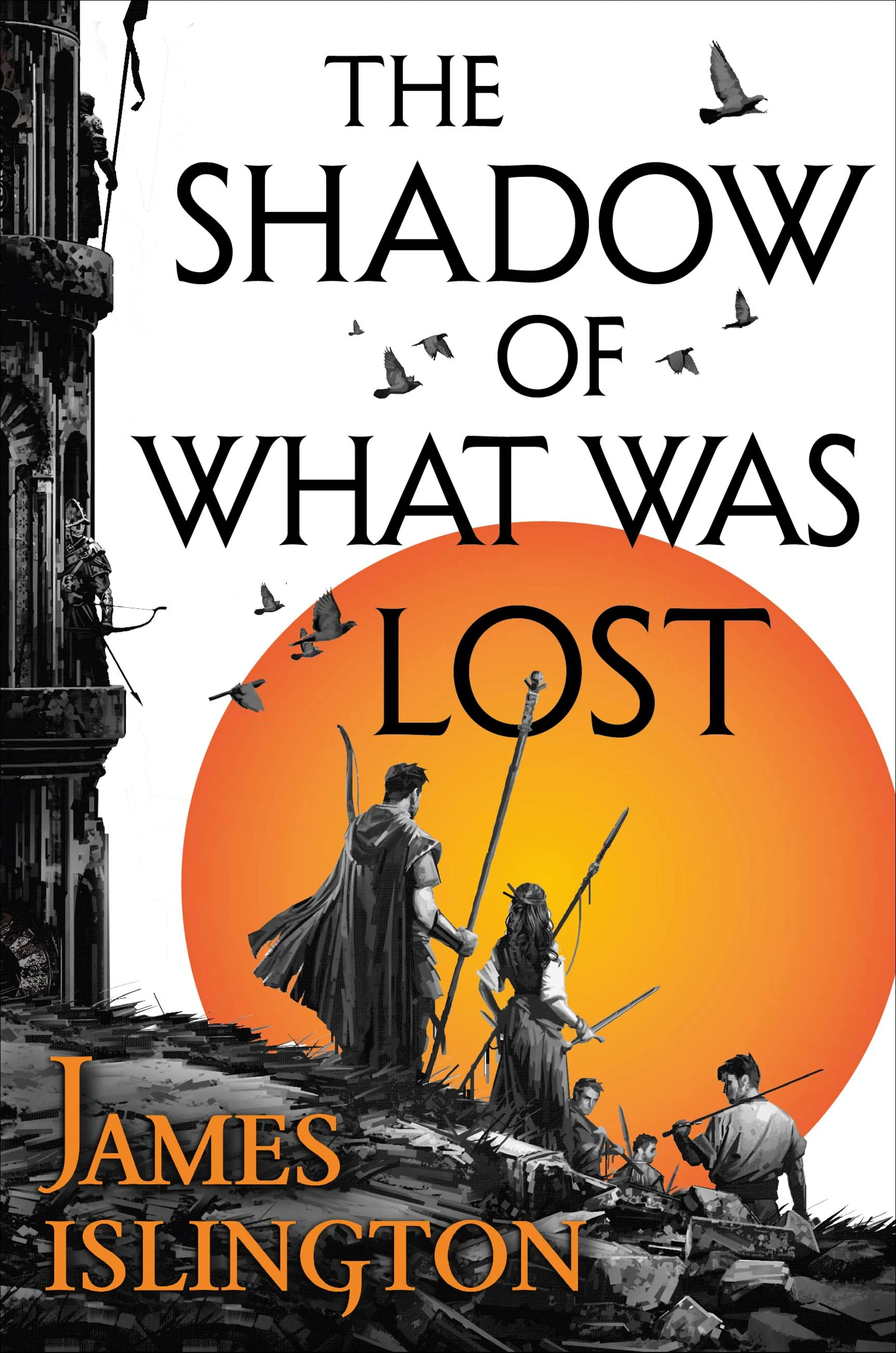
Alright, fellow fantasy fanatics! Buckle up, because today we’re diving deep into a book that kicks off a truly epic trilogy: The Shadow of What Was Lost by James Islington. If you’re looking for a world to get lost in, characters to root for (and sometimes question!), and a plot that twists and turns like a nest of vipers, then my friends, you’ve come to the right place. This is book one of The Licanius Trilogy, and let me tell you, it sets one heck of a stage!
So grab your favorite beverage, settle into your comfiest reading chair, and let’s unravel the mysteries of Andarra.
Plot Synopsis: Hold Onto Your Hats, Spoilers Abound!
Okay, seriously, if you haven’t read this book yet and want to go in blind, STOP READING NOW! I’m about to spill all the beans because this is a deep dive, and we can’t appreciate the genius without getting into the nitty-gritty.
The story kicks off with a tantalizing Prologue. We meet Tal’kamar, a powerful figure, escaping his master, the ominous Aarkein Devaed. Tal’kamar reveals he knows Devaed is “false” and makes a daring escape through a Gate just as Devaed realizes Tal has used the “Waters of Renewal.” This sets a mysterious and high-stakes tone right from the get-go.
Flash forward, and we meet our main protagonist, Davian. He’s a young Gifted (magic-user) at a school in Caladel, but there’s a catch: ever since a traumatic incident three years prior that left him with a distinctive scar, he hasn’t been able to use his powers (Essence). The Trials are looming—a test all Gifted must pass or be stripped of their abilities and become Shadows, marked and ostracized. We witness this grim fate firsthand when a fellow student, Leehim, is caught trying to flee and is forcibly made a Shadow. Davian’s fear is palpable, especially as he has a secret ability: he can see when people are lying, manifested as black smoke escaping their mouths. His best friend, Wirr, knows this secret and warns him to keep it hidden, as it’s dangerously close to what the feared Augurs could do.
Things escalate when Elder Ilseth Tenvar from Tol Athian (the main Gifted stronghold) arrives, announcing the Trials have been moved up to the very next day! Davian is understandably panicked. That night, Ilseth secretly approaches Davian, revealing he knows Davian is an Augur. He speaks of a weakening Boundary in the north that once held back Aarkein Devaed and his monstrous creatures. Ilseth gives Davian a mysterious bronze box, a Vessel, claiming it will guide him north to others who can help him train and repair the Boundary. He urges Davian to flee immediately. Wirr, ever loyal, insists on accompanying Davian, and they escape Caladel under the cover of darkness.
Meanwhile, back at the school, Asha, another of Davian’s close friends, wakes to a horrific massacre. Everyone—students, Elders, even Administrator Talean—has been brutally murdered. Quira, her roommate, is one of the first victims she finds. As Asha stumbles through the carnage, she encounters Ilseth Tenvar and his two companions, Elders Kasperan and Kien (the woman from the Prologue, though Asha doesn’t know this). Ilseth, using the chaos and Asha’s grief over finding Davian’s room (supposedly) also bloodied, manipulates her into believing she begged to become a Shadow to escape the trauma. He performs the ritual, and Asha loses her memories of the event, waking up on a horse en route to Tol Athian.
Davian and Wirr’s journey north is fraught with peril. They learn that wearing makeup to hide their Gifted Marks is essential. In Talmiel, a border town, they narrowly escape a Hunter (Breshada, who seems to have a mysterious debt to a “Tal’kamar”) thanks to a smuggler named Anaar. Anaar helps them cross the river Devliss into Desriel, a country that executes Gifted. Once across, Anaar betrays them, but Davian cleverly negotiates, though he suspects he might have unknowingly used an Augur ability to make Anaar forget about the bronze Vessel. In Desriel, to earn money, Wirr convinces Davian to play Geshett (a card game) with some Hunters. Davian’s lie-seeing ability makes him a natural. The game turns ugly when one Hunter, Gorron, bets his sword, “Slayer.” When Davian calls his bluff, Gorron attacks, and Davian, in self-defense, accidentally kills him with Slayer. Shaken, they flee. Davian also notices the bronze box sometimes glows, showing a wolf symbol, and starts to suspect it’s a Wayfinder.
Asha arrives at Tol Athian and is told the official story: the school was attacked, and she’s the sole survivor who begged to become a Shadow. She’s assigned to work in the library. She meets Jin, a leading Shadow, who shows her the Sanctuary, an underground haven for Shadows led by the enigmatic Shadraehin (whose real name is Scyner). In the Sanctuary, Asha witnesses the Watcher (Aelrith, one of the sha’teth, though she doesn’t know this) murder Jin and is warned that her presence “marks the beginning.”
Davian and Wirr, following the Wayfinder (the bronze box), are led to a Desrielite military camp. They discover the box is pointing to a prisoner in a wagon—a young man named Caeden. They rescue him, but are immediately set upon by soldiers. Wirr unleashes a powerful blast of Essence, but it’s ineffective against a Trap. Just as they’re about to be overwhelmed, the Watcher (Aelrith, the same creature from the prologue who attacked Tal, and who Asha saw kill Jin) appears, slaughtering the soldiers. It speaks in Darecian and is about to attack the boys when another powerful blast of light drives it away. This blast, Wirr reveals, came from Caeden, whose Shackle had fallen off. Before they can escape, they are captured by a scarred man who is revealed to be Taeris Sarr—the Elder who saved Davian three years ago and was supposedly executed.
Taeris reveals that Ilseth Tenvar lied: there are no sig’nari in Desriel. Caeden has amnesia but possesses the same wolf tattoo as the Wayfinder and, crucially, no Gifted Mark, meaning the Tenets don’t bind him. Taeris believes the Boundary is failing and that Caeden is key. While they’re holed up in an inn, Aelrith attacks again. Taeris tries to command it (revealing his past connection to the sha’teth), but it disobeys. Caeden, in a moment of quick thinking, slaps a Shackle on Aelrith, killing it. They flee the inn just as Gil’shar soldiers arrive.
Taeris reveals the sha’teth are assassins from Tol Athian and that Wirr has a “Trace” on him. Wirr refuses to explain why. Taeris plans to take them to Thrindar to seek aid from the Andarran royal delegation during the Song of Swords festival, hoping to get Caeden to Tol Athian to restore his memories. He shows them a dar’gaithin scale as proof of the northern threat. In Thrindar, they meet Princess Karaliene Andras. In a shocking reveal, Karaliene recognizes Wirr, calling him “Torin”—Wirr is actually Prince Torin Andras, the Northwarden’s son! Karaliene informs Wirr of the Caladel massacre. Wirr is devastated. Karaliene agrees to help them get back to Andarra but refuses asylum for Caeden initially. Wirr forces her hand by threatening to reveal his identity. Karaliene arranges for Aelric Shainwiere (a famed swordsman who threw the final match of the Song of Swords for political reasons) and his sister Dezia to escort them. Wirr finally tells Davian his true identity.
Meanwhile, Asha, now working as a Scribe for Duke Elocien Andras (the Northwarden, Wirr’s father) and his secret group of young Augurs (Erran, Fessi, Kol), learns the truth about Wirr. Elocien is trying to protect the Augurs and find a way to use their abilities for Andarra’s good. Asha also learns that Shadows can use Vessels if they have a residual Reserve. Scyner (the Shadraehin) kidnaps Asha, demanding information about the Northwarden. The Augurs rescue her; Kol brutally deals with the kidnappers. Later, Scyner sends Asha the severed heads of her kidnappers with an apology. Asha realizes Scyner knew she’d be bringing them a deal about Shadows using Vessels.
Davian, feeling Taeris is hiding something, confronts him. Taeris confesses the truth about Davian’s past: Taeris didn’t kill those men three years ago; Davian did, unconsciously using a powerful, uncontrolled Augur ability to make them kill themselves and each other after they tortured him. Taeris took the blame to protect Davian. Davian is horrified and shattered by this revelation.
The group (Davian, Wirr, Taeris, Caeden, Aelric, Dezia) heads for Tol Athian. On the way, they are attacked by another sha’teth. Caeden, to everyone’s surprise, unleashes immense power, creating shields and destroying the sha’teth. Taeris realizes Caeden is also an Augur. At Tol Athian, the Council, led by Nashrel and a skeptical Haemish, refuses to help Caeden, fearing his Markless nature and the accusations against him. They also confiscate Davian’s Wayfinder box and a black stone Taeris found (a dar’gaithin scale). Davian, visiting Ilseth Tenvar in his cell, uses his newfound Reading ability (learned from Malshash, see below) to uncover Ilseth’s memories: Ilseth was ordered by a Venerate (one of Devaed’s elite) to give Davian the Portal Box to send him north to Caeden. The Venerate needed Davian to deliver the box to Caeden, who was a key to Devaed’s plans. Ilseth’s memories reveal the box is a Portal Box. Davian is horrified and realizes Caeden using the box is playing into Devaed’s hands.
Davian is accidentally transported 70 years into the past via a rift in Deilannis (a cursed, mist-shrouded city). He meets Malshash, an ancient Augur who has been waiting for him. Malshash reveals Davian is “dead”—he produces no Essence of his own and unconsciously draws it from his surroundings using kan (a power distinct from Essence). This is why he survived the time rift. Malshash trains Davian in Augur abilities (Reading, shape-shifting, time manipulation). Davian learns the bronze box is a Portal Box and the ring Malshash used to draw him to the past will be important to Davian in the future. Malshash sends Davian back to his own time, linked to the Portal Box.
The Blind invade Andarra. The king, Kevran Andras, is acting erratically, refusing to let the Gifted fight. Asha realizes the King is being Controlled (likely by Dras Lothlar of Tol Shen using a Vessel). The Andarran army is decimated. Wirr’s father, Duke Elocien, is killed by an Echo (a possessed soldier) while protecting Wirr. With his dying breath, Elocien makes Wirr promise to change the Tenets. Wirr, with Davian’s help (as Davian now has no Mark and can use Essence externally), uses the Vessel in Tol Athian to change the Tenets, allowing Gifted to fight in self-defense and to protect Andarra. The change breaks the King’s Control.
Caeden, drawn by the Portal Box, arrives in Res Kartha, a fiery underground realm of the Lyth. He meets Garadis, Guardian of Licanius (the sword on the pillar). Garadis reveals Caeden is Tal’kamar, an ancient being who has lost his memories. Caeden takes Licanius, which binds him to free the Lyth from Res Kartha within a year and a day. Garadis restores some of Caeden’s combat knowledge and opens a portal back to Ilin Illan.
Caeden arrives just as the Blind are about to overwhelm the Andarran defenders at the palace. He unleashes the power of Licanius, slaughtering the Blind army. Their special armor offers no protection. Caeden reveals to Davian and Wirr, “He is coming,” then uses the Portal Box to depart, stating he has a schedule to keep.
Davian, knowing Administrators will soon hunt him as an Augur, decides to go to Tol Shen with Ishelle (another young Augur working with Driscin Throll of the sig’nari, who contacted Davian earlier). Asha gives Davian the silver ring Malshash had in the past, telling him to return it when they next meet. Wirr, now Northwarden, stays to rebuild and lead. Asha also remains at the palace, now a key figure.
The Epilogue shows Caeden arriving at the Wells of Mor Aruil. Asar, the Keeper, restores Caeden’s final memories. He remembers everything: He is Tal’kamar, and he is also Aarkein Devaed. He intentionally had his memories removed and took on the form of Caeden to escape his past and infiltrate Andarra, seeking Licanius to fight the true ancient evil he was trying to stop before being corrupted himself. The “Tal’kamar” who served him (and who Ilseth remembered) was a subordinate. His quest for Licanius was part of his long-term plan. The book ends with this monumental reveal.
Whew! What a ride, right? And that’s just book ONE!
Character Analysis: The Movers and Shakers
Islington crafts some truly compelling characters here, each with their own burdens and secrets.
-
Davian: Our primary POV for much of the book. He starts as an insecure young man, terrified of his future and haunted by his past. His core traits are loyalty and a deep-seated goodness. His journey is one of reluctant heroism, thrust into situations far beyond his understanding.
- Strengths: Innate decency, sharp mind, unwavering loyalty to his friends. His Augur ability to see lies is unique and crucial. His eventual mastery of kan shows incredible potential.
- Flaws: Prone to self-doubt, initially naive about the wider world. His inability to use Essence is a huge crutch for a long time.
- Arc: From a powerless, fearful student to a time-traveling, kan-wielding Augur who has killed (albeit sometimes accidentally or defensively) and faced immense horrors. He’s hardened but retains his core goodness. The revelation of his past actions (controlling the men who attacked him) is a massive shock to him.
-
Wirr (Prince Torin Andras): Starts as Davian’s cheerful, confident, and capable best friend. He’s athletic, politically savvy, and a strong Essence user.
- Strengths: Fiercely loyal, brave, intelligent, a natural leader. His understanding of politics is a stark contrast to Davian’s naivety.
- Flaws: Can be impulsive. His secret identity creates immense internal conflict and isolates him.
- Arc: From a prince in hiding to a leader forced to confront his responsibilities. The massacre at Caladel and the death of his father force him to mature rapidly. His decision to change the Tenets is a defining moment.
-
Asha: A kind, intelligent, and resilient young woman. Her journey is perhaps the most tragic in this first book.
- Strengths: Compassionate, resourceful, strong-willed. She adapts to becoming a Shadow and later a political player with remarkable fortitude.
- Flaws: Perhaps too trusting initially (of Ilseth). The trauma she endures leaves deep scars.
- Arc: From a promising Gifted student to a Shadow, then an apprentice Representative, and finally a key player in Elocien’s secret Augur network. Her discovery about the Vessels and her dealings with the Shadraehin show her growing agency. The revelation that Davian is alive will undoubtedly reshape her path.
-
Caeden (Tal’kamar/Aarkein Devaed): The ultimate enigma. Introduced as a battered amnesiac, he’s quiet, polite, and surprisingly skilled.
- Strengths: Incredible combat prowess (both with Essence and swords), innate knowledge he can’t explain, a mysterious connection to ancient powers.
- Flaws: Amnesia makes him vulnerable and unsure. The truth of his identity is a devastating burden.
- Arc: From a helpless prisoner to the wielder of Licanius and the destroyer of the Blind army. His journey is one of rediscovering fragments of a terrifying and monumental past, culminating in the shocking revelation of his true nature.
-
Taeris Sarr: The scarred, cynical veteran. He’s a complex figure, driven by a desire to protect Andarra from the northern threat.
- Strengths: Highly skilled Gifted, knowledgeable about ancient lore and the sha’teth. His sacrifice for Davian (taking the blame) speaks volumes.
- Flaws: Can be secretive and mistrustful. His past actions (even if misunderstood) haunt him. His belief in Davian being a “chosen one” sometimes clouds his judgment.
- Arc: From a supposed traitor to a reluctant leader guiding the group. His connection to Davian is deeper and more tragic than initially revealed.
-
Ilseth Tenvar: The initial catalyst for Davian’s journey. Appears as a concerned Elder but is actually a pawn (or willing participant?) in a much larger, darker game.
- Strengths: Manipulative, able to convincingly lie (even to Davian’s ability, initially).
- Flaws: Serves a dark master, responsible for immense suffering.
- Arc: Revealed as a traitor. His motivations are tied to the Venerate and Devaed’s plans.
-
Duke Elocien Andras (The Northwarden): Wirr’s father. Initially appears as the stern creator of the Tenets, but is revealed to be secretly working to protect Augurs and Andarra.
- Strengths: Politically astute, deeply loves his son, willing to take immense risks.
- Flaws: His attempts to keep secrets and control situations sometimes backfire. His true motivations are manipulated by Erran for years.
- Arc: From a seemingly harsh authority figure to a desperate father trying to save his son and his country. His death is a major turning point.
-
Princess Karaliene Andras: Wirr’s cousin. Assertive, intelligent, and politically savvy.
- Strengths: Strong-willed, loyal to her family and country, capable leader.
- Flaws: Can be somewhat imperious, initially mistrustful.
- Arc: Grows from a princess concerned with courtly matters to a key decision-maker in a time of crisis. Her relationship with Wirr is a vital anchor.
The relationships are intricate: Davian and Wirr’s brotherhood, Davian and Asha’s burgeoning (and now tragically complicated) romance, Caeden’s mysterious connections to everyone. It’s a character-driven epic, for sure!
Thematic Resonance: What’s It All About?
Islington isn’t just throwing magic and monsters at us; there’s some real thematic meat on these bones!
- Power and Corruption: A classic fantasy theme, explored through the Gifted, the Augurs, and the Administrators. The Tenets are an attempt to control power, but power always finds a way. The potential for Augurs to be corrupted, or for their power to be misused, is a constant undercurrent. Aarkein Devaed is the ultimate example of power corrupting.
- Identity and Memory: This is HUGE. Caeden’s amnesia is central, but Davian also struggles with who he is, especially after learning about his past. Asha’s forced memory loss and subsequent regaining of it reshapes her. The book asks: Are we defined by our memories? Can we escape our past selves? What if our identity is a lie?
- Truth, Deception, and Trust: Davian’s lie-seeing ability highlights this. Characters constantly withhold information, manipulate, or outright lie. Ilseth Tenvar is a master manipulator. The bronze box itself is a deception. Trust is a rare and precious commodity.
- Fate vs. Free Will: The Augurs’ ability to See the future (and its apparent fallibility in the past) brings this to the forefront. Is the future set, or can it be changed? Malshash’s theories on time suggest a complex interplay. The Old Religion’s “Grand Design” is another facet of this.
- Sacrifice and Responsibility: Many characters make immense sacrifices. Taeris takes the blame for Davian. Wirr accepts his princely duties. Elocien sacrifices his life. Davian and Asha both bear heavy burdens of responsibility. The cost of doing what’s “right” is often steep.
- The Weight of the Past: The Unseen War, the fall of the Augurs, the ancient conflict with Aarkein Devaed—all these historical events cast long shadows over the present. Characters are constantly grappling with the consequences of past actions, both their own and those of their ancestors.
World-Building Deep Dive: Welcome to Andarra (and Beyond!)
Islington has built a rich, complex world that feels lived-in and has a deep history.
-
Geography & Nations:
- Andarra: The primary setting, a kingdom still recovering from the Unseen War. Features Ilin Illan (the capital), Caladel (school location), and Tol Athian (Gifted stronghold).
- Desriel: A northern, theocratic nation hostile to the Gifted. Thrindar is its capital.
- Narut: Another neighboring nation.
- Talan Gol: The blighted lands north of the Boundary, Aarkein Devaed’s prison.
- Deilannis: An ancient, mist-shrouded, and cursed city built by the Darecians, existing outside normal time/space due to the Jha’vett.
- Res Kartha: Fiery underground realm of the Lyth.
-
Magic Systems & Powers:
- Essence: The primary magic source for the Gifted. Drawn from an internal “Reserve,” it can be used for physical effects—healing, barriers, energy blasts. Overuse is draining.
- Kan: A rarer, more ancient power used by Augurs (and beings like Malshash and the Venerate). It’s an external force, not energy itself but something that can manipulate Essence and reality. Allows for Reading minds, Seeing the future, time manipulation, shape-shifting (though dangerous), and creating powerful shields. Davian’s unique nature allows him to use it to draw Essence from external sources.
- The Mark: A symbol (man, woman, child in a circle) that appears on Gifted when they first use Essence. Black for Gifted, red for Administrators (who choose it). Fades if a Gifted becomes a Shadow or if an Augur doesn’t use much Essence.
- Shackles: Devices that suppress a Gifted’s ability to use Essence from their Reserve.
- Traps: Devices that dissipate Essence in an area.
- Vessels: Magical artifacts, often ancient, imbued with Essence/kan to perform specific functions (e.g., Portal Box, Travel Stones, memory restoration device, Veils).
- The Tenets: Four laws binding all Gifted and Administrators in Andarra, enforced by a powerful Vessel linked to the royal bloodline. They restrict the use of Essence against non-Gifted and compel obedience to Administrators.
-
Peoples & Factions:
- Gifted: Those who can use Essence. They are feared and restricted by the Treaty and Tenets. Organized into Tols (Athian and Shen are the main surviving ones).
- Augurs: Once rulers of Andarra, they could See the future and Read minds. Their powers failed, leading to their overthrow. New Augurs (Davian, Erran, Fessi, Kol, Ishelle, Caeden) are emerging, using kan.
- Shadows: Gifted who failed their Trials or were stripped of their powers. Marked by black veins on their faces. Ostracized but can sometimes use Vessels. The Shadraehin leads a hidden community.
- Administrators: Enforcers of the Treaty. Many hate the Gifted. Headed by the Northwarden.
- Darecians: An ancient, powerful race that built Deilannis and created many Vessels. Long gone.
- The Lyth: Fiery beings like Garadis, guardians of Licanius in Res Kartha.
- The Venerate: Devaed’s elite, powerful kan-users. The one who instructed Ilseth.
- Sha’teth: Assassins/trackers created by Tol Athian, now seemingly rogue. Immune to many forms of Essence attack and can become invisible. The Watcher (Aelrith) was one.
- The Blind: The invading army from the north. Their armor makes them supernaturally fast/strong and resistant to Essence. Their helmets are eyeless.
- Echoes: People whose minds are gone, their bodies controlled by an external force (likely the Blind).
- Hunters/Seekers: Mercenaries who hunt Gifted for bounties (often illegally).
-
History & Lore:
- The Eternity War: Ancient conflict where Aarkein Devaed and his monstrous armies (dar’gaithin, eletai, etc.) were sealed behind the Boundary by the Augurs.
- The Unseen War: Fifteen years prior to the book’s start. The Augurs’ powers failed, leading to their overthrow by the Loyalists (led by King Andras’s father and Vardin Shal). This war led to the Treaty and the Tenets.
- The Boundary: A massive barrier of Essence in the north, now weakening.
- Licanius: An ancient, powerful sword. Its name means “Fate.”
- The Jha’vett: The device in Deilannis that allows travel through/outside of time.
- The Old Religion: Worshipped El and the Grand Design. Faded after the Augurs’ fall.
The world feels vast and ancient, with layers of history impacting every aspect of the present story. The interplay between Essence and kan is particularly fascinating and well-thought-out.
Genre Context & Comparisons: Finding Its Place
The Shadow of What Was Lost firmly plants itself in the epic/high fantasy subgenre. It’s got all the hallmarks: a sprawling world, a detailed magic system, ancient evils, young protagonists coming into immense power, and a conflict with world-shattering stakes.
- Comparisons to Sanderson: Islington’s meticulous magic systems (Essence and kan, the Tenets, Vessels) and intricate plotting definitely bring Brandon Sanderson to mind, particularly Mistborn or The Stormlight Archive. There’s that same feeling of rules-based magic and revelations that recontextualize earlier events. Davian’s initial inability with Essence despite his Augur nature reminds me a bit of Vin initially struggling with Allomancy.
- Echoes of Jordan: The sheer scope, the large cast of characters with distinct POVs (though more focused in book 1), and the theme of ancient prophecies and returning evils have a Robert Jordan (The Wheel of Time) vibe. The “Chosen One” aspect with Davian (and later Caeden) also resonates, though Islington plays with these tropes in interesting ways.
- “School for Magic Users” Trope: The initial setting at Caladel touches on this, a la Harry Potter or The Name of the Wind, but the story quickly expands far beyond it. The school serves more as a crucible for Davian’s early struggles and the introduction to the harsh realities of being Gifted.
- Originality: While it uses familiar epic fantasy building blocks, Islington weaves them together with fresh twists. The concept of Augurs being distinct from regular Gifted, the mechanics of kan, the political ramifications of the Tenets, and the truly shocking reveal about Caeden’s identity give it a unique flavor. The way memory and identity are explored feels particularly distinctive.
It’s a book that feels both familiar and new, which is a sweet spot for many fantasy readers. It respects the genre’s traditions while carving out its own identity.
Influences & Inspirations: Whispers from Beyond the Page
While it’s always speculative, we can see some potential influences:
- Classic Epic Fantasy: The DNA of Tolkien, Jordan, and Eddings is present in the world-spanning conflict and the good vs. evil struggle (though “good” and “evil” are more nuanced here).
- Philosophical Explorations of Identity: The focus on memory, amnesia, and the mutability of self could draw from philosophical ideas about personal identity. What makes you you? Is it your past, your actions, or something more intrinsic?
- Mythology and Ancient History: The Darecians feel like a “lost advanced civilization” trope, akin to Atlantis or a Rome-like fallen empire, whose relics (Vessels, Deilannis) still impact the world. The names “Aarkein Devaed” and “Tal’kamar” have an ancient, almost mythological ring to them.
- Political Thrillers: The machinations within Tol Athian, the Administrators, and the royal court, especially concerning the Tenets and the succession of power, have elements of political intrigue.
Islington seems to have absorbed a wide range of fantasy traditions and then put his own unique spin on them, particularly with the dual magic systems and the intricate plot reveals.
Key Takeaways
- Magic is Layered & Consequential: Essence for the Gifted, Kan for Augurs – distinct powers with their own rules and societal impacts. The Tenets are a brilliant source of conflict.
- Identity is Fluid & Fragile: Amnesia, hidden pasts, and manipulated memories are central. Who you think you are might not be the whole truth.
- Secrets Drive the Narrative: Almost every character has a secret, and their gradual uncovering fuels the plot’s major twists.
- The Past is Never Dead: Ancient evils, forgotten wars, and lost knowledge profoundly shape the present.
- Expect the Unexpected: Islington is a master of the long-game reveal. What you think you know at the beginning of the book will be turned on its head by the end. That Caeden reveal is a jaw-dropper!
Wrapping It Up
Phew! What a book! The Shadow of What Was Lost is a stunning debut to an epic fantasy series. It’s got that perfect blend of intricate world-building, compelling characters on difficult journeys, and a plot that keeps you guessing until the very last page (and even then, leaves you desperate for more!).
Islington isn’t afraid to go dark, to make his characters suffer, and to challenge genre conventions. The magic system is fresh and fascinating, the political landscape is complex, and the historical lore feels incredibly deep. If you’re a fan of authors like Brandon Sanderson or Robert Jordan, but are looking for a new voice with a unique take on epic fantasy, then you absolutely need to pick this up.
It’s a commitment, sure—this is a chunky book, and it’s only the beginning—but trust me, it’s a journey well worth embarking on. The shadows of the past are long and terrifying, but the promise of what’s to come is utterly captivating. Highly, highly recommended! Get ready to lose some sleep!