Ship of Destiny
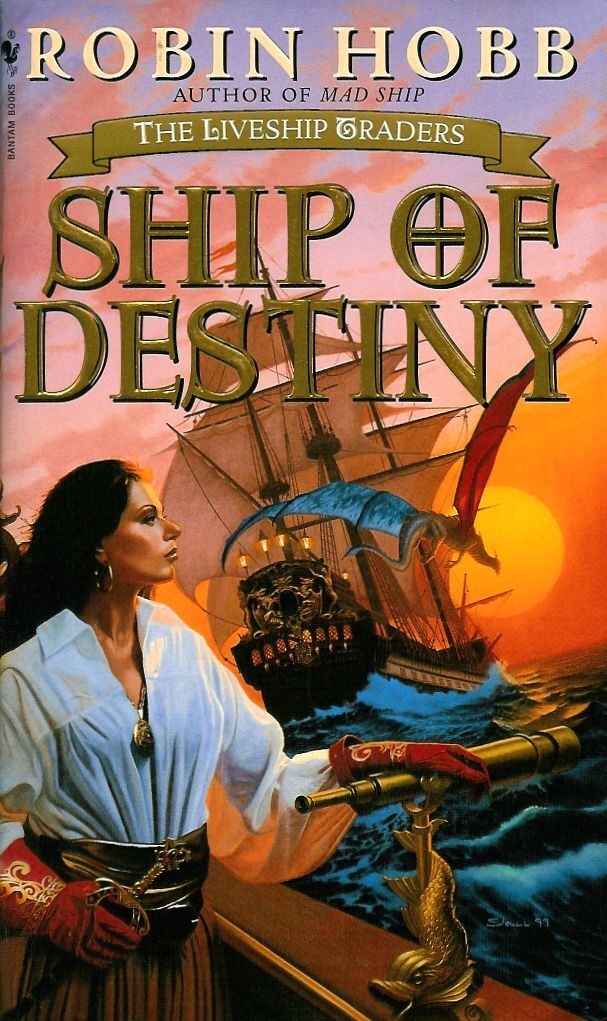
Alright, buckle up, fantasy fanatics! Your resident loremaster is back, and today we’re diving headfirst into the Maelstrom – I mean, the epic conclusion to Robin Hobb’s Liveship Traders Trilogy, Ship of Destiny. If you thought the first two books were a wild ride, hoo boy, this one cranks the ancient magic, political backstabbing, and good old-fashioned sea-serpent chaos up to eleven. So grab your grog, settle in, and let’s unpack this absolute behemoth of a book. Full spoilers ahead, folks – you’ve been warned! 🐉
Plot Synopsis: The Whole Enchilada, Spoilers and All!
Okay, where do we even begin with this sprawling epic? “Ship of Destiny” picks up with our myriad of characters scattered and in dire straits, and Hobb masterfully weaves their threads together towards a truly mind-blowing convergence.
-
She Who Remembers, the Ancient Serpent:
- Our story kicks off with a deep dive into the psyche of She Who Remembers, one of the last sea serpents holding the full memory of her kind. She’s ancient, burdened, and was imprisoned by the “Abominations” (later revealed to be Others from the Treasure Beach) for centuries, her memories milked for prophecy.
- Freed by Wintrow Vestrit (more on him later), she’s now following the liveship Paragon, sensing a kinship she can’t quite understand. It smells like… a serpent. This is a huge clue, people!
- She encounters a crazed white serpent, awakens his ancestral memories with her potent venom, only for him to despair at what their race has lost. This white serpent, later called Carrion, becomes a reluctant, nihilistic guide.
-
Malta, the Satrap, and the Perilous River:
- Meanwhile, Malta Vestrit, the once-spoiled brat who’s been through the wringer, is trying to navigate the acidic Rain Wild River in a decomposing boat with the foppish Satrap Cosgo and his terrified Companion, Kekki. They’ve just escaped the collapsing Elderling city.
- Their journey is a nightmare of bickering, thirst, and the constant threat of the river itself devouring their boat. They’re eventually swept past the tree-city of Trehaug, their cries for help unheard.
- Later, starving and desperate, they’re “rescued” by a Chalcedean war galley. Kekki, weakened by drinking river water, dies. Malta, showing incredible resilience and cunning, manages to bluff and manipulate their Chalcedean captors, using the Satrap’s (inflated) status to secure slightly better treatment. She eventually negotiates their transfer to a larger Chalcedean ship, still pretending to be the Satrap’s loyal servant and advisor while subtly trying to improve their lot. She even gets the Satrap to make a ridiculous wager with her about his own survival, aiming to secure her family’s future.
-
Trehaug’s Troubles and the Dragon’s Emergence:
- Back in Trehaug, Keffria Vestrit is consumed by grief and uncertainty. Her younger children, Malta and Selden, are missing after the earthquake that devastated the buried Elderling city. Reyn Khuprus, Malta’s betrothed, has also vanished into the ruins.
- The city is in turmoil, struggling with rescue efforts. Then, news arrives – a massive blue dragon, Tintaglia, has been sighted! This is the dragon Reyn had long believed in.
- Reyn and young Selden are revealed to have been trapped in the Crowned Rooster chamber within the Elderling city. They witnessed Tintaglia’s fiery emergence from her wizardwood cocoon. Tintaglia, initially reluctant, rescues them and flies them back to Trehaug, causing a massive stir.
-
Bingtown’s Turmoil: Ronica and Serilla:
- In Bingtown, Ronica Vestrit navigates a city shattered by riots and Chalcedean aggression. She learns from Cerwin Trell about the political chaos, the branding of her family as traitors, and the fear gripping the Old Traders.
- Determined, Ronica confronts Companion Serilla, who has seized Davad Restart’s estate and is trying to rule Bingtown in the Satrap’s name. Serilla, initially arrogant, is shaken by Ronica’s accusations and her knowledge of Bingtown law.
- Roed Caern, a ruthless young Trader, becomes Serilla’s strong arm, further destabilizing the city. News arrives of the Satrap’s (and Kekki’s) disappearance after the Trehaug quake. Roed plots to use this to consolidate power, even suggesting marriage to Serilla and using Ronica as a hostage. Serilla, terrified but finding a sliver of courage, subtly warns Ronica, who flees.
-
The Liveship Paragon: Althea and Brashen:
- Althea and Brashen, finally sailing together on the liveship Paragon, head towards the Pirate Isles to rescue Vivacia. Their crew is a mix of hired sailors and former slaves.
- The first mate, Lavoy, is a brutal disciplinarian, causing tension. Paragon himself is becoming increasingly erratic and bloodthirsty, influenced by Lavoy and his own dark past.
- They are attacked by pirates. The battle is chaotic. Paragon displays terrifying strength, killing a prisoner. Lavoy, along with many of the former slaves, mutinies and deserts during the fight. Brashen is stabbed by Lavoy but survives. This marks a turning point for Paragon, who begins to reclaim some sanity with Amber’s help.
-
The Liveship Vivacia: Kennit, Wintrow, and Bolt:
- Aboard the Vivacia, captained by the pirate Kennit, Wintrow is recovering from sea serpent venom burns. Etta cares for him, while wrestling with her own awe and fear of Kennit, who displayed god-like powers calming a storm and commanding a serpent.
- Wintrow finally confronts the truth about Vivacia: she’s not just a sentient ship, but animated by the stolen life-force and memories of a dragon, encased in wizardwood (the dragon’s cocoon).
- This revelation shatters Vivacia. She attempts a sort of spiritual suicide, wanting to reject her false existence. But the dragon spirit within her, now calling herself Bolt, refuses to die and seizes control of the figurehead. Bolt is fierce, powerful, and deeply connected to her dragon nature.
- Kennit, devastated by the loss of “his” Vivacia, strikes a bargain with Bolt: he will aid her, and she will serve him as his pirate ship. She demands a high price – his service for a long period when she guides the serpents north. The arrival of She Who Remembers and her serpent tangle further complicates things; Bolt commands them, but their loyalty is strained.
-
Tintaglia’s Quest and Bargain:
- Tintaglia, after leaving Trehaug, searches for other dragons. She finds only Kelsingra in ruins and evidence of her race’s demise. She encounters a dying serpent and learns the truth: the Rain Wild River has changed, the cocooning grounds are inaccessible.
- Driven by the need to save her species, she returns to Bingtown, now under Chalcedean attack. She unleashes her fury on the Chalcedean fleet.
- Young Selden Vestrit, who has a strange connection to her, sings her praises and convinces her to aid Bingtown. Reyn, now knowing Malta is alive (Tintaglia “showed” him through a mental link), bargains with Tintaglia: he will help her find a way for dragons to survive (possibly by finding other buried Elderling cities with cocoons) if she helps rescue Malta. Tintaglia agrees.
- A grand council is held in the ruined Bingtown Concourse. Representatives from Old Traders (Ronica, Keffria, Devouchet), New Traders (Mingsley), Three Ships (Sparse Kelter), the Tattooed (Dujia), Rain Wilders (Jani, Reyn), and even Serilla (representing Jamaillia, however tenuously) forge a new, fragile alliance. They agree to help Tintaglia dredge the Rain Wild River to make the cocooning grounds accessible in exchange for her protection.
-
The Race for Malta and the Convergence:
- Tintaglia and Reyn set off to find Malta. Reyn, through his growing connection with Tintaglia and his own latent Elderling senses, “dreamwalks” and locates Malta on a Chalcedean ship bound for Jamaillia.
- Meanwhile, Althea and Brashen, aboard the repaired Paragon (whose face Amber is re-carving, awakening the dormant dragon spirits within him), learn Kennit’s mother is alive on Key Island. Their plan: kidnap her and use her as a bargaining chip for Vivacia and Althea’s father, Kyle Haven (who, they discover, Kennit had also imprisoned on Key Island).
- Kennit, aboard Vivacia/Bolt, receives word of Paragon’s survival and Althea’s mission. He also learns of a Jamaillian fleet sailing to “punish” Bingtown for the Satrap’s (presumed) death.
- The paths converge. Paragon, guided by Kennit’s mother and a newly assertive dragon-self, intercepts the Jamaillian ship carrying the Satrap and Malta. Vivacia, under Wintrow’s command after Kennit is taken, also joins the fray.
- A massive sea battle erupts.
- Kennit boards the Jamaillian ship to rescue the Satrap (and Malta), but is mortally wounded.
- Paragon, now fully awakened with his dragon memories and a new, fierce personality (a composite of his old self and the two dragons within), arrives. Vivacia/Bolt places the dying Kennit into Paragon’s arms.
- Kennit dies, and his anma (life-force/memories) is absorbed by Paragon, finally making Paragon whole and healing much of his madness. Kennit’s mother and Etta mourn him.
- Althea is thrown/flies from Vivacia to Paragon and is reunited with Brashen.
- Kyle Haven is killed during the fighting on Paragon.
- Reyn, dropped by Tintaglia into the battle, is wounded but reunited with Malta.
- The Satrap is “rescued.” Wintrow, displaying unexpected leadership, forges a new treaty between the (now leaderless) Pirate Isles, the Satrap, and the Jamaillian nobles (who were mostly traitors anyway and are now Wintrow’s hostages). Etta, pregnant with Kennit’s child (a boy to be named Paragon), is declared Queen of the Pirate Isles, with Wintrow as her regent/commander.
-
Resolutions and New Beginnings:
- Tintaglia, with the liveships Paragon and Vivacia (captained by Althea and Brashen, and Wintrow/Malta/Reyn respectively, though Wintrow will soon leave Vivacia for the Pirate Isles), leads the remaining sea serpents up the now-dredged Rain Wild River.
- Many serpents die, but a number successfully cocoon. Tintaglia begins her vigil.
- In Bingtown, a new, more inclusive Council is formed. Serilla, stripped of power by the Satrap, is offered a role as an advisor by Keffria and Ronica, using her knowledge of Jamaillian politics to Bingtown’s benefit.
- Malta and Reyn, deeply in love and both showing signs of Elderling/Rain Wild transformation (scaling, changed eyes), prepare for their wedding and their future in the Rain Wilds, tied to the fate of the dragons. Selden, also changing, becomes a key link to Tintaglia.
- Althea and Brashen, finally together, face an uncertain future with the now-whole (but still complex) Paragon. Amber, her mysterious purpose seemingly tied to Paragon’s transformation, prepares to depart.
- Wintrow and Etta head to the Pirate Isles to build Kennit’s kingdom.
- The epilogue shows Shreever, one of the serpents, within her cocoon, dreaming of metamorphosis. The age of dragons is poised to return.
Phew! See? I told you it was an epic. Hobb leaves no stone unturned, no character arc incomplete. It’s a whirlwind, but a deeply satisfying one.
Character Analysis: The People (and Ships) Who Make It Real
Hobb is a master of character, and “Ship of Destiny” is a showcase.
- Malta Vestrit: Her transformation is stunning. From a selfish, vain girl, she’s forged by hardship into a shrewd, resilient, and surprisingly compassionate young woman. Her journey from near-death on the Rain Wild River to a political negotiator using her wits to survive Chalcedean captivity and then leveraging the Satrap is phenomenal. Her love for Reyn, and his acceptance of her changed self (scar and all, which he sees as a mark of her Elderling heritage!), is a beautiful, hard-won romance.
- Key Relationship: Her dynamic with the Satrap Cosgo evolves from contempt to a strange sort of protective responsibility. Her reunion with Reyn is the emotional core of her arc.
- Wintrow Vestrit: The priest-boy forced into piracy finds his true calling not in Sa, but in leadership and a pragmatic morality. His initial idealism is shattered, but he rebuilds himself into someone capable of commanding a fleet and forging treaties. His complex relationships with Kennit (father figure/mentor/captor) and Etta (friend/confidante/unspoken love?) are central to his growth.
- Key Arc: Accepting that his destiny lies outside the monastery, and embracing his capacity for decisive action and leadership.
- Althea Vestrit: Her quest for Vivacia becomes a quest for self. She proves herself a capable sailor and officer, but her deepest struggles are internal – her relationship with Brashen, her bond with Vivacia, and overcoming her past traumas (Kennit’s rape is a brutal, defining moment). Her eventual reunion with Brashen feels earned.
- Key Arc: Moving from defining herself by Vivacia to finding her own strength and a partnership with Brashen. Her healing from trauma is a quiet but powerful thread.
- Brashen Trell: The disowned son finds redemption and purpose as Paragon’s captain. His love for Althea is a driving force, but he also grapples with the responsibilities of command and the madness of his ship. He’s a solid, decent man in a world of moral grays.
- Key Relationship: His partnership with Althea is the bedrock of his later arc. His evolving understanding and acceptance of Paragon are crucial.
- Kennit: Oh, Kennit. The charismatic pirate king. Charmer, manipulator, visionary, deeply traumatized soul. His desire for a kingdom is intertwined with his desperate need for control and his fear of his own past (especially his connection to Paragon). His relationships with Vivacia/Bolt, Etta, and Wintrow are all facets of his complex psyche. His death is both tragic and, in a way, a release, especially as his anma merges with Paragon.
- Key Flaw: His inability to escape his past trauma, which ultimately drives his actions and shapes his “kingdom.”
- The Liveships:
- Vivacia/Bolt: Her journey is one of identity crisis. The shock of her true origin (a dragon’s cocoon) leads to the emergence of Bolt, her more primal dragon-self. Her eventual integration into a new, whole Vivacia, one that acknowledges both her human-given identity and her dragon core, is fascinating. Her bond with Kennit is intense and possessive, a dark reflection of a liveship bond.
- Paragon: The “mad” ship. His story is one of deep trauma, betrayal (by Kennit, from his perspective), and a desperate longing for wholeness. Amber’s re-carving of his face and the absorption of Kennit’s anma finally bring him a measure of peace and a new, more integrated identity. He’s no longer just the sum of Ludluck memories or battling dragons; he becomes Paragon.
- Tintaglia: The last (known) dragon. Regal, arrogant, powerful, but also burdened by the fate of her species. Her interactions with humans, particularly Reyn and Selden, force her to compromise and bargain, something alien to her nature.
- Reyn Khuprus: His transformation from a somewhat sheltered Rain Wilder into a key player in the world’s destiny is compelling. His love for Malta drives him, but his connection to Tintaglia and the Elderling past gives him a unique destiny. The physical changes he undergoes are outward signs of his deepening connection to the ancient magic.
- Ronica and Keffria Vestrit: Mother and daughter, representing the resilience of Bingtown. Ronica’s unwavering fight for justice and Keffria’s growth into a leader show the strength of the Trader women.
- Selden Vestrit: The boy who sees dragons. His innocent courage and strange connection to Tintaglia make him a pivotal, if small, character. He is the future link between humans and dragons.
- Etta: More than just Kennit’s woman. She’s a survivor, intelligent and resourceful. Her pregnancy and her eventual role as Queen of the Pirate Isles show her own strength and destiny unfolding.
- Amber: The enigmatic carpenter. Her role is clearly more than it seems. She’s a catalyst, a healer of ships and perhaps souls. Her pronouncements are often prophetic. Her connection to Paragon is deep and mysterious.
Thematic Resonance: What Hobb Is Really Saying 🧐
“Ship of Destiny” isn’t just about pirates and dragons; it’s juggling some seriously hefty themes:
- Identity and Transformation: This is HUGE. Malta’s growth from spoiled child to formidable woman, Wintrow’s journey from priest to pirate leader, the liveships grappling with their dragon origins – everyone and everything is in flux. The book asks: are we defined by our past, our choices, or what others make of us? Can we truly change who we are?
- Highlight: Paragon’s transformation is perhaps the most literal, from a “mad” ship of painful memories to a new, integrated being.
- Memory, History, and Legacy: The weight of the past is a constant presence. She Who Remembers carries the entire history of her race. Liveships are literally built from the memories of dead dragons. Characters are haunted by their personal histories. The theme explores how memory shapes us, burdens us, and how new legacies are forged.
- Highlight: The concept of wizardwood itself – a vessel of memory that can quicken into a new form of life.
- The Nature of Freedom: What does it mean to be free? The slaves fight for physical freedom. Kennit seeks freedom from his past. The liveships yearn for agency. Tintaglia fights for the freedom of her species to exist.
- Highlight: The serpents’ desperate, instinctual drive to reach the cocooning grounds and complete their life cycle, a biological imperative for a freedom they barely understand.
- Power: Its Use and Abuse: We see power in many forms – political (Satrap, Serilla), military (Chalcedeans, Kennit), magical (Tintaglia), and personal. The novel examines how power is acquired, wielded, and how it corrupts or ennobles.
- Highlight: Kennit’s rise and the methods he uses, versus the Satrap’s inherited but often misused authority.
- Trauma, Healing, and Redemption: So many characters are dealing with deep wounds. Kennit’s childhood, Althea’s rape, Paragon’s tortured existence. The narrative explores whether healing is possible and if redemption can be found, even for those who have done terrible things.
- Highlight: Althea’s journey post-rape, and Paragon’s eventual finding of peace through integration.
- Connection and Interdependence: No man (or ship, or dragon) is an island. The bonds between families (Vestrit, Khuprus, Trell), between captains and ships, between humans and the ancient world, are all explored. The book emphasizes that survival and growth often depend on these connections.
- Highlight: The final alliances forged between Bingtown, the Rain Wilds, and even the Pirate Isles, showcase this theme.
World-Building Deep Dive: The Canvas of an Epic 🌎
Hobb’s world-building is, as always, top-notch and deeply immersive.
- Geography and Its Impact:
- The Rain Wilds: A toxic, transformative environment. The acidic river is a major obstacle and a source of unique resources. The ancient Elderling cities buried here are key to the plot.
- Bingtown: A bustling port city, the heart of the Trader culture, now fractured by internal strife and external threats. Its reliance on liveships and the Rain Wild trade is central.
- The Pirate Isles: A lawless archipelago, dangerous but also a place of refuge and burgeoning power under Kennit. Divvytown and Key Island are key locations.
- The Cursed Shores: The broader coastal region, aptly named, full of peril and strange magic.
- Jamaillia and Chalced: The larger political powers, representing decadence/corruption (Jamaillia) and militaristic cruelty (Chalced).
- Magical Systems & Unique Beings:
- Liveships: The star of the show! Created from the wizardwood cocoons of dragons, these ships “quicken” after three generations of a family have died on their decks, absorbing their memories and becoming sentient. They are deeply bonded to their families.
- Key Detail: The figureheads are their “faces” and primary means of interaction.
- Dragons and Serpents: Their complex life cycle is slowly revealed: sea serpents migrate to the Rain Wild River, ingest magical mud, and cocoon themselves in wizardwood. If undisturbed, they emerge as dragons.
- Key Detail: Their memories are incredibly long and passed down through generations. They have a deep, almost symbiotic relationship with the Elderlings.
- Elderlings: The ancient, graceful race allied with dragons. They built magnificent cities and possessed advanced knowledge. Rain Wilders are their distant, changed descendants.
- Key Detail: Their “memory stone” architecture and the concept of dream-walking hint at their unique abilities.
- Wizardwood: The cocoon-stuff of dragons. It holds memories and is the key material for liveships. Its properties are central to the magic of this world.
- Liveships: The star of the show! Created from the wizardwood cocoons of dragons, these ships “quicken” after three generations of a family have died on their decks, absorbing their memories and becoming sentient. They are deeply bonded to their families.
- Social and Political Structures:
- Bingtown Traders: A society built on family, tradition, and maritime trade. Divided into Old Traders (with liveships) and New Traders (resentful upstarts). Their Council governs the city.
- Rain Wild Traders: Descendants of Elderlings, physically marked by the Rain Wilds. Their survival is tied to the treasures of the buried cities.
- The Satrapy of Jamaillia: A decadent and corrupt empire, ruled by a foppish Satrap, with powerful, scheming nobles.
- Chalced: A brutal, militaristic state heavily involved in the slave trade.
- Pirate Society: A loose confederation of settlements, which Kennit is attempting to forge into a unified kingdom. Based on strength, cunning, and a rejection of mainland laws.
- Slavery: A pervasive and horrific institution, particularly driven by Chalced and some New Traders. The Tattooed slaves are a significant group seeking freedom.
- The “Others” / Treasure Beach: The mysterious beings on Others’ Island who guard the Treasure Beach and offer cryptic prophecies. They are revealed to be the “Abominations” who imprisoned She Who Remembers. Their nature and true purpose remain somewhat veiled, adding to the world’s mystique.
Genre Context & Comparisons: Where “Ship of Destiny” Fits In
This book is pure epic fantasy with a strong maritime flavor.
- Epic Scale: Like the grandmasters (Tolkien, Jordan), Hobb paints on a vast canvas with multiple intersecting plotlines, a richly detailed world, and stakes that affect entire civilizations.
- Deep Characterization: This is where Hobb truly shines, reminiscent of Ursula K. Le Guin or George R.R. Martin. Her characters are flawed, complex, and undergo significant, believable development. You feel for them, even the antagonists.
- Unique Magic System: The liveship/dragon/wizardwood connection is highly original. It’s not about flinging fireballs; it’s a magic deeply intertwined with memory, biology, and emotion.
- Maritime Fantasy: Think Patrick O’Brian meets dragons. The sailing details, the life aboard ships, the dangers of the sea – it’s all incredibly well-realized. This sets it apart from many land-locked epic fantasies.
- Compared to…
- Le Guin’s Earthsea: For its thoughtful exploration of dragons and the balance of power/magic, and focus on character psychology.
- Martin’s A Song of Ice and Fire: For its political intrigue, morally ambiguous characters, and the sense that no one is truly safe. However, Hobb generally offers more hope and resolution for her protagonists.
- It avoids some common fantasy tropes while leaning into others (like the pirate king) but always with Hobb’s unique spin, making them feel fresh.
Influences & Inspirations: Educated Guesses 🧐
While only Hobb knows for sure, we can speculate a bit:
- Age of Sail Narratives: The detailed descriptions of shipboard life, trade, and naval conflict feel heavily influenced by classic maritime adventures.
- Mythology: Dragons are, of course, mythological staples, but Hobb’s take on their life cycle and connection to memory feels unique, perhaps drawing from more animistic or cyclical belief systems.
- Environmentalism (Subtle): The idea of a species (dragons/serpents) struggling for survival due to changes in their environment (the river) and past exploitation (wizardwood harvesting) has a subtle environmentalist undertone.
- Psychology of Trauma: The way characters like Kennit and Paragon are shaped by past abuse and suffering suggests an interest in the long-term effects of trauma.
Key Takeaways:
Here are some big ideas to carry away from “Ship of Destiny”:
- True identity is forged through experience and choice, not just birth or memory.
- The past is never truly dead; it shapes the present and demands reconciliation.
- Freedom is a constant struggle, both internal and external.
- Power demands responsibility, and often comes at a great personal cost.
- Healing is possible, even from the deepest wounds, but it’s a journey, not a destination.
- Interconnection is vital: individuals, families, societies, and even species are linked in a delicate web.
- Destiny isn’t a fixed point, but a confluence of choices, circumstances, and the ripples of ancient actions.
Wrapping It Up 🎁
“Ship of Destiny” is a masterclass in epic fantasy. It’s a sprawling, emotionally resonant conclusion that ties up a staggering number of plot threads while still leaving you pondering the future of its richly imagined world. The characters are unforgettable, their struggles are real, and the world Hobb has built is one you can truly lose yourself in.