The Goblin Emperor
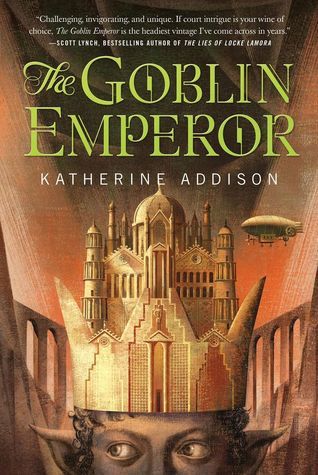
This isn’t just a review; it’s a full-blown exploration. We’re going spoiler-heavy on the plot because, honestly, the journey is that good, and understanding the twists and turns is key to appreciating its genius. So, if you haven’t read it yet, consider this your MAJOR SPOILER WARNING! Go read it, then come back and we’ll geek out together.
For everyone else, let’s get to it!
Plot Synopsis: From Exile to Emperor, With a Whole Lotta Drama
Our story kicks off with Maia, the titular (half) Goblin Emperor-to-be, living in a state of miserable, isolated exile at a rundown hunting lodge called Edonomee. He’s the youngest, least-favored, mixed-heritage son of the recently deceased Emperor Varenechibel IV. His mother, Chenelo, a goblin princess from Barizhan, was Varenechibel’s fourth wife, and let’s just say the marriage wasn’t a love match. Varenechibel pretty much loathed her and, by extension, Maia. So, Maia’s grown up under the cruel thumb of his cousin and guardian, Setheris Nelar, a bitter and abusive elf who makes Maia’s life a living hell.
- The Tragic News : Maia is abruptly woken one morning by Setheris with shocking news: the Emperor, along with his three eldest sons (Nemolis, Nazhira, and Ciris – all full-blooded elves and the expected heirs), have all perished in a catastrophic airship crash. The Wisdom of Choharo went down, leaving no survivors. Just like that, Maia, the forgotten fourth son, is the new Emperor of the Elflands. Talk about a promotion you never asked for!
- A Hasty Ascent to the Untheileneise Court : Setheris, ever the opportunist, immediately sees a chance to escape his own exile. He bullies Maia into demanding an airship to take them to the Untheileneise Court, the sprawling palace-city capital. Maia, still reeling and utterly unprepared, also has to deal with a letter from the Lord Chancellor, Uleris Chavar, which pretty much dictates the funeral arrangements without consulting him. Maia, with a surprising spark of assertion likely fueled by Setheris’s goading, decides to countermand Chavar’s plans slightly, wanting to arrange his coronation before the funeral to establish his authority.
- First Steps in a Hostile World : The Untheileneise Court is a viper’s nest. Maia is terrified, out of his depth, and looks nothing like his elvish father or half-brothers (he strongly favors his goblin mother). He’s immediately met with thinly veiled disdain and outright hostility. Chavar is a particular thorn, clearly resentful of this “hobgoblin” on the throne. Maia, however, finds an unexpected ally in Csevet Aisava, the young courier who brought the news. Csevet, initially Chavar’s man, quickly proves himself indispensable, becoming Maia’s secretary and guide through the labyrinthine court.
- Gathering a Household and Early Challenges : Maia begins to assemble his household. He inherits his father’s household steward, Echelo Esaran, who is coldly efficient but clearly mourning Varenechibel and dislikes Maia. He gets a Master of Wardrobe, Clemis Atterezh, who is refreshingly kind and practical. He also meets his nohecharei (sworn bodyguards): the stern Lieutenant Deret Beshelar, the gentle maza Cala Athmaza, the initially resentful Lieutenant Telimezh, and the maza Dazhis Athmaza.
- Maia makes an early, significant decision to attend the funeral for the crew of the Wisdom of Choharo at the humble Ulimeire, much to the shock of the court. This act of compassion, though, endears him to some.
- He also has a frosty encounter with his father’s young widow, Csoru Drazharan, who tries to assert herself as the Empress. Maia firmly puts her in her place, insisting she’s Zhasanai (empress-widow), not Zhasan (ruling empress). He also invites his father’s first wife, Arbelan Drazharan, to his coronation, a subtle power play.
- The Coronation and Whispers of Sabotage : Maia is crowned Edrehasivar VII. The ceremony is fraught with tension, but he gets through it. Shortly after, the official Witnesses investigating the airship crash deliver their report: it wasn’t an accident. The Wisdom of Choharo was sabotaged by an incendiary device. This throws the court into turmoil and sets a dark cloud over Maia’s nascent reign.
- Chavar wants to lead a grand, public investigation. Maia, distrustful, also asks Thara Celehar, a disgraced prelate and Csoru’s kinsman (whom she uses for her own ends), to conduct a private investigation. Celehar is a Witness for the Dead, able to glean information from corpses.
- Navigating Court Intrigue and Personal Relationships :
- Maia struggles with loneliness and the constant scrutiny. He tries to be kind, a stark contrast to his father, but this is often seen as weakness.
- He forms tentative connections: with his young nephew and heir, Idra (son of the deceased Nemolis), who shows surprising maturity; and his half-sister Vedero, who initially dislikes him but respects his eventual decision not to force her into a political marriage.
- Setheris continues to be a problem, angling for power. Maia, with Csevet’s help, gives him a minor, distant post as Liaison to the City of Cetho, effectively neutralizing him.
- The matter of Maia’s own marriage becomes urgent. Csevet guides him, and after much political maneuvering orchestrated by Csevet to counter Chavar’s preferred candidate, Csethiro Ceredin (Arbelan Drazharan’s great-niece) is chosen as his future empress. Their initial interactions are stiff, but a surprising warmth begins to develop.
- Maia also develops an innocent infatuation with an opera singer, Nedaö Vechin, which causes court gossip but also provides him moments of genuine pleasure.
- The Bridge Proposal and Political Factions : A proposal from the Clocksmiths’ Guild of Zhaö to build a bridge over the Istandaärtha river becomes a major political football. It highlights the deep divisions between the traditional, wealthy eastern landowners (who control silk trade and river transport) and the burgeoning industrial west. Maia, seeing its potential benefits, supports the idea, further alienating conservative elements like Lord Pashavar, the Witness for the Judiciate.
- The Great Avar’s Visit : Maia’s goblin grandfather, Maru Sevraseched, the Great Avar of Barizhan, announces a state visit for Winternight (which is also Maia’s 19th birthday). This is a huge deal, as the Avar hasn’t left Barizhan in decades. The visit is tense but also allows Maia to connect with his maternal heritage and meet relatives he never knew, including his outspoken aunt, Nadeian Vizhenka. The Avar, despite his bluster, shows concern for Maia and leaves a contingent of his Hezhethoreise Guard for Maia’s protection.
- Winternight Ball and Assassination Attempt! : The Winternight Ball is the culmination of the Avar’s visit. During the ball, Eshevis Tethimar (a powerful eastern lord who had been aggressively pursuing marriage to Vedero) approaches Maia on the dais. Tethimar, furious at Maia’s refusal to be bullied into the marriage and likely fearing exposure for his deeper crimes, attempts to assassinate Maia with a dagger.
- Beshelar, Maia’s nohecharis, throws himself in front of Maia, taking a wound to his arm.
- Cala Athmaza, Maia’s other First Nohecharis, instantly kills Tethimar with a death-spell (revethmaz).
- Unraveling the Conspiracy : The assassination attempt throws the court into chaos. It’s quickly revealed, through the confession of Tethimar’s associate Dach’osmer Ubezhar (whom Csevet punches out when he tries to flee), that Tethimar was the mastermind behind the sabotage of the Wisdom of Choharo.
- The original plan was for the airship to be destroyed after Tethimar had married Vedero, positioning him to become regent for Idra. The earlier crash was a “miscommunication” or, more likely, a deliberate alteration of the plan by the Curneisei fanatics Tethimar hired.
- Thara Celehar returns from Amalo, having tracked down the culprits who built and planted the bomb: Aina Shulivar (the bomb-maker), Evrenis Bralchenar (who planted it), and Atho Narchanezhen (a courier/conspirator). They are followers of the radical philosopher Curnar, believing in “Universal Ascendance” through dismantling existing power structures. Shulivar, in a chilling confrontation with Maia, claims responsibility and even argues his actions were necessary to bring about change, pointing to Maia’s own unexpected ascension.
- The Second Coup Attempt (Foiled) : Amidst this turmoil, Maia faces another coup attempt! This one is orchestrated by his former Lord Chancellor, Uleris Chavar, and Maia’s bitter sister-in-law, Sheveän (Idra’s mother). They plan to force Maia to abdicate in favor of Idra, with themselves as regents. Dazhis Athmaza, one of Maia’s Second Nohecharei, betrays him, using a soporific cantrip on Telimezh.
- The coup is foiled thanks to the quick thinking of Nemer (one of Maia’s edocharei, or gentlemen of the chamber) and, crucially, by Idra himself, who refuses to usurp his uncle’s throne when confronted with the plot. The Untheileneise Guard arrives in the nick of time.
- Aftermath and Justice :
- Dazhis Athmaza commits ritual suicide (revethvoran) for his betrayal. Maia witnesses it, a grim and haunting experience.
- Chavar and Sheveän are tried and banished. Chavar to a remote family estate, Sheveän to the isolated manor of Bakhoree. Osmin Bazhevin (Ciris’s former fiancée, who knew of Sheveän’s plot but was too scared to speak) is sent with Sheveän.
- The Tethimada is effectively extirpated. The Duke Tethimel (Eshevis’s father) is implicated and faces execution. Their lands are to be divided among Eshevis’s unmarried sisters, who are placed under the guardianship of Prince Orchenis of Thu-Athamar (who married one of Tethimar’s sisters but was innocent of the conspiracy).
- Shulivar, Bralchenar, and Narchanezhen are tried and executed for their roles in the bombing.
- Building Bridges (Literally and Figuratively) : With the conspiracies dealt with, Maia begins to find his footing.
- Lord Berenar becomes the new, competent, and supportive Lord Chancellor.
- Maia’s relationship with Csethiro Ceredin deepens into a genuine, warm understanding. She even offers to teach him to dance.
- He solidifies his bonds with his nohecharei, particularly Cala and Beshelar, acknowledging a unique kind of friendship. Kiru Athmaza, a female maza and cleric, replaces Dazhis, another progressive step.
- He continues to foster good relations with Idra and Vedero.
- The Corazhas finally votes on the Istandaärtha bridge proposal. After a tie, Maia casts the deciding vote in favor. He proposes it be named the “Wisdom Bridge,” in memory of all who died on the Wisdom of Choharo and in hope for the future.
- The book ends with Csevet remarking that Maia will likely be called “Edrehasivar the Bridge-Builder,” a title Maia finds he would like very much, reflecting his efforts to connect with people and build a better future.
Phew! That’s the whirlwind tour, folks. Even with all that, there are nuances and smaller moments of brilliance I haven’t even touched on. But this gives you the sweep of Maia’s incredible, and incredibly challenging, first few months as emperor.
Character Analysis: More Than Just Goblins and Elves
Addison excels at character, and “The Goblin Emperor” is a masterclass.
- Maia Drazhar (Emperor Edrehasivar VII) : Our protagonist. Maia starts as a traumatized, isolated young man, bearing the scars (literal and metaphorical) of abuse and neglect. His journey is less about learning to wield power in a traditional sense and more about learning to survive, to trust, and to find his own moral compass in a deeply corrupt and cynical world.
- Strengths: Innate kindness, a strong sense of justice (often at odds with courtly pragmatism), intelligence, and resilience. He’s surprisingly adept at listening and understanding people when he’s not overwhelmed.
- Flaws: Crippling shyness, social awkwardness, deep-seated insecurity, and a tendency towards despair. His upbringing has left him woefully unprepared for his role. He also sometimes struggles with bitterness, though he fights it.
- Arc: Maia grows from a frightened boy into a young emperor who, while still struggling, is beginning to assert himself and make decisions based on his own values. He learns to build alliances based on trust and respect rather than fear or manipulation. His journey is about finding agency and learning that kindness is not always weakness.
- Csevet Aisava : Maia’s secretary and arguably his most important ally. Csevet is a young elvish courier who is initially assigned to Maia but quickly proves his loyalty, intelligence, and organizational genius.
- He’s the epitome of competence and grace under pressure. Csevet is Maia’s guide, shield, and often his quiet moral support. He’s fiercely protective of Maia, understanding the emperor’s vulnerabilities and strengths. His own backstory with Eshevis Tethimar reveals a hidden depth of trauma and resilience.
- Their relationship is one of the pillars of the book – a beautiful depiction of professional loyalty evolving into something akin to deep, respectful friendship within the strictures of their roles.
- Setheris Nelar : Maia’s abusive cousin and former guardian. Setheris is a bitter, arrogant, and cruel elf, whose mistreatment of Maia has profoundly shaped the young emperor.
- His motivations are rooted in his own frustrated ambition and resentment at his exile. He sees Maia as a means to an end. Even when he claims loyalty, it’s self-serving.
- He’s a deeply unlikable character, but Addison makes him understandable, if not sympathetic. His fear when Maia finally has power over him is a telling moment.
- Csethiro Ceredin : Maia’s chosen empress. Initially, she appears cold and dutiful, another political pawn.
- However, she reveals herself to be intelligent, fiercely independent (she knows how to duel!), and capable of great warmth and honesty once she moves past her own prejudices and misunderstandings about Maia.
- Her relationship with Maia evolves from a politically mandated pairing to a genuine partnership based on mutual respect and a shared desire for something better than the loveless marriages of their parents. Her bluntness is a refreshing contrast to courtly insincerity.
- The Nohecharei (Cala, Beshelar, Telimezh, Kiru) : Maia’s bodyguards are more than just background characters.
- Cala Athmaza: Gentle, observant, and deeply compassionate. His quiet support and understanding are crucial for Maia. His use of the death-spell to save Maia is a shocking moment that underscores his loyalty.
- Deret Beshelar: Stern, rule-bound, and initially disapproving of Maia’s “un-emperor-like” behavior. However, his loyalty is absolute, and he gradually comes to respect, and even show affection for, Maia in his own gruff way. His taking the dagger for Maia is proof of his dedication.
- Telimezh: Struggles with guilt after Dazhis’s betrayal but is ultimately loyal.
- Kiru Athmaza: The female maza who replaces Dazhis. Competent, kind, and brings a different dynamic to the group.
- Lord Berenar : The Witness for the Treasury, later Lord Chancellor. A voice of reason and integrity in the Corazhas. He recognizes Maia’s difficulties and offers genuine help without sycophancy, becoming a trusted advisor.
- Idra Drazhar and Vedero Drazhin : Maia’s nephew/heir and half-sister.
- Idra shows remarkable integrity and courage, especially during the coup attempt.
- Vedero is initially aloof but thaws as she sees Maia’s character, becoming a valued, if unconventional, family connection. Her passion for astronomy is a nice touch.
The relationships are the heart of this book. Maia’s tentative steps towards trust with Csevet, his nohecharei, and eventually Csethiro, are beautifully drawn and incredibly rewarding.
Thematic Resonance: Power, Prejudice, and the Weight of Kindness
“The Goblin Emperor” isn’t just a cool story; it’s got layers, man. Addison is playing with some seriously meaty themes here:
- The Nature of Power and Responsibility : This is front and center. Maia is thrust into immense power he never sought and is terrified by the responsibility. The book explores whether power corrupts inherently, or if it’s how one wields it that matters. Maia’s attempts to rule justly and kindly are constantly challenged by a system built on cynicism and self-interest.
- Prejudice and Identity : Maia’s mixed heritage is a constant source of conflict. He’s the “goblin emperor” in a court of elves, facing microaggressions and outright racism. His journey is partly about coming to terms with his dual identity and proving that his worth isn’t defined by his blood. The book subtly critiques xenophobia and the arbitrary nature of social hierarchies.
- Kindness as Strength : In a world where ruthlessness is often seen as a virtue, Maia’s defining characteristic is his kindness. The court initially sees this as weakness, but it’s often his empathy and compassion that allow him to connect with people and build genuine loyalty. The novel champions the idea that kindness, integrity, and a genuine desire for the well-being of others can be powerful tools, even in the face of brutal politics.
- The Burden of the Past and Forging a New Path : Maia is haunted by his father’s legacy and his own traumatic childhood. He struggles with not becoming like the abusers he’s known. The book is about breaking cycles – Varenechibel’s coldness, Setheris’s cruelty – and trying to create something new and better, even if it’s imperfect. The “Bridge-Builder” moniker at the end is symbolic of this.
- Isolation vs. Connection : Maia’s profound loneliness is palpable. His journey is about finding genuine connections and learning to trust, moving from a place of utter isolation to having a small, fiercely loyal circle. The book emphasizes the human need for belonging and understanding.
- Justice vs. Revenge : After the attempts on his life and the discovery of the conspiracies, Maia has the power to exact brutal revenge. His struggle to choose justice and due process, even for those who wronged him horrifically, is a key part of his character development. He grapples with his anger but ultimately tries to act with fairness.
These themes are woven into the fabric of the narrative, making it a thought-provoking read beyond just the political chess games.
World-Building Deep Dive: Welcome to the Untheileneise Court!
Addison’s world-building is meticulous and immersive. It’s not flashy, but it’s deep.
- The Ethuveraz (The Elflands) :
- Politics: A hereditary monarchy ruled by an Emperor (Ethuverazhid Zhas). The government is complex, involving:
- The Corazhas: A council of nine Witnesses (for Judiciate, Prelacy, Universities, Treasury, Athmaz’are, Foreigners, Parliament, and later, the Emperor and the Dead) who advise the emperor.
- Parliament: Consisting of the House of Blood (hereditary nobles) and the House of Commons (elected).
- Judiciate: The legal system, with its own hierarchy and Witnesses.
- Lord Chancellor: The emperor’s chief minister, a powerful and often politically charged position.
- Society: Deeply hierarchical and class-conscious. Elves are the dominant race, and there’s significant prejudice against goblins, even those of high birth like Maia’s mother. Lineage and house affiliation are paramount.
- Naming Conventions & Forms of Address (from the Appendix): This is a standout feature! Addison provides detailed rules for names (gendered endings: -a, -is, -et for males; -o, -an for females), family name suffixes (-ar for men, -aran for married women, -in for unmarried women, -ada for the house), and titles (mer/merrem/min for commoners, osmer/osmerrem/osmin for minor nobility, dach’osmer/dach’osmerrem/dach’osmin for high nobility, Serenity for the Emperor). This linguistic detail adds incredible texture and realism.
- Geography: Divided into principalities (Thu-Athamar, Thu-Cethor, etc.). The Istandaärtha is a major river, and its bridging becomes a significant plot point reflecting economic and political tensions between the east and west.
- Technology: Airships are the primary mode of long-distance travel, running on hydrogen. There’s also a pneumatic tube system for messages within the Untheileneise Court. The Clocksmiths’ Guild hints at a burgeoning industrial/mechanical knowledge.
- Politics: A hereditary monarchy ruled by an Emperor (Ethuverazhid Zhas). The government is complex, involving:
- Barizhan (The Goblin Lands) : The Ethuveraz’s southern neighbor. Ruled by the Great Avar of Avarsin. Goblins have their own distinct culture, language (Barizhin), and customs (e.g., nesecho talismans, different forms of address and greeting). Relations with the Ethuveraz are often tense but crucial for trade.
- The Untheileneise Court : The sprawling palace complex that is the seat of imperial power. It’s a city within a city, full of halls (Untheileian, Michen’theileian, Verven’theileian), private apartments (like the Alcethmeret, the emperor’s residence), prisons (Esthoramire, Nevennamire), and religious spaces (Untheileneise’meire, Mazan’theileian). Its sheer scale emphasizes the emperor’s isolation and the complexity of the bureaucracy.
- Religion and Magic :
- A pantheon of gods and goddesses (Ulis, Osreian, Anmura, Cstheio, Salezheio, Csaivo, etc.), each with their own domains and clergy. Rituals like revethvoran (ritual suicide) are taken very seriously.
- Mazei (singular: maza) are magic-users, part of the Athmaz’are. Their magic seems subtle, often tied to perception, protection, or, as Cala demonstrates, potent offense (revethmaz). Witnesses for the Dead, like Thara Celehar, have a specific clerical/magical ability.
- Unique Species/Cultures:
- Elves: The dominant race in the Ethuveraz, often depicted as pale, refined, and prone to political maneuvering.
- Goblins: From Barizhan, generally darker-skinned, with their own distinct physical traits and cultural practices. Often viewed with prejudice by elves. Maia’s mixed heritage is central to his identity and the challenges he faces.
- Nazhmorhathveras (People of the Night Sky): The “barbarians” of the Evressai Steppes, with whom the Ethuveraz has been in a long, unresolved conflict. They have their own unique culture and spiritual beliefs (e.g., their witches, their reverence for specific burial sites).
The world feels lived-in, with a history that impacts current events (like the Varedeise dynasty’s policies or the fallout from previous emperors’ actions). Addison doesn’t info-dump; the details emerge organically through Maia’s experiences and interactions.
Genre Context & Comparisons: A Fantasy of Manners, Not Might
“The Goblin Emperor” sits firmly in the subgenre of political fantasy or fantasy of manners. Think more Jane Austen with elves and airships than Tolkien with orcs and wizards.
- Low Magic, High Politics: While magic exists (mazei, clerical powers), it’s not the driving force of the plot. The real battles are fought with words, alliances, and subtle social cues in the halls of power.
- Character-Driven Narrative: The focus is intensely on Maia’s internal journey and his relationships. The plot unfolds through his perspective, and his reactions to events are as important as the events themselves.
- Comparisons:
- It’s often compared to Ellen Kushner’s Swordspoint for its intricate courtly setting and focus on manners and politics, though “The Goblin Emperor” is less overtly romantic and more focused on the burdens of rule.
- You might see echoes of C.J. Cherryh’s Foreigner series in its depiction of an outsider navigating complex alien (or, in this case, elvish) political structures, though Maia’s is a culture he’s supposed to belong to.
- Some readers find a tonal similarity to the thoughtful, character-focused works of Ursula K. Le Guin or Lois McMaster Bujold (particularly her Vorkosigan saga, with its blend of political intrigue and personal drama, though that’s sci-fi).
- Unlike the sprawling, often grimdark epics like George R.R. Martin’s A Song of Ice and Fire, “The Goblin Emperor” is a more contained story with a fundamentally hopeful, if not naive, protagonist. The stakes are high, but the tone is less about widespread war and more about the personal and political survival of one young man.
- Originality and Tropes: It plays with the “unexpected heir” trope but does so with such depth and focus on the emotional and practical realities of Maia’s situation that it feels entirely fresh. It subverts the “dark lord” or “epic quest” narratives common in fantasy, opting for a more intimate and psychologically nuanced story. The sheer detail in the social structures and naming conventions is also quite unique.
This book is a fantastic example of how fantasy can explore complex human (and elvish, and goblin!) experiences without relying on traditional epic fantasy tropes. It’s a quiet revolution in its own way.
Influences & Inspirations: Whispers of History and Linguistics
While it’s always speculative, one can see potential threads of influence in “The Goblin Emperor”:
- Historical Courtly Societies: The intricate etiquette, the power plays, the arranged marriages, and the rigid social hierarchy of the Untheileneise Court feel reminiscent of historical courts, perhaps 18th or 19th-century European monarchies, or even more ancient imperial courts like those of Byzantium or China, with their complex bureaucracies and emphasis on ritual.
- Linguistics and Anthropology: The detailed construction of language (Ethuverazhin, Barizhin), naming conventions, and social customs (as highlighted in the appendix) suggests a strong interest in linguistics and cultural anthropology. This isn’t just surface-level world-building; it feels like a foundational element, much like Tolkien’s approach.
- A Reaction to “Grimdark”? In an era where much popular fantasy leans towards darker, more cynical narratives, “The Goblin Emperor” stands out for its fundamentally decent protagonist and its exploration of kindness as a viable, if challenging, path. It could be seen as a gentle pushback against the idea that power inevitably corrupts absolutely or that protagonists must be morally grey anti-heroes to be compelling.
- Classical “Coming-of-Age” Stories (Bildungsroman): At its heart, this is a story about Maia’s growth and education – not just in statecraft, but in understanding himself and the world around him. He learns to navigate a hostile environment and find his place, a classic theme.
- Fantasy of Manners Tradition: As mentioned before, it clearly draws from and contributes to the fantasy of manners subgenre, where social interaction and political maneuvering are the primary sources of conflict and interest.
Addison (Sarah Monette) is a scholar herself, and that academic rigor and love for detail shine through, enriching the world without making it feel like a textbook.
Key Takeaways
If you take away nothing else from this massive dive, remember these points:
- Power is a burden, not just a prize: Maia’s journey highlights the immense weight and responsibility that comes with authority.
- Kindness can be a revolutionary act: In a cynical world, choosing compassion and integrity is a difficult but ultimately powerful path.
- Words and names have power: The meticulous linguistic world-building underscores the importance of language in shaping identity and social structures.
- Connection is vital for survival: Maia’s story is a testament to the human (and elvish/goblin) need for trust, friendship, and belonging.
- Building bridges is hard but necessary: Overcoming prejudice, misunderstanding, and historical enmity requires deliberate effort and a willingness to reach out.
Wrapping It Up
“The Goblin Emperor” is, simply put, a triumph. It’s a book that trusts its readers to appreciate subtlety, to invest in characters, and to find drama in the intricacies of court life rather than the clash of swords. Maia’s journey is deeply moving, and the world Katherine Addison has crafted is one you’ll want to revisit.
Is it for everyone? Maybe not. If you absolutely need non-stop action, this might feel slow. But if you appreciate masterful character work, intricate world-building that feels utterly real, and a story that explores profound themes with intelligence and heart, then you need to read this book. It’s a warm, hopeful, and ultimately uplifting read, despite the darkness Maia faces. It’s a hug in book form, but a hug that also makes you think. A true gem of modern fantasy!