The Hunger of The Gods
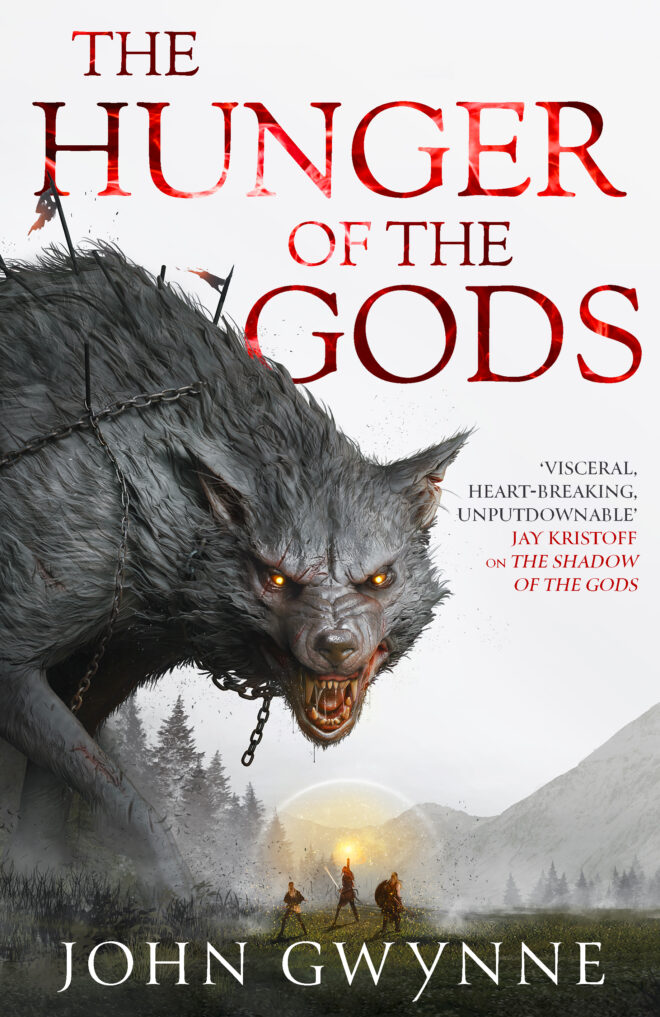
Alright, folks, grab your mead horns and sharpen your axes, because we’re diving deep into John Gwynne’s The Hunger of the Gods, the second book in The Bloodsworn Saga! If you thought The Shadow of the Gods was a wild ride, buckle up, because Gwynne cranks the epic-ness to eleven and snaps the knob clean off. This isn’t just a sequel; it’s a full-blown god-tier escalation of everything we loved about the first book. So, let’s get into the nitty-gritty of this Norse-soaked saga! 🤘
Plot Synopsis: All Hel Breaks Loose! (Spoilers Ahead, Obviously!)
Man, where to even begin? The Hunger of the Gods picks up pretty much right after the cataclysmic events of the first book, and it doesn’t waste a single second throwing you back into the frozen, blood-soaked lands of Vigrið.
-
Orka’s Relentless Hunt: Our favorite she-wolf, Orka, is still a whirlwind of grief and vengeance. We find her at the Grimholt, a bloody mess after carving her way through a fortress looking for her son, Breca. Lif, the fisherman’s son she rescued, is still with her, a witness to her raw, Tainted power. The Bloodsworn, led by Glornir (Thorkel’s brother, remember?), arrive, and it’s a heavy reunion. Glornir learns how Thorkel died and that Breca was taken by Drekr, a dragon-born. Orka, driven by an almost primal need, decides her best lead is Rotta’s chamber, where the Bloodsworn previously fought a dragon-born.
- At Rotta’s chamber, they don’t find Breca but instead run smack into a war party of Raven-Feeders led by Myrk Sharp-Claw, Ilska’s sister and another dragon-born. A brutal fight ensues, and Orka’s crew, with the help of the Bloodsworn detachment (Edel, Halja, Gunnar, Revna, and Ingmar), manages to defeat them and capture Myrk. Orka tries to interrogate Myrk, who initially claims Breca was taken west towards the Iskalt Islands.
- Their journey takes them to the port town of Starl. Here, a pivotal meeting occurs. Elvar and her Battle-Grim arrive, and a tense standoff leads to a parley. Orka learns from Elvar that Ilska and Lik-Rifa are actually heading east, meaning Myrk has been lying. A deal is struck: Orka will send word to the main Bloodsworn contingent about Elvar’s offer to hire them (to fight Lik-Rifa) in exchange for information from Elvar about Lik-Rifa’s Galdrabok.
- With Myrk’s deception revealed, Orka now needs a new way to track her. She “frees” Sæunn, a Hundur-Tainted thrall she bought in Starl, and tasks her with tracking Myrk’s scent, using a piece of bloodied cloth from Myrk’s horse.
- Their eastward pursuit leads them to Gudleif Arnesson’s steading, which is under attack by skraelings. Orka and her small band, somewhat reluctantly, intervene, saving the steading. Here, she reconnects with the giant ravens, Kló and Grok, whom she’d helped at the Grimholt. She tasks them with carrying Vesli the tennúr south to find Glornir with Elvar’s message and arm ring.
- Sæunn’s tracking eventually leads them to Lik-Rifa’s massive war camp, poised to attack Jarl Orlyg’s fortress of Svelgarth. Orka, seeing the children’s wagons, knows Breca is close. Her plan is simple: sneak in, get Breca, and get out, killing only those who get in her way. She and her small band (Gunnar, Revna, Lif, Halja, and Spert) launch a diversionary attack while Orka slips towards the wagons.
- She finds Breca! It’s an emotional reunion, and they also find Bjarn (Uspa’s son). However, their escape is betrayed by Harek (Asgrim’s son, another captive child who has bought into Lik-Rifa’s rhetoric). A desperate fight erupts. Orka faces Fain and Storolf Wartooth (Kalv’s father and brother, Tainted boars). She kills Fain in a savage display. Revna is killed by Biórr.
- Rotta, the rat god (surprise, he’s alive!), intervenes. He captures Orka and Breca. Orka is bound by frost-spider web. In a last-ditch effort, Spert poisons Storolf, causing chaos. Orka, though poisoned herself by a frost-spider, manages to throw Breca into a river to escape. Gunnar Prow escapes carrying Revna’s body. Orka is overwhelmed, bitten again by spiders, and a night-hag descends upon her as she loses consciousness. Her fate is grimly uncertain.
-
Elvar’s Rise to Power: Elvar is dealing with the fallout of Oskutreð: Agnar is dead, Biórr is a traitor, and she’s bound by the blóð svarið to Uspa to rescue Bjarn. The Battle-Grim are restless.
- The key to defeating Lik-Rifa, Uspa believes, lies in Lik-Rifa’s own Galdrabok, which Uspa managed to snatch during the chaos at Oskutreð. The book contains a spell to resurrect a god. Their target? Ulfrir, the wolf-god, whose bones lie on the Oskutreð plain.
- First, they need to deal with Skuld, one of Orna’s daughters and Ulfrir’s kin, who was knocked unconscious. Elvar, using knowledge from her youth in Jarl Störr’s hall, manages to bind Skuld with a thrall-collar. They then forge a larger thrall-collar, capable of holding a god, using the forge in Lik-Rifa’s former prison.
- With Uspa’s Seiðr-magic and the Galdrabok, they perform the ritual. Ulfrir is resurrected, but he’s weak and wounded from his ancient battles. He’s also, understandably, furious about the collar.
- The Battle-Grim journey south to their ship, the Wave-Jarl. Tensions rise, and Huld challenges Elvar for leadership. Elvar, using a feigned shoulder injury to her advantage (healed by Uspa’s magic), defeats and kills Huld in a holmganga, becoming the new chief of the Battle-Grim.
- Elvar’s plan is audacious: go to Snakavik, her father Jarl Störr’s fortress, and “hire” his famed Berserkir guard (including Bjarn’s father, Berak) to help fight Lik-Rifa. She knows this is a long shot.
- The confrontation at Snakavik is brutal. Jarl Störr is dismissive and cruel. He refuses her offer and threatens to take her Oskutreð treasure. When Elvar stands her ground, Störr orders his Berserkir to attack. Ulfrir transforms into his giant wolf form, and a massive battle erupts within the mead hall. Jarl Störr is eaten by Ulfrir (on Skuld’s prompting and Elvar’s nod). Thorun, Elvar’s cruel older brother, inherits control of the Berserkir and orders them to kill Elvar. However, Silrið, Jarl Störr’s Galdurwoman, switches allegiance to Elvar, and Elvar kills Thorun. Her younger brother, Broðir, submits to her. Elvar is now Jarl of Snakavik.
- It’s after this that she meets Orka at Starl and they make their deal. Elvar intends to use the Bloodsworn as part of her army against Lik-Rifa.
-
Varg’s Path of Blood and Brotherhood: Varg is reeling from the revelation that he’s Úlfhéðnar. He and the Bloodsworn are at the Grimholt with Orka. Their immediate goal is to rescue Vol from Skalk the Galdurman.
- They track Skalk south. At Njal Olafsson’s village, Varg encounters Terna, a former thrall from Kolskegg’s farm. Terna tells him that his sister, Frøya, was sold with her to a slaver named Brimil in Darl, and then Brimil sold Frøya to a man named Brák Trolls-Bane. This ignites Varg’s quest for vengeance anew.
- In Darl, Svik helps Varg find Brimil. In a confrontation, Varg learns Brimil abused Frøya. Svik kills Brimil after he reveals Brák Trolls-Bane’s name and that he frequents The Dead Drengr inn.
- The Bloodsworn learn Prince Jaromir (who wants Sulich) has Vol and is heading for Liga. They sail from Darl.
- At sea, they’re attacked by a pirate ship whose crew is infected by “tongue-eaters” – horrific parasites that control their hosts. A grim battle ensues, and the Bloodsworn prevail but suffer losses.
- They set an ambush for Jaromir as he approaches his fortress of Valdai. A fierce battle takes place. Ingmar Ice is tragically killed by Jaromir. Vol is rescued after she uses her Seiðr-magic to break free from her bonds and incinerate many druzhina.
- Inside Valdai, they discover a hidden chamber where Jaromir has imprisoned many of his Tainted half-siblings, including Sulich’s full brothers and sisters. The Bloodsworn free them, adding to their numbers. Their next destination is unclear, but they are now a larger, more diverse group.
-
Biórr’s Tangled Loyalties: Biórr is back with the Raven-Feeders but is clearly struggling with guilt over Agnar’s death and his betrayal of Elvar. He finds companionship with Myrk.
- He witnesses Lik-Rifa’s methods, including her “education” of the captive Tainted children, teaching them to embrace their heritage. He even plays tafl with Breca.
- His loyalties are tested when he discovers Kráka (the Seiðr-witch formerly thralled to the Battle-Grim, now with the Raven-Feeders) attempting to escape with Bjarn. Kráka reveals she’s bound by the same blóð svarið as Elvar. Biórr, sympathetic, allows them to “knock him out” and escape.
- However, Kráka and Bjarn are recaptured by Brák Trolls-Bane. In front of the assembled Raven-Feeders and Rotta, Biórr is accused by Brák of aiding the escape. To prove his loyalty (and likely save his own skin under Rotta’s subtle pressure), Biórr is forced to execute Kráka. This act seems to further cement his place but also deepens his internal conflict.
-
Guðvarr’s Unlikely Journey to the Dragon’s Den: Guðvarr, the cowardly but opportunistic drengr, escapes the Grimholt with Skalk and the captive Vol.
- In Darl, he tries to curry favor with Queen Helka. Skalk, recognizing Guðvarr’s ambition and cowardice, tasks him with spying on Prince Hakon, suspecting Hakon is in league with Drekr. To ensure Guðvarr’s loyalty, Skalk inflicts a horrific ordeal on him, having a hyrndur (a giant magical wasp-like creature) burrow into his chest to act as an internal spy.
- Guðvarr overhears Hakon meeting with Kalv (Storolf’s brother), a messenger from Drekr. Kalv confirms Lik-Rifa is free and tells Hakon to “be ready.” Guðvarr reveals this to Skalk and Helka. Hakon’s betrayal is exposed when a dragon tattoo is found on his head.
- Skalk proposes resurrecting Orna, the eagle-god, using fragments of the Raudskinna, to fight Lik-Rifa. The ritual is performed, and Orna is brought back, thralled to Helka.
- Just as Orna is resurrected, Lik-Rifa attacks Darl. A colossal battle between the two gods ensues. During the chaos, Jarl Sigrún (Guðvarr’s aunt) betrays and kills Queen Helka. Guðvarr, seizing the moment, kills Prince Hakon. Princess Estrid attempts to claim control of the Úlfhéðnar. Orna is ultimately defeated and torn apart by Lik-Rifa.
- In the aftermath, Skalk, realizing Guðvarr knows too much (and that Lik-Rifa can control the hyrndur), sends Guðvarr as a “messenger” from the “deceased” Hakon to Lik-Rifa’s new base at Nastrandir, hoping Guðvarr can gather intelligence or perhaps be a pawn.
- Guðvarr makes the perilous journey north, is captured by Lik-Rifa’s vaesen, and brought before the dragon-god and Rotta. He spins his tale, and Lik-Rifa, smelling the hyrndur in him (and Skalk’s magic), extracts it (painfully) and seems to accept his story, or at least finds him useful for now. He is now a very reluctant spy in the dragon’s den.
-
The Grand Scheme and Climactic Beats:
- The overarching plot is Lik-Rifa’s rise. She’s gathering her Tainted children and vaesen at Nastrandir, her ancient hall which Rotta (who faked his death and hid) has been maintaining.
- Her plan is to conquer Vigrið, starting with Jarl Orlyg of Svelgarth, then moving on to the other major powers. She aims to establish a new world order where the Tainted rule.
- The book culminates with several major confrontations converging: Orka’s desperate rescue attempt at Svelgarth, and the Bloodsworn’s rescue of Vol and Sulich’s kin from Valdai. Elvar has consolidated her power in Snakavik. Darl is in ruins after the god-battle.
- The very end sees Orka captured after ensuring Breca’s escape, her fate unknown. Varg is with a strengthened Bloodsworn. Elvar is a Jarl. Biórr is deeper with the enemy. Guðvarr is a terrified mole. The stage is set for an even bigger conflict.
Phew! That’s the core of it. Gwynne juggles these threads with incredible skill, making each feel vital and ensuring the pacing is relentless. You’re constantly switching perspectives, but it never feels jarring, only like you’re getting a panoramic view of a world on fire.
Character Analysis: Flawed, Fierce, and Unforgettable ❤️🔥
Gwynne’s characters are the lifeblood of this saga, and they continue to grow and surprise in The Hunger of the Gods.
- Orka Skullsplitter: Still the grieving mother and vengeance-fueled warrior. Her Úlfhéðnar blood is a terrifying force, but her love for Breca is her driving motivation and her greatest vulnerability. She’s a force of nature, pragmatic to a fault, yet capable of surprising compassion (like with Lif, or her eventual understanding with Spert and Vesli). Her internal conflict between her brutal past and her desire for a peaceful life with her son is heartbreaking.
- Key Moment: The reunion with Breca, raw and emotional, followed by her desperate sacrifice to ensure his escape.
- Elvar Fire-Fist: Her arc is one of dramatic transformation. From a young warrior seeking fame to a Jarl shouldering immense responsibility. The blóð svarið forces her hand, but she embraces her destiny with a fierce determination. Her complicated relationship with her family’s legacy, especially her father, is central. She’s clever, a skilled fighter, and learning to be a leader, though not without internal conflict about the cost.
- Key Moment: Killing her father (via Ulfrir) and then her brother Thorun to claim Snakavik. It’s a brutal necessity that reshapes her.
- Varg No-Sense: Varg’s journey is about self-discovery and finding belonging. Learning he’s Tainted and then being accepted by the Bloodsworn gives him a family he never had. His personal quest to avenge his sister Frøya remains, but it’s now intertwined with loyalty to his new kin. He’s growing as a warrior, learning to control his wolf-nature, and his inherent decency shines through even in the grim world.
- Key Moment: His grief and rage when Ingmar Ice is killed, showcasing his deepening bond with the Bloodsworn. Also, his confrontation with Brimil.
- Biórr: Oh, Biórr. This guy is a walking tragedy of conflicting loyalties. His guilt over Agnar and Elvar eats at him, yet he’s drawn to the cause of the Tainted and the charisma of Rotta. His relationship with Myrk is complex – part physical, part perhaps a search for belonging. Being forced to kill Kráka is a devastating turning point, pushing him further down a dark path, or so it seems.
- Key Moment: Executing Kráka. It’s a gut-wrenching scene that shows how trapped he is.
- Guðvarr: The ultimate survivor, driven by fear and a desire for status he rarely earns legitimately. He provides some grim comic relief, but his journey is also a harrowing one, showing how ordinary people get caught up in extraordinary, terrifying events. His arc from a boastful local drengr to a terrified pawn of gods and Galdurmen is surprisingly engaging.
- Key Moment: The hyrndur ordeal. It’s horrific, yet it’s a turning point that forces him into deeper, more dangerous games.
- Lik-Rifa: The big bad, and she’s magnificent. Powerful, ancient, intelligent, and utterly ruthless. Her maternal affection for her “children” (both dragon-born and vaesen) is terrifyingly genuine but warped. She’s a compelling antagonist because her desire for a Tainted-led world is, from a certain perspective, understandable given their persecution.
- Rotta: The surprise comeback! Charming on the surface, but deeply scarred by his past torture. His alliance with Lik-Rifa feels genuine, driven by a shared desire for vengeance against their kin. He’s a master manipulator, as seen with Biórr.
- Supporting Cast:
- Glornir: His grief for Thorkel and his desperate love for Vol drive him. A stoic leader pushed to his limits.
- Uspa: Her determination to save Bjarn is her core. Her Seiðr-magic is crucial, and her past with Ilska adds layers.
- Skuld: A god thralled. Her fierce loyalty to Ulfrir and her simmering rage make her compelling. Her adjustment to servitude is a key part of her arc.
- Svik & Røkia: Continue to be fantastic supporting characters. Svik’s hidden depths and loyalty to Orka are revealed, and Røkia’s mentorship of Varg is a highlight.
Thematic Resonance: Echoes in the Blood and Bone 🗣️
This book is dripping with themes that resonate long after you’ve turned the last page.
- Vengeance: This is HUGE. Orka wants vengeance for Thorkel and Breca. Varg for Frøya and Torvik. Glornir for Vol. Lik-Rifa and Rotta for their past perceived wrongs. Halja for Vali. It’s a cycle of violence that fuels much of the plot.
- Family & Loyalty: What defines family? Blood ties are powerful (Orka/Breca, Lik-Rifa/dragon-born, Jarl Störr/Elvar/Thorun), but so are bonds of found family (Bloodsworn, Battle-Grim). Loyalty is constantly tested, and betrayals cut deep.
- Power & Its Corruption: The pursuit of power is a major theme. Queen Helka’s ambition, Jarl Störr’s tyranny, Lik-Rifa’s desire to rule. The book explores how power, whether divine or mortal, can corrupt and the lengths people (and gods) will go to obtain or keep it. The thrall-collars are a potent symbol of abusive power.
- Freedom vs. Servitude: The central struggle of the Tainted. Their enslavement and persecution are the backdrop for Lik-Rifa’s crusade. The desire for freedom is a powerful motivator for many characters, from thralls like Sæunn to gods like Ulfrir.
- The Weight of the Past: The Guðfalla casts a long shadow. Ancient grudges, prophecies, and the actions of the gods continue to shape the present. Characters are often struggling with the legacy of their ancestors or their own past actions.
- Identity: Many characters grapple with who they are, especially the Tainted. Varg accepting his Úlfhéðnar nature, Biórr torn between identities, Elvar forging her own path away from her father’s name.
World-Building Deep Dive: A Land Forged in Myth and Steel 🗺️
Gwynne’s Vigrið is a masterclass in creating a believable, immersive fantasy world.
- Norse Foundation: The world feels authentically Norse. From the societal structures (Jarls, Althings, Holmgangas, drengrs) to the harsh, unforgiving landscapes, the naming conventions, and the warrior ethos. The longships, weapons, and armor all add to this.
- The Guðfalla’s Scars: The “god-fall” is not just ancient history; its consequences are everywhere. The bones of dead gods (Snaka’s skull forming Snakavik, Orna’s skeleton in Darl) are literal parts of the landscape. Relics of the gods hold power.
- The Tainted & Their Powers: This is the core magical element tied to characters. Each Tainted bloodline (wolf, bear, dragon, rat, boar, hound, eagle, stoat, etc.) grants specific abilities, often tied to animalistic traits – heightened senses, strength, speed, shapeshifting (for gods), or unique powers. This system is well-integrated and has clear consequences.
- Magic Systems:
- Seiðr-magic: Wielded by witches like Uspa and Vol. It’s elemental, capable of healing, illusions, potent offensive spells (Uspa’s sun-light, Vol’s fire), and crucial for binding oaths like the blóð svarið. It feels ancient and deeply connected to the world’s spiritual fabric, explicitly linked to Snaka, the father of the gods.
- Galdur-magic: Practiced by Galdurmen like Skalk and Silrið. It’s rune-based, more systematic, used for enchantments, controlling thrall-collars, and direct offensive capabilities (Skalk’s staff).
- Divine Power: Gods like Lik-Rifa, Ulfrir, and Rotta possess inherent, immense powers far beyond mortal magic-users. This includes shapeshifting into their animal forms, controlling their “creations” (Lik-Rifa and the vaesen), and immense physical prowess.
- Vaesen: Lik-Rifa’s creations are a fantastic addition, adding a bestiary of unique and often terrifying creatures. Tennúr (tooth-eaters), Spertus (scorpion-like stingers), Frost-Spiders, Night-Hags, Skraelings, Trolls – each with distinct characteristics and loyalties, now largely flocking to their maker.
- Key Locations:
- Nastrandir: Lik-Rifa’s ancient hall, a subterranean fortress carved into the mountains, now her primary base of operations. Its reawakening is a significant event.
- Snakavik: Jarl Störr’s (now Elvar’s) fortress built within Snaka’s colossal skull. A major seat of power.
- Darl: Queen Helka’s fortress built around Orna’s skeleton. A center of political intrigue and Galdur-magic. Now significantly damaged.
- Svelgarth: Jarl Orlyg’s domain, Lik-Rifa’s first major target.
- Oskutreð: The god-battle plain, site of Lik-Rifa’s release and Ulfrir’s resurrection.
- Rotta’s Chamber: A hidden complex in the Bonebacks, source of the Raudskinna fragments.
- Political Climate: Vigrið is a fractured land of competing Jarls on the brink of larger conflict, which Lik-Rifa’s arrival throws into utter chaos. The southern empire of Iskidan also plays a role, with its own internal politics and expansionist eyes.
Genre Context & Comparisons: Grim, Gritty, and Glorious! ⚔️
The Hunger of the Gods proudly plants its banner in the grimdark fantasy camp, but with a strong Norse flavor that sets it apart.
- Grimdark Core: Expect morally grey characters, brutal violence (Gwynne doesn’t shy away from the visceral realities of combat), a harsh and unforgiving world, and protagonists who are often deeply flawed and make questionable choices. Victory, if it comes, is usually hard-won and comes at a steep price.
- Norse Epic: The influence of Viking sagas and Norse mythology is undeniable. It’s not just window dressing; it’s baked into the DNA of the story, from the gods and their animalistic natures to the societal structures and warrior codes.
- How it Stacks Up:
- If you love Joe Abercrombie’s First Law series for its morally ambiguous characters, sharp dialogue, and brutal action, you’ll feel right at home here. Orka, in particular, could give Logen Ninefingers a run for his money in a scrap.
- There are shades of Mark Lawrence’s work in the darkness of the world and the often-cynical outlook of some characters, though Gwynne’s heroes tend to have a clearer (if sometimes desperate) moral compass.
- Like George R.R. Martin’s A Song of Ice and Fire, there’s a large cast and epic scope, with political machinations, though Gwynne keeps the focus tighter on his POV characters and delivers more consistent action.
- It definitely has that “epic quest” feel, but often subverts it. Vengeance quests are central, as are “rescue the captive” missions, but they are fraught with peril and moral compromise.
- Originality & Tropes: Gwynne uses familiar tropes – ancient evils returning (Lik-Rifa), prophecies, cursed artifacts (Galdraboks), chosen bloodlines (the Tainted) – but he infuses them with such gritty realism and Norse authenticity that they feel fresh. The Tainted system, in particular, is a well-realized take on “special powers.”
Influences & Inspirations: Echoes of the North 🌲
It’s pretty clear where Gwynne draws his inspiration from, and he weaves it all together beautifully.
- Norse Mythology (Duh!): This is the big one. The Guðfalla is clearly inspired by Ragnarök. Characters like Ulfrir (Fenrir), Orna (the great eagle at the top of Yggdrasil or Hræsvelgr), Snaka (Jörmungandr), and Lik-Rifa (Níðhöggr or other Norse dragons) have direct mythological counterparts or strong thematic links. The concept of Vigrið itself is a plain from Norse myth where the final battle of Ragnarök is fought.
- Viking Sagas: The tone, the language (especially the titles and terms), the warrior ethos, the focus on blood feuds, oaths, and personal honor (or lack thereof) scream saga. The fatalism present in many sagas also subtly underscores the narrative.
- Historical Viking Age: The material culture – the longships, weapons (seax, long-axes, brynja), mead halls, fortifications, and social structures like jarloms and the Althing – are all grounded in the historical period.
- David Gemmell: While Gwynne’s work is darker, there’s a Gemmell-esque quality to the epic battles, the focus on warrior characters striving against terrible odds, and the themes of courage and sacrifice. You can feel that heroic pulse beating beneath the grimdark exterior.
- European Folklore: The vaesen, while given a Norse spin, draw from a wider pool of monstrous creatures found in European folklore – trolls, hags, and various other beasties.
Key Takeaways
- Vengeance is a Vicious Cycle: So many characters are driven by it, and it rarely leads to peace, only more bloodshed.
- Family is Complicated: Whether by blood or by oath, family ties are a source of immense strength and profound pain.
- Power Always Has a Price: The pursuit and wielding of power, divine or mortal, demands sacrifice and often leads to corruption.
- The Old World is Awakening: The return of the gods and their ancient conflicts is violently reshaping the mortal realm.
- No Easy Heroes or Villains: Characters operate in shades of grey, driven by relatable (if sometimes extreme) motivations.
- The North Remembers (and Bites Back): The Norse-inspired setting is brutal, beautiful, and integral to the story’s fabric.
Wrapping It Up 🎁
Guys, The Hunger of the Gods is an absolute beast of a book. John Gwynne has taken everything that made the first book great and amplified it. The stakes are higher, the battles are more brutal, the betrayals cut deeper, and the world feels even more alive and dangerous. The character arcs are phenomenal, especially for Orka, Elvar, and Varg, who continue to be some of the most compelling protagonists in modern fantasy.
Yes, it’s dark, and yes, it’s violent, but it’s also shot through with moments of fierce loyalty, desperate love, and the kind of raw, untamed heroism that gets your blood pumping. Gwynne’s prose is sharp as a Valyrian—I mean, a god-forged blade, and his pacing is relentless.