The Lies of Locke Lamora
The Lies of Locke Lamora
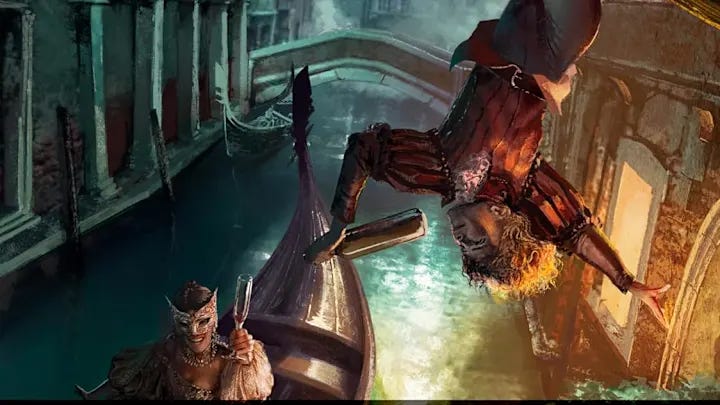
Alright folks, gather ‘round, grab your favorite ale (or maybe something stronger), because today we’re diving deep into a book that absolutely rocked the fantasy scene when it dropped: Scott Lynch’s The Lies of Locke Lamora! If you haven’t read this one yet, buckle up because it’s a wild, twisty, and utterly brilliant ride. And if you have read it, you know what I’m talking about – let’s relive some of that glorious chaos!
This is gonna be a full spoiler zone , people. We’re talking beginning, middle, end, the whole shebang. So, if you haven’t read it and want to go in fresh, maybe bookmark this and come back later. For the rest of us? Let’s get into it!
Plot Synopsis: Oh, The Glorious Schemes! (Spoilers GALORE!)
Okay, strap in. The Lies of Locke Lamora kicks off by introducing us to, well, Locke Lamora, but as a snot-nosed kid who’s already too damn clever for his own good. He’s an orphan in the fantastical, Venice-inspired city of Camorr , a place built on the ruins of an ancient, alien civilization (hello, Elderglass!). Little Locke is such a pain-in-the-ass thief that his initial handler, the Thiefmaker , can’t deal with him anymore. He sells the kid off to Father Chains , an “Eyeless Priest” of the Nameless Thirteenth, the Crooked Warden, the god of thieves (who technically doesn’t exist in the official pantheon of Twelve, but hey, details).
Locke’s Origin:
We see his early days, establishing his innate talent for thievery and deception even as a child. The Thiefmaker selling him is a pivotal moment.
Father Chains & The Temple:
Locke is taken into the hidden underground lair beneath the Temple of Perelandro. This isn’t a real priesthood; it’s the base of operations for the most elite con artists in the city – the Gentlemen Bastards.
The Crew:
Chains trains Locke alongside other orphans: the brawny and loyal Jean Tannen , the identical twin jokesters Calo and Galdo Sanza , the clever (and later, Locke’s lost love) Sabetha (though she’s absent during the main plot), and the young apprentice Bug. Their lair is surprisingly luxurious, funded by years of successful cons.
The main storyline, set years later, follows the adult Locke and his Gentlemen Bastards. Locke is now the Garrisa (leader) of the crew, following Chains’ death. They pose as a small-time gang pulling petty thefts to satisfy the city’s underworld boss, Capa Barsavi , and maintain the Secret Peace (an agreement where thieves don’t rob nobles, keeping the Duke’s guard relatively off their backs). But secretly? They’re pulling incredibly elaborate cons on the nobility , accumulating a massive, hidden fortune.
Their current big con involves Locke posing as Lukas Fehrwight , a merchant from Emberlain, trying to swindle the noble Don Lorenzo Salvara and his wife, Doña Sofia. This involves intricate disguises, fake business deals (selling nonexistent supplies of rare brandy), staged encounters, and near-constant improvisation.
The Salvara Game:
The central con driving the first half of the book. Locke uses multiple personas, faked emergencies (like the staged alleyway mugging where Jean gets “beaten”), and elaborate props to gain the Salvaras’ trust and extract huge sums for a “secret” venture. It’s Ocean’s Eleven meets fantasy, and it’s glorious.
The Secret Peace:
A crucial element of Camorr’s underworld. It dictates that organised crime leaves the nobility alone. The Gentlemen Bastards flagrantly violate this, making their operations incredibly risky.
Things get complicated (understatement of the year) with the arrival of the Gray King. This mysterious figure starts brutally murdering Capa Barsavi’s garristas (gang leaders). No one knows who he is or what he wants, but he’s violating underworld rules with impunity and seems unstoppable. Barsavi, paranoid and enraged, demands absolute loyalty and starts cracking down hard.
Locke, trying to maintain his cover and continue the Salvara con, gets caught in the middle. He’s forced to attend Barsavi’s court, navigating treacherous underworld politics while simultaneously juggling the high-stakes Salvara deception. The Gray King makes contact with Locke, revealing he knows about the Gentlemen Bastards’ secret operations. He blackmails Locke into working for him, demanding Locke impersonate him at a meeting with Barsavi.
The Gray King:
The mysterious antagonist who throws the entire underworld into chaos. His methods are brutal and seemingly supernatural.
Escalating Danger:
The Gray King’s actions put Locke and his crew in immense danger from both Barsavi and the Gray King himself. The stakes jump from financial ruin to bloody murder.
The situation spirals downwards rapidly. The Gray King forces Locke’s hand, leading to a confrontation where Barsavi plans to kill the Gray King (who he thinks Locke is). This is further complicated when Barsavi, suspecting Locke might be the Gray King, arranges for Locke’s capture before the meeting.
But the Gray King has his own agent – The Falconer , a terrifying Bondsmage from Karthain (super rare and powerful sorcerers). The Bondsmage manipulates events, ensuring Locke attends the meeting as planned, but also reveals the Gray King’s ruthlessness by orchestrating the death of Bug.
Bug’s Demise:
A gut-wrenching moment. The youngest Bastard is killed as part of the Gray King’s manipulation, highlighting the true stakes and cruelty involved.
The Bondsmage:
The introduction of powerful, external magic shatters the relatively low-magic setting. The Falconer is terrifyingly efficient and becomes a major threat.
The climax occurs at the Floating Grave , Barsavi’s stronghold. Locke, forced to impersonate the Gray King, arrives for the supposed peace meeting. Barsavi, however, has been tipped off (by one of the Gray King’s own men, posing as a traitor!) that the Gray King’s supposed invulnerability is a lie. He sets a trap using a dying man ( Eymon ) to touch Locke, proving he’s not magically lethal.
Barsavi captures Locke, reveals his knowledge of Locke’s true nature (though he still thinks Locke is the Gray King using deception), and prepares a horrific execution: drowning him in a cask of horse piss. Just as Locke is about to be executed, the real Gray King appears with the Bondsmage.
It’s revealed the Gray King is Luciano Anatolius , a man whose family was murdered by Barsavi decades ago as part of the deal that established the Secret Peace. His twin sisters, Cheryn and Raiza Berangias , had infiltrated Barsavi’s organization years ago, becoming his most trusted bodyguards (the shark-tooth adorned ladies!). They turn on Barsavi, killing his sons ( Anjais and Pachero ) before his eyes.
The Reveal:
The Gray King is Capa Raza, seeking revenge for his family’s destruction by Barsavi. His sisters are the deadly Berangias twins. This twist recontextualizes everything.
Bloodbath:
The Berangias twins brutally murder Barsavi’s sons and numerous guards. Raza kills Barsavi himself, symbolically drowning him in vengeance.
Raza declares himself the new Capa of Camorr. He gives the remaining gangs a choice: swear fealty or leave the city. Many swear fealty, revealing they were already secretly allied with him.
Meanwhile, Jean Tannen, who was trapped by the Bondsmage using a sorcerous link (a severed hand with his name stitched into it!), manages to break free after Locke destroys the hand. He arrives just after Locke is dumped into the cask of horse piss and hurled into the water beneath the Floating Grave. Bug, defying Jean’s orders, had jumped in after the cask. Jean fights off horrifying salt devils (magically altered giant spiders working for the Bondsmage) while trying to rescue Locke. Bug is tragically killed by one of the Gray King’s men during the chaos.
Twin Tragedy:
Calo and Galdo are found murdered back at the Temple lair, their throats slit, killed by the Berangias twins. Bug dies trying to help rescue Locke. Only Locke and Jean survive.
Salt Devils & Magic:
The confrontation introduces more overt magical elements and monstrous creatures under the Bondsmage’s control.
Jean rescues Locke from the cask. They escape the Floating Grave, utterly broken. Locke, discovering the Gray King’s identity and the Bondsmage’s involvement, realizes the depth of the manipulation. They track down the Bondsmage. In a harrowing confrontation, Locke manages to trick the Bondsmage (exploiting the link between the mage and his falcon familiar, Vestris ) and Jean kills him, but not before the Bondsmage puts Jean under a painful curse/compulsion to kill Locke. Locke, using his wits, manages to break the compulsion by exploiting its specific wording (it names Locke Lamora , which isn’t his birth name).
Locke’s Cleverness:
Even in defeat, Locke uses lies and misdirection to survive, turning the Bondsmage’s own magic against him by revealing “Locke Lamora” is just another alias.
The book ends with Locke and Jean, the last surviving Gentlemen Bastards, grievously wounded and emotionally shattered, leaving Camorr by ship. They have lost their home, their friends, their fortune, and their anonymity. But they are alive, and Locke vows revenge on Capa Raza.
Character Analysis: A Ragtag Bunch of Brilliant Bastards
Lynch doesn’t just give us characters; he gives us people we feel for, even when they’re doing questionable things.
Locke Lamora:
The heart of the story. He’s not a fighter, he’s a thinker, a planner, a liar extraordinaire. His genius lies in his audacity and his ability to weave convincing falsehoods. But he’s also fiercely loyal to his found family, the Gentlemen Bastards. His arrogance is often his biggest flaw, leading him to underestimate threats. His journey in this book is one of devastating loss, forcing him to confront the real, bloody consequences of the games he plays.
Jean Tannen:
Locke’s right-hand man, best friend, and the muscle of the operation. He’s highly intelligent, well-read, but also incredibly dangerous with his twin hatchets, the “Wicked Sisters.” Jean is the anchor of loyalty and practicality to Locke’s sometimes reckless brilliance. His grief and protective instinct towards Locke after their losses are palpable. Their dynamic is one of the best bromances in fantasy.
Father Chains:
The mentor figure. Gruff, demanding, but ultimately dedicated to training his “Bastards” for survival in a harsh world. His methods are unconventional, focusing on deception and intellect over brute force. His influence shapes Locke profoundly.
Calo & Galdo Sanza:
The twins provide much-needed comic relief, constantly bickering but utterly loyal and competent thieves in their own right. Their banter feels natural, and their sudden, brutal deaths hit hard, removing a layer of light from the crew.
Bug:
The youngest apprentice. Eager to please, desperate to be part of the gang’s real work. His enthusiasm makes his tragic death even more impactful, serving as a harsh lesson about the dangers Locke courts.
Capa Barsavi:
The initial antagonist, the powerful crime lord of Camorr. He’s ruthless and demands respect, but ultimately, he’s bound by the rules of his own system. He serves as a benchmark against which the Gray King’s more chaotic and personal evil is measured.
Capa Raza (Luciano Anatolius) / The Gray King:
The true antagonist. Driven by decades of simmering revenge, he’s cold, calculating, and utterly ruthless. His transformation from a mysterious figure to a man with a tragic (though twisted) backstory adds depth. He represents the devastating consequences of the past and the corrupting nature of vengeance.
The Falconer:
The Bondsmage serves as an external force of overwhelming power, representing the intrusion of high magic into the low-magic world of Camorr’s underworld. He’s arrogant, cruel, and highlights the terrifying potential of sorcery in this world.
Thematic Resonance: Lies, Loyalty, and Loss
This book is rich with themes that stick with you long after you finish.
Deception & Lies:
It’s right there in the title! The entire plot revolves around elaborate cons, disguises, and misdirection. Locke’s greatest strength is his ability to lie convincingly. But the book also explores the cost of these lies, both personal and collateral.
Found Family & Loyalty:
The Gentlemen Bastards aren’t related by blood, but their bond is incredibly strong. They are a true family, forged in shared experience and loyalty to one another. This makes the eventual losses even more devastating. Their fierce devotion to each other is the emotional core.
Consequences & Violence:
While the Bastards see their cons as games, the arrival of the Gray King brings brutal, real-world consequences. Lynch doesn’t shy away from depicting the visceral, ugly reality of violence and its emotional toll. Actions, especially transgressive ones, have devastating repercussions.
Social Hierarchy & Corruption:
Camorr is a city rife with inequality, from the untouchable nobles in their Elderglass towers to the gangs ruling the streets, all under the watchful (and often corrupt) eyes of the Duke and the Capa. The Secret Peace itself is a form of institutionalized corruption.
Revenge:
The Gray King’s entire motivation is revenge, painstakingly planned over decades. The book explores how this drive can consume and twist someone, leading to horrific acts that echo the very crimes they sought to avenge.
World-Building Deep Dive: Welcome to Camorr!
Camorr isn’t just a backdrop; it’s a character in itself. Lynch does a fantastic job making this city feel real, dangerous, and unique.
Setting - Camorr:
Imagine a darker, grittier, fantasy version of Venice. A city of canals, islands, ancient bridges, and towering structures built from mysterious Elderglass – the remnants of a long-lost, non-human race. The atmosphere is thick with fog, grime, and the constant threat of violence or drowning. Distinct districts (like the Narrows, Coalsmoke, the Floating Grave, Coin-Kisser’s Row) give the city texture.
Elderglass:
This mysterious, indestructible material forms much of the city’s ancient architecture, including the Five Towers where the nobility live. It glows faintly at night ( Falselight ) and hints at a deep, magical history largely lost to the current inhabitants. It adds a layer of ancient mystery and wonder.
Social/Political Structure:
A strict hierarchy exists. At the top is the Duke Nicovante and the Five Families, residing in the Towers. Below them are lesser nobles. The underworld is controlled by the Capa , who oversees numerous gangs ( garristas lead individual gangs). The Secret Peace is the uneasy truce between the underworld and the nobility, brokered by the Duke’s secret police (the Midnighters led by the Spider ) and the Capa.
Underworld Economy:
Detailed depiction of gang structures, territories, tithes, and the rules (like the Secret Peace) that govern criminal life. The Gentlemen Bastards operate within and against this system.
Religion:
A pantheon of Twelve official gods, plus the unofficial Thirteenth, the Crooked Warden , god of thieves. Religion is present but often feels more like tradition or a tool (like Chains’ priesthood) than a source of active divine intervention.
Magic:
Generally low-magic. The main exceptions are the mysterious properties of Elderglass and the extremely rare, powerful, and feared Bondsmagi from Karthain, who operate under strict guild rules and charge astronomical fees. Their presence drastically alters the power dynamics when they appear.
Genre Context & Comparisons: Heists and Hard Knocks
The Lies of Locke Lamora sits comfortably in a few spots within the fantasy genre.
Heist Fantasy:
This is its primary identity. Think Ocean’s Eleven or The Italian Job but with swords, canals, and more swearing. The focus on intricate planning, clever disguises, and high-stakes cons is central. It really revitalized this fantasy subgenre. Compare it to works like Six of Crows by Leigh Bardugo (though Locke came first and is arguably grittier).
Grimdark-Adjacent:
While not as relentlessly bleak as some full-blown grimdark, it shares many elements: morally ambiguous protagonists, a gritty and dangerous world, graphic violence, political corruption, and a focus on survival in harsh circumstances. It lacks the nihilism of some grimdark but definitely has that sharp edge. Think a less sprawling, more focused A Song of Ice and Fire in its depiction of consequence and violence, or compare the witty banter amidst darkness to Joe Abercrombie’s First Law series.
Narrative Structure:
Lynch uses a non-linear approach, interspersing the main Salvara/Gray King plotline with Interludes detailing Locke’s (and Jean’s) past under Father Chains’ tutelage. This structure is highly effective, providing backstory and world-building while raising the stakes for the present-day narrative. It echoes Patrick Rothfuss’s The Name of the Wind in using framing stories, though Lynch’s interludes are more directly tied to the main plot’s immediate context.
Character Dynamics:
The witty, loyal partnership between Locke and Jean is reminiscent of classic duos like Fritz Leiber’s Fafhrd and the Gray Mouser , though updated with more modern sensibilities and grit.
Influences & Inspirations: Echoes of Venice and Rogues Past
While only Scott Lynch knows for sure, we can speculate on some potential influences:
Venice:
The most obvious inspiration. The canals, the architecture, the distinct social strata, the history of powerful merchant families – Camorr breathes a fantastical Venice.
Heist Films:
The structure of the Salvara con, with its planning, execution, and unexpected complications, feels heavily inspired by classic heist movies.
Fritz Leiber:
The aforementioned Fafhrd and the Gray Mouser stories, with their focus on clever rogues in a fantasy city, likely provided some inspiration for the tone and character dynamics.
Renaissance Italy:
Beyond just Venice, the political intrigue, the powerful families, the blend of high culture and brutal violence evokes the atmosphere of Renaissance Italian city-states.
Maybe Dumas?:
The camaraderie, adventure, and focus on intricate plotting might have faint echoes of The Count of Monte Cristo or The Three Musketeers , albeit filtered through a much darker lens.
Key Takeaways
- It’s a masterclass in heist fantasy , filled with intricate scams and brilliant improvisation.
- The found family dynamic of the Gentlemen Bastards provides a powerful emotional core.
- Camorr is an incredibly realised, atmospheric city that feels like a character itself.
- Actions have brutal consequences , and Lynch doesn’t pull punches with violence or loss.
- The non-linear structure with Interludes expertly weaves backstory into the present narrative.
- Locke and Jean’s friendship is one of the standout relationships in modern fantasy.
- Expect sharp dialogue, dark humor, and devastating twists.
Wrapping It Up
Seriously, folks, The Lies of Locke Lamora is just plain fantastic. It’s clever, it’s funny, it’s heartbreaking, and it’s utterly unforgettable. Scott Lynch bursts onto the scene with a unique voice, a stunningly realised world, and characters you can’t help but root for, even as they’re picking pockets or planning elaborate revenge. The plot twists keep you guessing, the dialogue crackles, and the emotional gut punches land with devastating accuracy. If you love intricate plots, morally gray characters, witty banter, and a world that feels both fantastical and brutally real, you need to read this book. It’s the start of a series, and while the sequels are great too, this first installment is a near-perfect piece of fantasy literature. Go read it. Now! You won’t regret it. Highly, highly recommended!