The Lions of Al Rassan
The Lions of Al Rassan - Full Book Recap and Summary
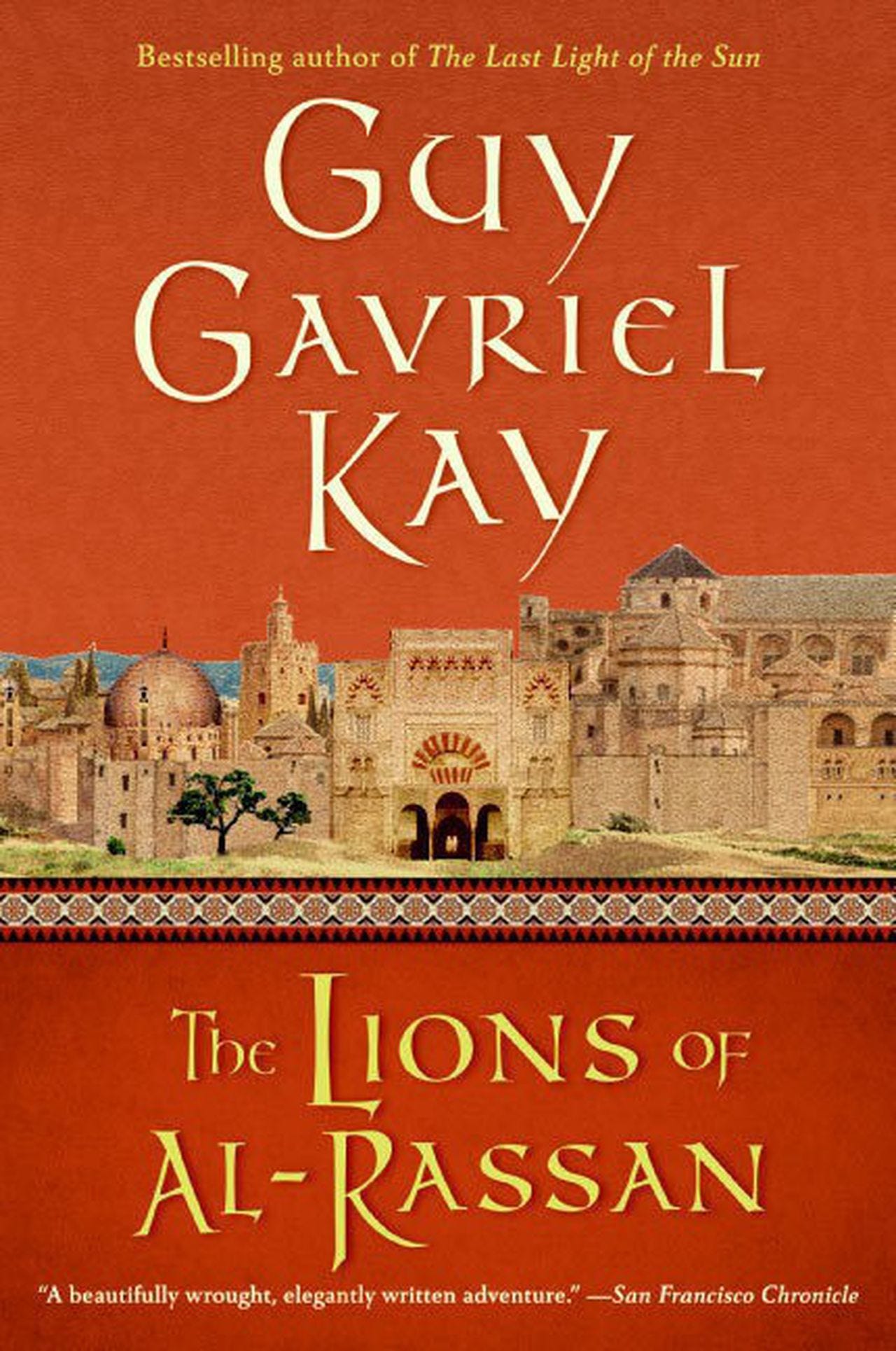
Hey everyone, and welcome back to the blog! Today, we’re diving deep into a book that absolutely wrecked me in the best possible way: Guy Gavriel Kay’s The Lions of Al-Rassan. Now, if you know Kay, you know he doesn’t really do typical epic fantasy. He crafts these incredibly rich, emotionally resonant stories steeped in history-that-never-quite-was. And Lions? It’s arguably one of his absolute best. Think medieval Spain, but cranked up with Kay’s signature blend of beautiful prose, complex characters, and heartbreaking choices. Grab a drink, get comfy, because we’re going spoiler-heavy on this masterpiece!
Plot Synopsis: Buckle Up, It’s a Ride!
Okay, strap yourselves in, because this is where the magic (and the pain!) happens. The Lions of Al-Rassan throws us into a peninsula reminiscent of medieval Iberia, split between the sophisticated, star-worshipping Asharites in the south (Al-Rassan) and the rougher, sun-worshipping Jaddites in the north (Esperaña). Sandwiched between them, often literally and figuratively, are the Kindath, worshippers of the two moons, clearly inspired by the Jewish diaspora.
The once-mighty Asharite Khalifate, which ruled most of the peninsula from Silvenes, has crumbled. Al-Rassan is now fractured into squabbling city-states ruled by petty kings. The prologue hits hard: we see a young Ammar ibn Khairan , a brilliant poet and warrior from Aljais, assassinate the last, blind, puppet khalif, Muzafar, in the beautiful gardens of the Al-Fontina palace. This act, done on behalf of the ambitious King Almalik I of Cartada , effectively ends the Khalifate era and earns Ammar both renown and notoriety as “the man who slew the last khalif.” It sets the stage for a new era of shifting power and instability.
- The Premise: Years later, Al-Rassan is a patchwork of rival cities. Almalik I of Cartada is the most powerful king, known as the “Lion of Cartada,” served by the now older, famed (and infamous) Ammar ibn Khairan. In the north, the three Jaddite kingdoms (Valledo, Jaloña, Ruenda), ruled by the sons and brother of the late King Sancho the Fat, war amongst themselves but are growing stronger, even extorting tribute money (the parias ) from some Asharite cities near the border, like Fezana.
We meet our three protagonists:
- Ammar ibn Khairan: The aforementioned poet, diplomat, assassin, and soldier. Cynical, brilliant, haunted by his past, fiercely loyal (initially) to Almalik I, and guardian to the king’s unimpressive eldest son, Almalik II.
- Rodrigo Belmonte: The legendary Jaddite captain from Valledo, Esperaña’s greatest warrior, known as “The Captain.” Honorable, skilled, deeply loyal to his men and family, but exiled from the highest circles of power by the current King Ramiro due to past political tensions surrounding Ramiro’s ascension after his own brother’s suspicious death.
- Jehane bet Ishak: A skilled Kindath physician in Fezana. Independent, intelligent, compassionate, she carries the weight of her father Ishak’s tragic fate – blinded and muted by Almalik I after performing a miraculous C-section saving the king’s favorite courtesan, Zabira, and their son.
The plot kicks off in Fezana, a rebellious city conquered by Cartada. Jehane is practicing medicine when Ammar, visiting Fezana with the young Prince Almalik II for a castle wing consecration, is dispatched to fetch her for a wealthy merchant, Husari ibn Musa. Husari is suffering from kidney stones and must attend the royal reception. Jehane, initially annoyed by Ammar’s arrogance, tends to Husari but forbids him from attending.
-
The Day of the Moat: This decision saves Husari’s life. The “consecration” turns out to be a brutal trap. King Almalik I, wanting to crush Fezanan dissent and subtly undermine both his son and Ammar (by making Ammar appear responsible), has arranged for all 139 invited dignitaries to be systematically beheaded as they enter the courtyard. Their bodies are thrown into the moat. Prince Almalik II watches, horrified and developing a permanent facial tic, while Ammar, implicated but uninvolved in the planning, walks through the carnage afterwards.
-
Escape & Alliance: Jehane, learning of the massacre, helps Husari escape Fezana. Husari, transformed by his near-death experience, vows vengeance on Cartada. They flee the city, encountering Rodrigo Belmonte’s company camped outside collecting the parias. Rodrigo, disgusted by Cartadan brutality and already dealing with his own political fallout involving the rogue raiding of the constable’s brother, Garcia de Rada , takes them under his protection. This is complicated when Garcia raids the nearby village of Orvilla. Rodrigo intervenes, his men slaughter many of Garcia’s, and Rodrigo allows a village boy, Ziri , to execute Garcia’s cousin for raping and murdering Ziri’s mother. Rodrigo whips Garcia but, bound by codes of ransom after surrender, lets him and his surviving men walk away, creating a blood feud.
Meanwhile, Ammar, framed for the Day of the Moat and disgusted by Almalik I’s methods, also decides to act. He sees King Almalik I has used the massacre partly to diminish Ammar’s influence and test his own son’s mettle. Ammar returns secretly to Cartada, disguises himself as a slave, and poisons Almalik I during an audience. He ensures the young Prince Almalik II is positioned to take the throne, appearing alongside him as a “captured” Muwardi guard.
-
Twists & Exiles: The plan seemingly works, but the newly crowned Almalik II, perhaps fearing Ammar’s power or influence (or due to complex personal history hinted at), immediately exiles Ammar from Cartada. Ammar, stunned but ever adaptable, escorts the now vulnerable courtesan Zabira (whose young sons are potential rivals to Almalik II) to Ragosa, another powerful Asharite city-state ruled by King Badir and his brilliant Kindath chancellor, Mazur ben Avren.
-
Rodrigo’s Path: Back in Valledo, Rodrigo faces King Ramiro. Ramiro, needing Rodrigo’s military skill but wary of his past loyalties and the de Rada feud (intensified after Rodrigo’s wife Miranda kills Garcia when he attacks their ranch seeking revenge), sentences Rodrigo to a two-year exile. Rodrigo, accepting his fate but securing protection for his family via the constable Gonzalez de Rada’s reluctant oath, chooses to take his formidable company into mercenary service in Al-Rassan – specifically, Ragosa.
And so, fate (and Kay’s masterful plotting) brings the two greatest warriors of their generation, Ammar and Rodrigo, exiled from their own lands, into the service of the same king in Ragosa.
-
Ragosa & Rising Tensions: In Ragosa, Ammar and Rodrigo develop a complex relationship marked by deep mutual respect, rivalry, and an almost uncanny connection on the battlefield (demonstrated in a stunning tournament display where they defeat five opponents). Jehane, also finding refuge and employment at Badir’s court under Mazur ben Avren’s patronage, navigates her feelings for both men, the political intricacies, and the growing threat from the north. Alvar de Pellino, the young soldier smitten with Jehane, follows her to Ragosa, joins King Badir’s forces, and serves as a viewpoint character for life in the city. News arrives of the massacre of the Kindath city of Sorenica in Batiara by Jaddite crusaders preparing to sail east, shaking Jehane and highlighting the rising tide of intolerance.
-
The Inevitable War: Winter passes. Spring brings the inevitable. King Ramiro of Valledo, using the pretext of a holy war fueled by clerics like Geraud de Chervalles (and a poisoned arrow incident possibly implicating his brother Sanchez of Ruenda), launches a full-scale invasion of Al-Rassan, aiming for Fezana. His uncle, King Bermudo of Jaloña, marches on Ragosa. The Reconquista, or something very much like it, has begun.
-
Fezana Burns Again: Ammar, Rodrigo, Jehane, Alvar, and Husari race back to Fezana ahead of the Valledan army to rescue Jehane’s parents. They arrive just as anti-Kindath riots, possibly stoked by Cartada, erupt. The Kindath Quarter is set ablaze. In a harrowing sequence, they fight their way through the mob, rescue Ishak and Eliane (and Ziri’s orphaned siblings), and escape through a secret passage – only to run directly into King Ramiro and his vanguard waiting outside the walls. Rodrigo’s young son Diego , possessing a psychic gift, had foreseen their location.
-
Orvilla Revisited: Before Rodrigo can react, Ammar realizes Almalik I had a contingency plan: a Muwardi ambush set for the supply depot at Orvilla, the very hamlet Garcia de Rada raided. They race there, but too late. The Muwardis have attacked, killing many Valledans, including the constable Gonzalez de Rada, and critically wounding Diego Belmonte.
-
Miracle & Choice: In a display of incredible skill, Jehane’s blind and mute father, Ishak , performs a trepanning surgery by torchlight, guided by touch and memory, saving Diego’s life. In the aftermath, the battle lines are irrevocably drawn. Rodrigo, his exile effectively ended by the king needing him, accepts the position of Constable of Valledo and command of the Jaddite army. He offers Ammar a position beside him, envisioning a future jointly ruled Al-Rassan.
-
The Parting: Ammar, torn between his pragmatic understanding of Al-Rassan’s likely fate and his loyalty to its history and culture (and perhaps his complex feelings for the land that shaped him), refuses. He cannot fight alongside the Jaddites against his own people, however fragmented and doomed they might seem. He chooses to return to Cartada (now ruled by the zealot Hazem “One-Hand,” Almalik II having been executed by the Muwardi leader Yazir ibn Q’arif who has crossed from the desert) to lead the Asharite resistance. Jehane, despite the danger and the heartbreak, chooses to go with Ammar. Their parting from Rodrigo is deeply emotional, filled with respect and sorrow for the conflict that must now divide them.
The stage is set for the final confrontation. The armies gather near the ruins of Silvenes. The narrative jumps forward nearly a year.
- The Final Duel: Before the climactic battle, tradition demands a duel between champions. Yazir ibn Q’arif leads the Asharite forces, including the returned outlaw Tarif ibn Hassan and his sons. Ramiro leads the unified Jaddites. The chosen champions are, inevitably, Ammar ibn Khairan and Rodrigo Belmonte. On a windswept plain at sunset, observed by Jehane and Miranda from a hilltop, the two men fight. It’s a breathtaking, intricate, and ultimately heartbreaking duel between men who deeply respect, understand, and perhaps even love each other in their own way. They are perfectly matched. Finally, Rodrigo, perhaps faltering slightly, is wounded. He knows it’s fatal. In a final, astonishing move of mutual respect and sorrow, he allows Ammar the killing blow rather than prolonging the inevitable or forcing Ammar into a less clean victory. Rodrigo Belmonte dies on the plain.
The epilogue jumps nearly twenty years later. Al-Rassan is gone, subsumed into a united Esperaña ruled by Ramiro the Great. Alvar, now Alvar ben Pellino, is a Kindath physician living in rebuilt Sorenica, married to Marisa, the daughter of his old teacher Rezzoni. He receives a letter from Miranda Belmonte. Rodrigo and Miranda’s sons have prospered: Fernan is the great military commander who completed the conquest, Diego (fully recovered) is the chancellor. Rodrigo’s memory is honored, his tomb inscribed with lines from a poem Ammar wrote. Jehane and Ammar are married, living seemingly near Sorenica, still together. The ending is bittersweet, reflecting on loss, memory, the passage of time, and the enduring power of love and story even after worlds have ended.
Character Analysis: Lions of Heart and Soul
Kay excels at character, and Lions is no exception. These aren’t archetypes; they’re flawed, complex, utterly believable people caught in the gears of history and their own hearts.
-
Ammar ibn Khairan: Where to even begin? The poet-assassin. He’s cynical, sophisticated, brilliant, capable of both breathtaking artistry and brutal pragmatism. Haunted by killing the khalif, he serves Almalik I but finds his loyalty fractured by the Day of the Moat. His journey involves confronting his own complicity, his capacity for love (unexpectedly, with Jehane), and his ultimate, painful loyalty to the dying culture of Al-Rassan, even when led by fanatics he despises. His relationship with Rodrigo is the soul of the book – rivalry, deep respect, a mirror image across a cultural divide.
-
Rodrigo Belmonte: The Captain. The embodiment of Jaddite martial honor, but far more complex than a simple warrior. He’s pragmatic, intelligent, deeply devoted to his family and men. His exile forces him into the heart of Al-Rassan, challenging his preconceptions. His bond with Ammar is profound, transcending faith and politics. His defining trait is perhaps his integrity, even when it costs him dearly. His love for Miranda is fierce and tender beneath his gruff exterior. His final duel and death are utterly devastating precisely because we know the man so well.
-
Jehane bet Ishak: The heart of the story in many ways. She’s intelligent, fiercely independent, dedicated to her calling, but also carrying deep wounds from her father’s fate. She represents the Kindath perspective – caught between larger powers, seeking a space to live with dignity. Her journey is one of finding her own path, navigating love and loss, and making difficult choices about loyalty and identity. Her relationships with Ammar and Rodrigo are central, forming a powerful, non-traditional love triangle built on respect and shared experience as much as romance.
-
Key Relationships:
- Ammar & Rodrigo: The core dynamic. Two lions of their respective cultures, finding respect and even a form of love for each other across the battle lines. Their similarities and differences drive the plot and themes.
- Jehane & Ammar/Rodrigo: A mature, complex triangle. Her bond with Ammar is intellectual, passionate, rooted in shared cultural understanding (despite different faiths). Her bond with Rodrigo is built on shared ordeal, mutual respect, and perhaps a quieter, unfulfilled connection.
- Miranda & Rodrigo: A portrayal of a strong, enduring marriage. Miranda is no damsel; she’s fierce, capable, and Rodrigo’s equal in spirit. Their love grounds Rodrigo.
- Alvar’s Journey: Alvar serves as an effective viewpoint character, growing from an idealistic boy into a man grappling with the brutal realities of war and the complexities of loyalty and love. His eventual conversion and choice of medicine over warfare is a powerful character arc.
Thematic Resonance: More Than Just Swords and Politics
This book is packed with themes that resonate long after you finish. Kay doesn’t offer easy answers, just profound questions.
- Tolerance vs. Intolerance: This is huge. The coexistence, however fragile, of the three faiths is contrasted with rising fanaticism on all sides (Muwardis, zealous Jaddites, even internal Kindath tensions). The destruction of Sorenica and the Fezana massacre are brutal depictions of where intolerance leads.
- Love, Loyalty, and Duty: The central conflict for nearly every character. Loyalty to faith, to country, to family, to friends, to lovers, to personal honor – these are constantly pulling people in different directions, forcing impossible choices. Ammar and Rodrigo’s final duel is the ultimate expression of this tragic conflict.
- The Nature of Honor: What does it mean to be honorable in a world tearing itself apart? Is it adherence to a code (like Rodrigo’s initial sparing of Garcia), or is it something deeper? Kay explores different kinds of honor – martial, personal, intellectual.
- Memory, History, and Loss: Kay writes elegies for lost worlds. Al-Rassan’s decline and fall is a lament for a golden age, for cultural brilliance threatened by cruder forces. The characters are deeply aware of history and their place in it, and the ending emphasizes memory as the last refuge of what is lost.
- The Individual vs. Historical Forces: Can individuals shape history, or are they swept along by larger tides? Ammar and Rodrigo are “great men,” lions of their age, yet even they are ultimately constrained by the massive political and religious shifts occurring.
World-Building Deep Dive: A History That Breathes
Kay’s world-building is immersive without being overwhelming. He gives you just enough to make the world feel real, lived-in, and consequential.
-
Setting: The Iberian Peninsula reimagined. Al-Rassan in the south is sophisticated, cultured, reminiscent of Al-Andalus, with great cities like Cartada, Ragosa, and the fallen Silvenes. Esperaña in the north is rougher, more martial, fragmented into Valledo, Jaloña, and Ruenda. The tagra is the dangerous borderland. The Majriti desert lies across the southern straits.
-
Peoples & Faiths:
- Asharites: Worshippers of the stars of Ashar, dominant in Al-Rassan. Culturally rich, politically fractured. Includes the fanatical Muwardi desert tribes.
- Jaddites: Worshippers of the sun god Jad, dominant in Esperaña. More unified by faith but politically divided amongst themselves. Growing in power.
- Kindath: Worshippers of the two moons, god’s sisters. A scattered people, often physicians or scholars, living precariously between the other two faiths. Tolerated in Al-Rassan, persecuted elsewhere. C D
-
Political Landscape: The decline of the central Asharite Khalifate leads to rival city-states (Cartada, Ragosa, etc.). The Jaddite kingdoms are consolidating power, beginning the parias system (tribute) and eyeing reconquest. The Muwardis represent an external fanatical threat.
-
History: The sense of a lost Golden Age (the Khalifate) hangs over Al-Rassan. The memory of past conflicts and atrocities informs present tensions (Queen Vasca’s persecution of the Kindath, past raids). History feels heavy and consequential.
-
Magic/Supernatural: Very low-key. Diego’s psychic gift is the most overt element. The power lies in faith, culture, politics, and personal choices, not spells. It feels grounded and historical.
Genre Context & Comparisons: Historical Fantasy Royalty
The Lions of Al-Rassan sits firmly in the Historical Fantasy subgenre, specifically the type where the history feels more prominent than the fantasy.
-
Kay’s Niche: Kay is a master of this style. He takes a recognizable historical period/setting (medieval Spain here, Byzantium in Sarantine Mosaic , Renaissance Italy in Tigana ), changes the names and details just enough to free himself creatively, and then explores deep human themes through meticulously crafted characters and plots.
-
Comparison Points:
- George R. R. Martin (ASoIaF): Shares complex political maneuvering and morally grey characters, but Kay’s tone is more lyrical, elegiac, and less overtly grim/graphic. Magic is far less prevalent in Lions.
- Historical Fiction: Honestly, Lions reads like top-tier historical fiction (think Ken Follett or Bernard Cornwell in terms of scope and character) that just happens to be set in a secondary world. The focus is on human drama, politics, and cultural clash.
- Other Low-Magic Fantasy: Fans of authors like K.J. Parker or Daniel Abraham (pre-Expanse) who emphasize character, politics, and consequence over overt magic systems might find a lot to love here.
-
Originality: While using historical templates, Kay’s genius lies in the emotional depth, the character complexity, and the sheer beauty of his prose. He takes familiar historical conflicts (religious war, cultural coexistence/clash) and makes them feel fresh and deeply personal through his characters’ eyes.
Influences & Inspirations: Echoes of El Cid
You can’t talk about Lions without talking about medieval Spain.
-
El Cid: The parallels between Rodrigo Belmonte and the legendary Spanish hero Rodrigo Díaz de Vivar (El Cid Campeador) are unmistakable. A brilliant warrior, loyal but politically exiled, who served both Christian and Moorish rulers. Kay takes this archetype and explores its complexities masterfully.
-
La Convivencia & Reconquista: The historical period in Spain where Christians, Muslims, and Jews coexisted (La Convivencia), followed by the centuries-long Christian reconquest (Reconquista), is the clear inspiration for the setting and central conflict. Kay captures the beauty and fragility of cultural mingling and the tragedy of its violent end.
-
Moorish Culture: The depiction of Al-Rassan draws heavily on the art, architecture, poetry, and learning of Al-Andalus (Moorish Spain), contrasting it with the less developed but militarily resurgent Christian north.
-
Poetry & Music: Kay infuses the text with snippets of poetry and references to music, reflecting the high value placed on arts in the historical period and adding to the book’s lyrical quality.
Key Takeaways
-
History is written in blood, tears, and ink – often simultaneously.
-
Love, loyalty, and faith create impossible choices in times of conflict.
-
There are no easy heroes or villains when cultures clash.
-
Tolerance is beautiful, fragile, and easily shattered by fear and fanaticism.
-
Loss and memory are indelible parts of the human experience.
-
Even the greatest “lions” are subject to the larger forces of history.
-
Guy Gavriel Kay writes prose that can make your heart ache with its beauty.
Wrapping It Up
Seriously, guys, The Lions of Al-Rassan is just phenomenal. It’s historical fantasy at its absolute peak. It’s got incredible characters you’ll fall in love with (and mourn deeply), intricate politics, a world that feels utterly real, and themes that stick with you long after you’ve turned the last page. It’s beautiful, it’s tragic, it’s thought-provoking, and it tells a powerful story about love, loss, and the choices we make when worlds collide. If you’re looking for fantasy with real emotional weight and historical depth, you need to read this book. It’s a masterpiece, plain and simple. Highly, highly recommended!
Let me know in the comments if you’ve read Lions and what you thought! What other Kay books should I dive into next? Until next time, keep reading!