The Priory of The Orange Tree
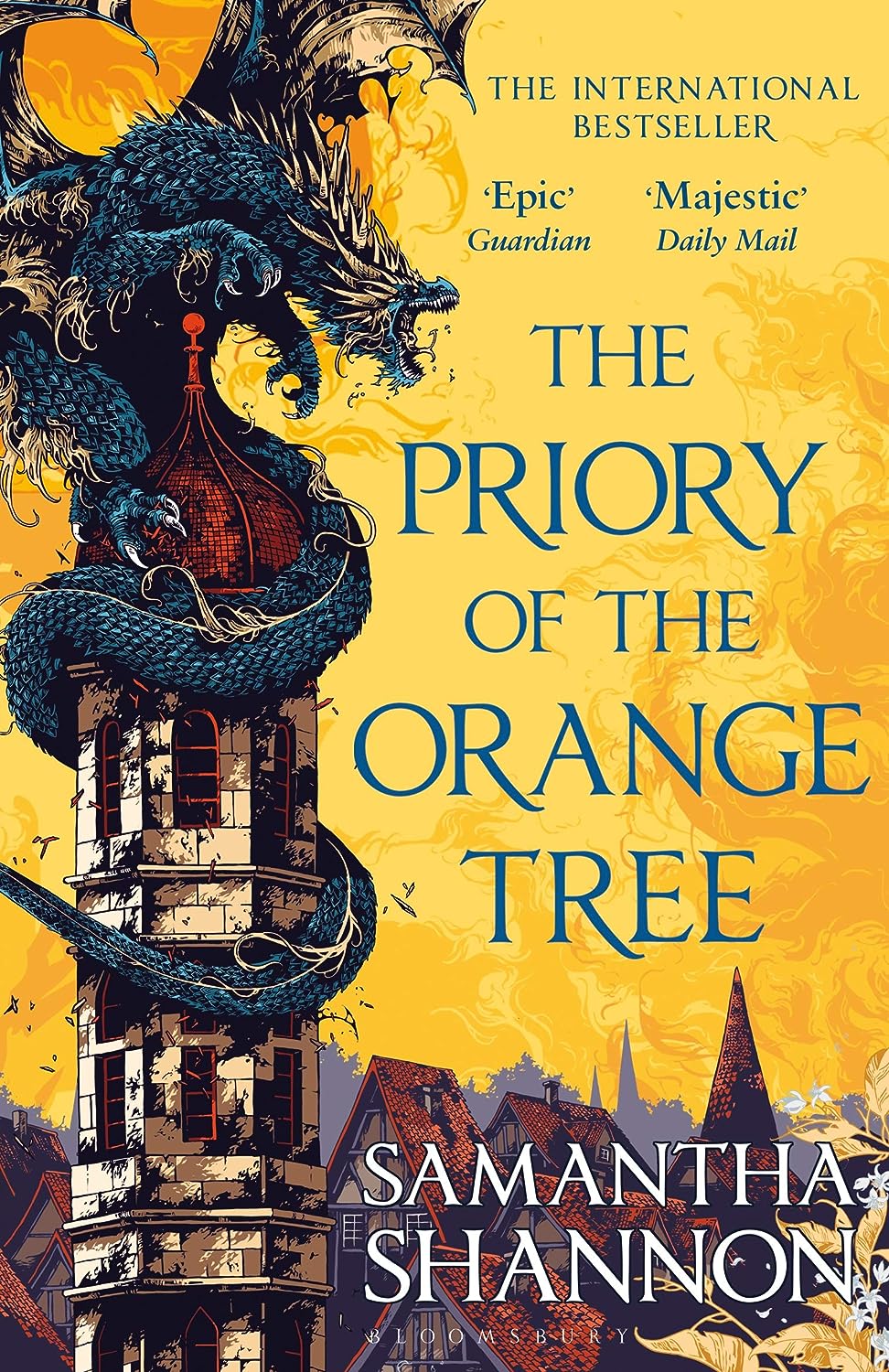
This isn’t just a book; it’s an experience. We’re talking a world so rich you could bottle it, characters you’ll cheer and weep for, and a plot that twists and turns like a wyrm in flight. So grab your preferred beverage (ale for the Inysh, perhaps some sake for our Seiikinese friends?), and let’s get into it!
Plot Synopsis: Hold Onto Your Helms!
Okay, deep breath. This story is HUGE, weaving together multiple perspectives across a vast and divided world.
-
The East Awakens:
- Our journey begins in Seiiki, an island nation in the East, where Tané, an ambitious apprentice dragonrider, breaks her sacred seclusion on the eve of her Choosing Day. Why? To sneak in one last swim, of course! Instead, she stumbles upon a shipwrecked outsider, Triam Sulyard, from the Western Queendom of Inys. This is a BIG no-no, as Seiiki is closed to foreigners to prevent the dreaded “red sickness” (Draconic plague).
- To save her lifelong dream of becoming a dragonrider and avoid implicating herself, Tané enlists the help of her friend Susa to hide Sulyard in Orisima, the Mentish trading post. He’s stashed with Niclays Roos, a disgraced alchemist exiled from Inys.
- Meanwhile, actual dragons – the majestic, water-based kind revered in the East – begin to appear near Seiiki, a rare and significant event.
-
The West in Peril:
- Across the Abyss, in the Queendom of Inys, Eadaz uq-Nāra (posing as Ead Duryan) serves as a lady-in-waiting to Queen Sabran IX Berethnet. But Ead has a secret: she’s a mage from the Priory of the Orange Tree, sent to protect Sabran. The Berethnet line is believed to be the only thing keeping the Nameless One, a catastrophic fire-breathing wyrm, imprisoned. If Sabran dies without an heir, it’s game over for everyone.
- Assassination attempts on Sabran are becoming more frequent and daring. Ead thwarts them, but the danger escalates. Sabran’s childhood friend, Lord Arteloth “Loth” Beck, mysteriously disappears from court, adding to the queen’s anxieties.
- Sabran, unmarried and without an heir at twenty-eight, receives a marriage proposal from Prince Aubrecht of Mentendon, a neighboring Western kingdom. This is a politically charged move, as Inys needs strong alliances.
-
Trials, Treachery, and Transformations:
- Tané successfully navigates the grueling water trials and is chosen by the ancient Lacustrine dragon, Nayimathun. She becomes a dragonrider, a Miduchi.
- Niclays, after Sulyard is discovered, is taken to Ginura (Seiiki’s capital) and ends up under a loose form of house arrest with his former students, the Moyakas. He later encounters Tané and, learning her secret about Sulyard, attempts to blackmail her for dragon blood and scale for his alchemical experiments.
- Ead grows closer to Sabran, who is haunted by nightmares and the pressure to marry. Fýredel, one of the five legendary High Western wyrms (servants of the Nameless One), attacks Ascalon Palace. Ead uses her siden (earth/fire magic) to protect Sabran, inadvertently revealing her powers to Truyde utt Zeedeur, a Mentish maid of honor with her own secrets.
- Loth, accompanied by his poet friend Kitston Glade, is exiled to the Draconic Kingdom of Yscalin (a former ally now worshipping the Nameless One). They are tasked with finding out what happened to Sabran’s father, Prince Wilstan. In Cárscaro, Yscalin’s capital, they meet the enigmatic Donmata Marosa Vetalda, the crown princess. She reveals her father, King Sigoso, is a “Flesh King” controlled by Fýredel and was responsible for murdering Sabran’s mother. Marosa entrusts Loth with an iron box from a slain Priory sister named Jondu, asking him to deliver it to Chassar uq-Ispad in the Ersyr. Kit is tragically killed during their escape through a collapsing tunnel. Loth, afflicted with the Draconic plague, is rescued by the ichneumon Aralaq and carried out of Yscalin.
- Sabran marries Prince Aubrecht. During a public appearance in Ascalon, doomsingers (followers of the Nameless One) attack. Aubrecht is killed protecting Sabran, and she suffers a miscarriage. Truyde is revealed to have orchestrated the “performance” part of the attack (intending only to scare Sabran into seeking Eastern aid) but is betrayed by true doomsingers. She’s imprisoned.
-
Jewels, Prophecies, and Converging Paths:
- Ead, after the attack on Sabran, reveals more of her true nature. She is summoned back to the Priory by Chassar. There, she learns the full truth about the Nameless One: he was bound not by the Berethnet bloodline alone, but by two celestial jewels wielded by the Mother (Cleolind Onjenyu, founder of the Priory) and an Eastern queen named Neporo. This binding lasts only a thousand years, and time is almost up! Ead discovers she possesses the waning jewel. The current Prioress, Mita Yedanya, is revealed to have murdered Ead’s mother and is against helping the West. Ead is forced to kill Mita in self-defense and flees the Priory with Loth (who was being held there after Aralaq brought him) and the waning jewel.
- Niclays is captured by the Golden Empress, leader of the infamous pirate fleet, the Fleet of the Tiger Eye. Using ancient texts and Jannart’s notes (his deceased lover), Niclays deciphers the location of the mythical mulberry tree on the lost island of Komoridu, said to grant immortality. The Golden Empress also has Nayimathun captive.
- Tané, exiled to Feather Island after her initial transgression and Nayimathun’s capture, discovers the rising jewel was hidden inside her. She escapes Feather Island by commandeering Loth’s abandoned ship, the Rose Eternal (with Loth and Thim, a Lacustrine gunner, as initially unwilling passengers). She pursues the Golden Empress to Komoridu.
- On Komoridu, Niclays realizes the mulberry tree is dead. Tané arrives, confronts the Golden Empress, frees Nayimathun, and reclaims the rising jewel. Niclays, in a moment of redemption, helps Laya Yidagé (the Empress’s interpreter and his friend) escape, but is gravely wounded by the Empress. Kalyba, the Witch of Inysca, appears and takes Niclays and Laya to the Dreadmount.
-
The Grand Alliance and the Final Stand:
- Loth and Tané (with Nayimathun and Thim) travel to the Empire of the Twelve Lakes. Loth, on behalf of Sabran, proposes an unprecedented alliance between East and West to fight the Nameless One. The Unceasing Emperor, Dranghien Lakseng, agrees.
- Ead and Sabran return to Inys. Ead reveals the full truth about the Berethnet legacy to Sabran—that her ancestor Galian was a deceiver, and the true hero was Cleolind. Sabran, though shaken, resolves to lead.
- An alliance forms: Inys, Mentendon, Hróth (West/North) join with Lasia and the Ersyr (South), and Seiiki and the Empire of the Twelve Lakes (East).
- A two-front war is planned for the third day of spring, when the Nameless One is prophesied to rise:
- A siege of Cárscaro, Yscalin, to divert Fýredel and the Draconic Army. Loth, Margret Beck (Loth’s sister), Tharian Lintley (Captain of Sabran’s guard), High Ruler Kagudo of Lasia, and King Jantar of the Ersyr lead this assault. King Sigoso is killed, and Donmata Marosa is freed.
- A naval battle on the Abyss against the Nameless One. Sabran, Ead, Tané, the Unceasing Emperor, Warlord Nadama of Seiiki, and King Raunus of Hróth lead this fleet.
- During the battle on the Abyss, Kalyba, the ancient Witch of Inysca, reveals herself as the White Wyrm, another High Western. Shockingly, she also reveals she is Galian Berethnet’s mother AND lover (through magical deception), and thus the true ancestor of the Berethnet queens! She intends to kill Sabran and offer Inys to the Nameless One. Ead, using a sterren blade given to Niclays by Kalyba (which he passed on), manages to kill Kalyba, retrieving Ascalon (the legendary sword Kalyba forged, needed to wound the Nameless One).
- The Nameless One rises. Tané, riding with Onren (another Seiikinese rider) on the dragon Norumo, manages to expose a weak spot in his armor. Ead, wielding Ascalon, delivers a critical wound. Then, Ead and Tané, wielding the waning and rising jewels respectively, combine their powers to bind the Nameless One in the Abyss, finally defeating him.
-
A New Dawn:
- Loth becomes Earl of Goldenbirch and begins to correspond with Donmata Marosa, hinting at a future alliance (and maybe more!).
- Ead is chosen as the new Prioress of the Orange Tree. She and Sabran acknowledge their deep love but also their duties, planning a future where they can eventually be together after Sabran reforms Inys and eventually abdicates. Sabran plans to reveal the true history of Galian and Cleolind.
- Niclays, having survived his ordeal and having been instrumental in understanding Kalyba’s plans, returns to Mentendon a changed man, reconciling with Aleidine (Jannart’s widow) and finding a new purpose.
- Tané, her honor restored, continues as a dragonrider and learns more about her ancestor, Neporo, embracing her legacy.
Phew! And that’s the condensed version, folks. It’s a wild ride!
Character Analysis: Souls Forged in Fire (and Water!)
Shannon doesn’t just write characters; she crafts souls.
- Eadaz uq-Nāra (Ead Duryan): Ead is the quiet storm. She starts as this enigmatic, highly skilled protector, bound by secrets and an ancient duty. Her internal conflict between her loyalty to the Priory and her growing feelings for Sabran (and the Western world) is beautifully portrayed. Her arc is one of shedding layers of deception to embrace her full power and her heart. She’s fiercely competent but also deeply compassionate. Her relationship with Sabran is the emotional core for many readers, evolving from duty to profound love.
- Queen Sabran IX Berethnet: Sabran carries the weight of a thousand years on her shoulders. Initially, she appears aloof, almost cold, a product of her isolated upbringing and the immense pressure of her lineage. But beneath the queenly facade is a woman terrified of her destiny, especially the childbed. Her journey is about dismantling the lies she’s been fed, finding her own strength independent of her “sacred” bloodline, and learning to trust and love. Her growth into a true leader, willing to confront uncomfortable truths, is magnificent.
- Tané Miduchi: Tané is ambition personified, at least at first. Her drive to become a dragonrider is all-consuming. Her initial actions are morally grey, driven by fear of losing her dream. However, her bond with Nayimathun and her eventual understanding of a greater good transform her. She learns loyalty beyond personal gain and steps into a heroic role she never anticipated, discovering her own hidden heritage linked to the celestial jewels. Her development from a somewhat narrow-focused apprentice to a world-saving hero is incredibly satisfying.
- Niclays Roos: Oh, Niclays. He’s the cynical, witty, grief-stricken alchemist you can’t help but root for. Exiled and bitter, his initial motivations are selfish – escape and perhaps a bit of revenge. But his journey, particularly his interactions with Sulyard (and the guilt from that), Laya, and his eventual confrontation with his past and the Golden Empress, leads him to a profound personal alchemy. He seeks redemption not through an elixir, but through self-understanding and sacrifice. His witty narration provides much-needed levity.
- Lord Arteloth “Loth” Beck: Loth is the quintessential honorable knight, thrust into a world far darker and more complex than he imagined. His loyalty to Sabran is unwavering, even when it costs him dearly. His experiences in Yscalin, the loss of Kit, and his time in the Priory strip away his naivety, forging him into a more seasoned and insightful leader. His journey is about maintaining his core goodness while adapting to harsh realities.
- Key Relationships:
- Ead & Sabran: The slow-burn, forbidden romance is a masterclass in tension and tenderness. From protector and charge to equals in love and war.
- Tané & Nayimathun: A beautiful depiction of the dragon-rider bond, built on mutual respect and growing understanding.
- Loth & Kit: A heartbreaking portrayal of loyal friendship. Kit’s death is a gut punch that profoundly impacts Loth.
- Niclays & Jannart (memory): Jannart’s memory is a driving force for Niclays, a source of both his greatest pain and his ultimate inspiration.
Thematic Resonance: More Than Just Dragons and Queens
This book is thrumming with big ideas:
- Legacy and Ancestry: So much of the conflict stems from inherited duties, prophecies, and historical grievances. Characters grapple with the legacies of their ancestors (Sabran with Galian and Kalyba, Tané with Neporo, Ead with Cleolind). The story beautifully explores whether one is defined by their blood or their choices.
- Truth vs. Deceit: National myths (the Berethnet “sainthood”), personal secrets (Ead’s identity, Tané’s transgression), and hidden histories (Cleolind’s true role, Kalyba’s machinations) are central. The unraveling of these deceptions drives much of the plot and character development.
- Duty vs. Desire: This is a HUGE one. Ead’s conflict between her Priory vows and her love for Sabran. Sabran’s duty to produce an heir versus her personal fears and desires. Tané’s ambition versus her conscience. The book constantly asks what is owed to oneself versus the world.
- Feminine Power: This novel is a celebration of diverse female strength. We have queens (Sabran, Kagudo), warriors (Ead, Tané, Red Damsels), mages (Ead, Kalyba), leaders (Golden Empress, Donmata Marosa), scholars, and pirates. It subverts traditional fantasy roles and showcases women in every echelon of power and agency.
- Unity vs. Division: The world is fractured by religion, geography, and ancient hatreds (East vs. West, dragon-worshippers vs. dragon-slayers). The ultimate triumph comes from these disparate factions finding common ground against a shared enemy. It’s a powerful message about overcoming prejudice.
- The Nature of Good and Evil: No easy answers here. Characters who seem “good” make questionable choices (Tané). “Evil” characters have complex motivations (Kalyba). Even the dragons/wyrms are not monolithic – Eastern dragons are allies, Western wyrms are destructive. It’s all wonderfully nuanced.
World-Building Deep Dive: A Universe Crafted with Care
Shannon’s world-building is nothing short of spectacular. It’s intricate, vast, and feels incredibly lived-in.
-
Geography & Cultures: * The West: Dominated by Virtudom (Inys, Mentendon, Hróth), a religion centered on Galian Berethnet and the Six Virtues. Yscalin, once part of Virtudom, has fallen to Draconic worship. The West generally fears/hates dragons as fiery, destructive beasts. * The East: Seiiki and the Empire of the Twelve Lakes revere water-based dragons as benevolent gods and protectors. They maintain strict isolation from the West due to fear of the “red sickness” (Draconic plague). * The South: Lasia (home of the Priory) and the Ersyr. More neutral, with ancient magical traditions. * The Abyss: The treacherous ocean separating East and West, home to the Nameless One’s prison. * Each region has distinct climates, architecture, customs, and political structures that feel unique and well-realized.
-
Political Systems: * Inys: A Queendom with a divinely ordained matriarchal line (or so they believe). Power is shared with the Virtues Council (Dukes Spiritual). * Mentendon: A Free State ruled by a High Prince. * Empire of the Twelve Lakes: Ruled by the Unceasing Emperor, advised by the Imperial Dragon. * Seiiki: Governed by a Warlord, with dragonriders (Miduchi) forming an elite military force. * The Priory: A secret order of mages led by a Prioress, dedicated to fighting wyrms and protecting the South.
-
Magic Systems: A Duality of Power! * Siden (Terrene Magic): Earth-based magic, drawn from the Womb of Fire at the world’s core and channeled through special trees (Orange Tree, Hawthorn Tree, Mulberry Tree). Eating their fruit grants mages powers like fire manipulation, enhanced healing, and warding. This is the magic of the Priory. * Sterren (Sidereal Magic): Star-based magic, derived from “star rot” left by the Long-Haired Star (a comet). This magic grants powers of illusion, water control, and shape-shifting. Kalyba is a primary wielder of sterren. Eastern dragons also have a strong connection to sterren. * The Balance: Siden and Sterren exist in a cosmic balance. When one waxes, the other wanes, leading to Ages of Fire or Ages of Starlight. The Nameless One is a miscreation born from an imbalance where siden grew too strong. The celestial jewels wielded by Cleolind and Neporo are artifacts of sterren.
-
Creatures of Legend (and Nightmare!): * Eastern Dragons: Majestic, intelligent, water-affiliated beings. They fly using a “crown” organ and are deeply connected to the natural world and sterren magic. They are allies to humans in the East. * Western Wyrms (Draconic Army): Fire-breathing, destructive creatures led by the Nameless One. The High Westerns (Fýredel, Valeysa, Orsul, the White Wyrm/Kalyba, and one other deceased) are his chief lieutenants. They sire wyverns, basilisks, cockatrices, etc. These are manifestations of uncontrolled siden. * Ichneumons: Large, mongoose-like creatures, natural enemies of wyrms and allies to the Priory (Aralaq is a key example). * The distinction between Eastern dragons and Western wyrms is crucial and a source of much of the world’s conflict and misunderstanding.
-
History & Lore: The book is steeped in a deep, intricate history – the Grief of Ages (or Great Sorrow), the founding myths of Inys and the Priory, the Great Edict closing off the East, the cyclical awakening of Draconic creatures. This history isn’t just backstory; it actively shapes current events and character motivations.
Genre Context & Comparisons: Standing Tall in the Epic Field
Priory firmly plants its banner in the realm of epic/high fantasy. It’s got all the hallmarks: a sprawling world, a large cast of characters, a world-altering conflict, intricate magic systems, and a hefty dose of political intrigue.
- Feminist Fantasy: This is where Priory truly shines and sets itself apart. It’s not just that it has strong female characters; it’s that women drive the narrative in nearly every sphere – as queens, warriors, mages, pirates, scholars, and villains. It challenges and subverts many traditional gender roles often found in epic fantasy.
- Comparisons:
- It shares the political complexity and vast scope of George R.R. Martin’s A Song of Ice and Fire, but with a generally more hopeful tone and less pervasive grimness.
- The depth of its world-building and exploration of cultural differences might remind some readers of Ursula K. Le Guin’s work, though Priory is more overtly action-packed.
- For its strong female protagonists and intricate magic, you could draw parallels to Naomi Novik’s Uprooted or Spinning Silver, though Priory operates on a much grander, multi-POV scale.
- Tropes and Originality: Priory utilizes familiar tropes like ancient evils returning, hidden lineages, magical artifacts, and epic quests. However, it often puts fresh spins on them. The “chosen one” trope is diffused among several key characters. The typical “good vs. evil” is made far more complex by the nuanced portrayal of different cultures and their beliefs (especially regarding dragons/wyrms) and the moral ambiguity of some characters. The dual magic system (siden/sterren) and its connection to the cosmic balance feels particularly original.
Influences & Inspirations: Echoes of Myth and History
Samantha Shannon mentions in her author’s note that the book is “inspired by events and legends from various parts of the world.” This is definitely palpable!
- East Asian Dragon Lore: The benevolent, elemental water dragons of Seiiki and the Empire of the Twelve Lakes strongly evoke Eastern mythological dragons (like Chinese or Japanese dragons), which are often seen as powerful natural spirits rather than purely malevolent beasts. This contrasts sharply with…
- Western Dragon Lore (St. George & the Dragon): The fire-breathing, destructive wyrms of the West, particularly the Nameless One, are more aligned with traditional European depictions of dragons as monstrous adversaries to be slain by knights. The entire Galian/Cleolind narrative is a direct and deliberate reinterpretation/subversion of the St. George myth.
- European Royal History: The courtly intrigue, dynastic succession struggles (especially the pressure on Sabran for an heir), and political marriages in Inys and Mentendon have strong echoes of European monarchies. The idea of a “divine right” to rule is also explored and deconstructed.
- Alchemy: Niclays Roos’s storyline and his alchemical pursuits (the elixir of life, transmutation) are clearly influenced by historical alchemy. The philosophical aspects of alchemy – transformation from base to noble – also resonate thematically with several character arcs.
- Reclaiming Narratives: There’s a strong sense of re-examining and reclaiming stories, particularly those traditionally dominated by male heroes. Cleolind’s true role versus the Inysh legend of Galian is the most prominent example.
- Epic Poetry & Foundational Myths: The acknowledgments mention The Faerie Queene and other historical works. The sheer scale and the creation of foundational myths for its world suggest an engagement with epic literary traditions.
Key Takeaways
If you walk away from The Priory of the Orange Tree with just a few things rattling around in your dragon-loving brain, let them be these:
- Not All Dragons (or Wyrms) Are Created Equal: The East/West divide on these creatures is a brilliant exploration of cultural perspective and the dangers of lumping complex beings under one monstrous label.
- Women Hold Up Half the Sky (and a Good Chunk of the Throne/Battlefield): This book is a masterclass in writing diverse, powerful, and flawed female characters who are absolutely central to every aspect of the story.
- History is Written by the Victors (and Sometimes Needs a Rewrite): The untangling of the Galian/Cleolind myth is a core theme, showing how narratives can be manipulated and the power of uncovering hidden truths.
- Unity is Hard-Won but Essential: Overcoming deeply ingrained prejudice and forging alliances across cultural and religious divides is presented as not just ideal, but necessary for survival.
- Love and Duty are a Tangled, Beautiful Mess: The characters constantly grapple with their obligations versus their personal desires, leading to some of the most compelling emotional arcs in the book.
Wrapping It Up
Phew! What a journey! The Priory of the Orange Tree is, without a doubt, a modern fantasy classic in the making. It’s ambitious, intelligent, and utterly immersive. Samantha Shannon has built a world that feels ancient and new at the same time, populated it with characters who are flawed but deeply human (even the mages and dragonriders!), and woven a tale of such epic proportions that you’ll feel like you’ve lived a lifetime within its pages by the end.
Is it a chunky book? Absolutely. Will you lose sleep reading it? Highly probable. Is it worth every single page? A thousand times, YES! If you love intricate world-building, complex characters, political maneuvering, epic battles, and a healthy dose of dragons (of all kinds!), then this is the book for you. It doesn’t just tell a story; it makes you feel it, question it, and ultimately, marvel at its scope.
Go forth and read, my friends! And may your own orange tree always bear fruit!