The Trouble With Peace
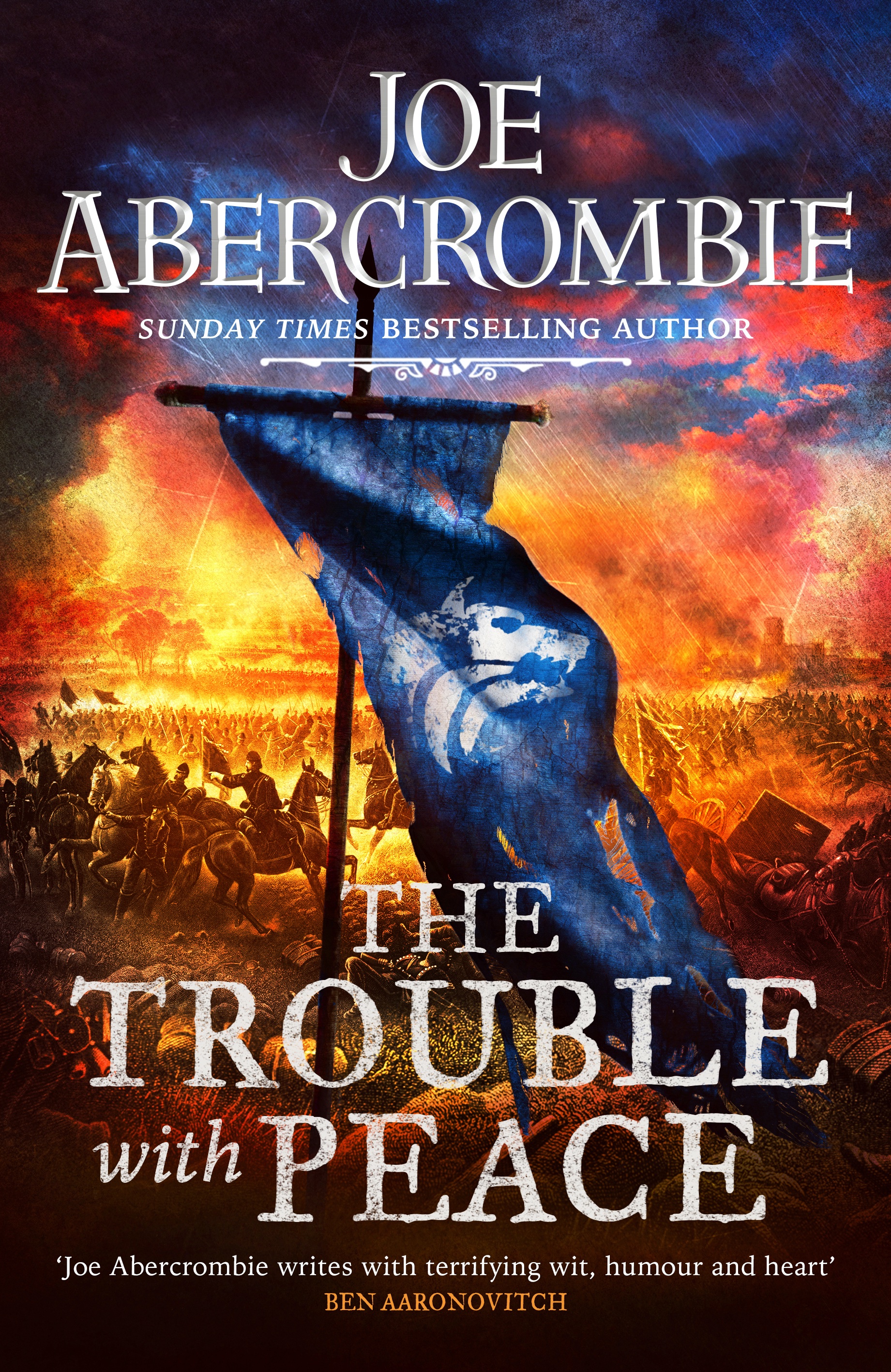
Alright, folks, settle in and grab your ale (or your preferred reading beverage) because we are diving deep into Joe Abercrombie’s The Trouble With Peace, Book Two of The Age of Madness! If you thought A Little Hatred was a wild ride, buckle up, buttercups, because Abercrombie cranks the “oh crap” dial to eleven and then snaps it off. This is your friendly neighborhood fantasy guru, here to break down this beast of a book. Full spoilers ahead, obviously! If you haven’t read it, go do that, then come back and nod sagely with me.
Plot Synopsis: When “Peace” is Just Another Word for “Impending Doom” 😵
Okay, so “peace” is in the title, but let’s be real, this is Abercrombie. Peace is just the quiet bit where everyone is sharpening their knives and plotting. The book is split into three parts, and each one just escalates the glorious, bloody mess.
Part IV: The World’s Wrongs – Or, The Simmering Pot
The book kicks off with the Union in a precarious state. King Orso, bless his reluctant heart, is trying to be a good king, but the crown chafes literally and metaphorically. He’s surrounded by the old guard of the Closed Council, who are about as helpful as a chocolate teapot.
- Orso’s Royal Pains: His big idea is a grand tour of the Union to connect with the people. The Closed Council, led by the ever-creepy Arch Lector Glokta (Savine’s dad, remember?) and the even creepier Bayaz (who is always lurking), immediately shoot it down. Too many problems at home: the Breakers are still a threat despite the Valbeck crackdown, the Burners (led by the fanatical Judge) are causing mayhem, and the pamphlets slandering everyone are flying thick and fast. Bayaz makes it clear the debt to his bank, Valint and Balk, is non-negotiable and is crippling the state. Orso then gets saddled with the Fedor dan Wetterlant case – a noble accused of rape and murder. Finding him innocent means pissing off the commoners; finding him guilty means pissing off the nobles. Bayaz advises Orso that the king’s job isn’t to set right the world’s wrongs, but “to ensure that we benefit from them.” Ouch.
- Vick in Westport: Inquisitor Vick dan Teufel, along with her reluctant sidekick Tallow, is dispatched to Westport. The city is on the verge of voting to secede from the Union and join Styria. Superior Lorsen, the local Inquisition head, is out of his depth. Vick’s mission is to stop this, by any means. She meets with key Aldermen: Filio (pro-Union but cautious), Dayep Mozolia (a savvy businesswoman playing both sides), and Sanders Rosimiche (a pro-Styrian pig). She uses bribes (trade rights from Glokta) and brutal intimidation (beating Rosimiche senseless after he insults her and reveals Valint & Balk hold his debts).
- Savine’s Business Blues & New Alliances: Lady Savine dan Glokta is having a rough time. Her investments are failing, her reputation is tarnished after Valbeck, and she’s haunted by her past. At a Solar Society meeting, King Orso publicly snubs her for her rival, Selest dan Heugen. Zuri, her ever-loyal companion, reveals Savine is pregnant (with Leo dan Brock’s child, from their tryst in A Little Hatred). Then, a lifeline: Leo’s mother, Finree dan Brock, and Savine’s mother, Ardee, propose a marriage between Savine and Leo. It’s a politically and personally advantageous match, offering Savine a way back to power and a solution to her “condition.” She accepts. Meanwhile, Bayaz has a not-so-subtle chat with Savine and Glokta on the Kingsway, hinting at future opportunities for Savine if she plays her cards right and warning Glokta his time might be up.
- Leo’s Wounded Pride: Lord Governor Leo dan Brock is struggling in Angland. His leg wound from the duel with Stour Nightfall is a constant agony, and he’s chafing under the administrative burdens of his new role and the Closed Council’s demands for more taxes. He’s frustrated and itching for action. His mother, Finree, urges him to be more political. He finds out about his impending marriage to Savine (arranged by their mothers) after he arrives in Adua for Lord Isher’s wedding, and after a surprisingly intense confrontation, he and Savine embrace their politically charged union, which quickly turns physically explosive.
- Broad’s Dark Path: Gunnar Broad is working for Savine, handling “labour relations” for her canal project. This means brutally suppressing strikes. He’s good at it, but it’s eating him up inside. He’s providing a good life for his wife Liddy and daughter May, but at the cost of his soul. Savine tasks him with a dangerous mission: to reconnect with the Breakers and Burners in Valbeck, using his past connections.
- Rikke’s Worsening Visions: Rikke, the Dogman’s daughter, is plagued by increasingly debilitating visions from the Long Eye. Isern-i-Phail, the hillwoman, believes a witch in the High Places, Caurib (whose face is stitched with golden wire), can help. They journey to the forbidden lake. Caurib performs a ritual, tattooing runes around Rikke’s left eye to control the Long Eye, but warns Rikke she must choose which eye to sacrifice to fully master her power.
- Clover in the North: Jonas Clover, now serving Stour Nightfall, is sent to hunt Shanka (flatheads). He leads a successful ambush, displaying his old tactical cunning. He’s clearly uncomfortable with Stour’s increasingly tyrannical rule, especially when Stour tortures Gregun Hollowhead. Stour mentions plans to annex Uffrith after the Dogman’s death, using an alliance with Oxel.
Part V: The Favourite Son – Or, The Plot Thickens (and Curdles)
This part is all about the characters making moves, alliances forming, and the rebellion really starting to take shape.
- Orso Deals with Wetterlant (and Leo): Orso, influenced by Lord Isher (who’s secretly plotting), decides to go through with Wetterlant’s trial, hoping for a compromise. However, Wetterlant, likely coached by Isher and his mother, pleads innocent, causing uproar. Leo dan Brock, also manipulated by Isher, makes a fiery speech condemning the trial as unjust and accusing Orso of being a puppet. Orso, enraged, has Gorst physically remove Leo. He then sentences Wetterlant to hang. The hanging itself is a botched, chaotic mess, further damaging Orso’s reputation and sparking a near-riot. This is the last straw for many nobles.
- Savine in Angland & Rebel Recruitment: Savine moves to Angland with Leo and immediately takes charge. She uses her business acumen and ruthlessness to extract “patriotic contributions” (aka taxes and shares) from industrialists like Arinhorm, securing funds for Angland and, secretly, for the rebellion. She launches a PR campaign, orchestrated by Spillion Sworbreck, to paint herself as “The Darling of the Slums,” using her Valbeck experiences.
- Vick’s Triumph and a New Master: Vick’s plan in Westport culminates. She fakes an assassination attempt on Solumeo Shudra (the pro-Styrian leader), “saving” him from a (hired actor) “Casamir dan Shenkt.” Shudra, convinced Styria tried to martyr him, swings his support to the Union, securing their victory in the secession vote. Later, the real Shylo Vitari (Styria’s Minister of Whispers) and the real Casamir dan Shenkt capture Vick. Vitari, impressed by Vick’s cunning, offers her a job, revealing that Bayaz controls the Union through Valint & Balk. Vick, still loyal to Glokta (who got her out of the camps), refuses. Vitari lets her go, giving her a contact if she changes her mind.
- Leo, the Reluctant Rebel: Back in Angland after his public humiliation by Orso, Leo is easily drawn into Isher’s conspiracy. Isher, Heugen, and Barezin paint the Closed Council as tyrants and Orso as their puppet. They propose an alliance to “free” the king and restore the Open Council’s power. Leo agrees to lead the military arm of the rebellion, planning to bring in Rikke and Stour Nightfall as allies. His relationship with Savine is passionate but volatile, especially when he learns of her past with Orso.
- Broad and Judge: Broad returns to Valbeck and finds Sarlby, his old Breaker comrade, now a Burner. Sarlby leads him to Judge. She’s crazier and more dangerous than ever. Broad reveals Savine’s offer: arms and support for a widespread uprising to coincide with Leo’s rebellion. Judge, enticed by the weapons (especially a cannon), agrees, but demands Broad prove his loyalty by helping her free some captured Burners.
- Rikke Takes Uffrith: The Dogman dies. At his funeral, the factions in Uffrith (Red Hat for Union, Oxel for Stour, Hardbread for neutrality) pressure Rikke to choose a side. Instead, she masterfully manipulates Red Hat and Oxel into a duel in the Circle. Oxel kills Red Hat. Rikke then has Shivers, her champion, kill Oxel. With her main rivals dead, she declares Uffrith will remain independent under her rule. She has chosen to sacrifice her right eye to fully control the Long Eye. The Nail (Gregun Hollowhead’s son) arrives, seeking vengeance on Stour; Rikke hints at a future alliance.
- Clover’s Discontent: Clover observes Stour’s search for a magician to counter Rikke’s Long Eye, which is largely fruitless. Stour receives news of the Dogman’s death and Rikke’s takeover of Uffrith, infuriating him. Calder warns Stour against antagonizing Bayaz.
Part VI: Storms – Or, Everything Hits the Fan
The rebellion launches, and it’s as messy and brutal as you’d expect.
- The Rebellion Begins: Leo lands his Angland army on the Midderland coast, joined by forces from the Open Council lords. Their plan is to march on Adua, relying on Stour and Rikke for support, and a traitor on the Closed Council (Lord Marshal Brint) to sow confusion.
- Orso’s Countermoves: Orso, warned by an anonymous letter (Rikke’s, it’s implied), is prepared. Glokta resigns due to the conflict of interest (Savine and Leo). Pike becomes the new Arch Lector. Orso raises his own forces, including the re-formed Crown Prince’s Division under the newly promoted General Forest. Vick uses Brint to feed misinformation to the rebels about Orso’s weakness. Orso also makes a secret trip to Sipani to meet King Jappo, seeking Styrian neutrality and successfully outmaneuvering Leo, who Jappo found arrogant. He also leaves his mother in Sipani with her lover, Countess Shalere.
- The Battle of Stoffenbeck:
- The Setup: The two armies converge near Stoffenbeck. Orso’s forces, though outnumbered, hold good ground. Pike commands the Union left with cannons, Forest the right. Orso, in a moment of inspiration, leaves his royal standard on the clock tower in Stoffenbeck to deceive the enemy, while he commands from a less conspicuous position.
- The Open Council’s Failure: The Open Council’s attack on Orso’s left flank (Pike’s cannons) is a disaster. Pike, having sabotaged the bridges and using his cannons effectively, decimates their forces. Lord Barezin’s “Gurkish Legion” is a particular shambles.
- Stour’s Betrayal (of Leo): Stour Nightfall, instead of supporting Leo’s main attack, launches his own premature assault on Orso’s right (Forest’s position). His Northmen fight fiercely but are eventually repulsed by Forest’s disciplined troops (who are later reinforced by Lord Marshal Rucksted’s cavalry arriving in the nick of time).
- Leo’s Charge: Leo, seeing the battle turning against him and Stour acting independently, leads a desperate cavalry charge into Stoffenbeck, hoping to capture Orso (believing him to be by his standard). He breaks through but is ambushed by cannon hidden in the town square. His force is annihilated. Antaup and Jin are killed. Leo is horribly wounded and captured by Gorst.
- Savine’s Ordeal: Savine, heavily pregnant, witnesses the battle’s disastrous turn. A cannon near her explodes, wounding her. Broad, Zuri, and Haroon manage to get her away from the immediate aftermath.
- Broad’s Redemption/Damnation: Broad, helping Judge free the Burner prisoners, participates in a brutal ambush on a Valint & Balk bank transport. He ends up killing the bank manager in a frenzy. Judge, impressed by his savagery, agrees to the uprising. The Breakers and Burners are now armed and ready to cause chaos across the Union.
- Rikke’s Gambit: Rikke, having tricked Leo and Stour, uses their absence to seize Carleon, Stour’s capital. With Shivers and Isern’s help, and an alliance with the Nail, she takes the city with minimal bloodshed by bribing/intimidating the guards. Brodd Silent, who resists, is killed. She is now effectively Queen of the North.
- Clover’s Betrayal (of Stour): Stour, defeated and wounded, retreats with Clover and his remaining men. On the voyage back to the North, Clover, Sholla, and Downside (along with men loyal to Rikke, led by Shivers and the Nail, who meet them at the coast) betray and capture Stour. They cripple him by slitting his tendons. Rikke has now eliminated her main rival.
- The Aftermath & New World Order:
- Leo is sentenced to hang, but Orso, likely influenced by Savine’s desperate plea (where she reveals she is Orso’s half-sister), commutes his sentence to life imprisonment. Savine, knowing the truth of her parentage is out, surrenders.
- The rebel lords are hanged. Orso has consolidated his power, but the Union is still deeply fractured.
- Vick discovers Pike is the Weaver, the true leader of the Breakers. He orchestrated the uprising in Valbeck and now, with the Union’s armies depleted and distracted, the Breakers launch a coordinated, massive rebellion across Midderland. Pike offers Vick a place in his “Great Change.” She accepts.
- Bayaz’s man, Sulfur (revealed to be an Eater), observes all this, hinting that Bayaz is, as always, playing a longer game.
Phew! And that’s just the main stuff! Abercrombie weaves a damn complex tapestry, and no thread is left untangled or unbloodied.
Character Analysis: A Bunch of Gloriously Flawed Bastards (and a Few Decent Fools) ❤️🩹
Abercrombie is the king of character, and The Trouble With Peace is a masterclass.
- King Orso: My man Orso! He’s still the reluctant king, witty and self-deprecating, but he’s growing. He shows surprising steel at Stoffenbeck, a cunning he didn’t know he had. His decision to spare Leo, after Savine’s bombshell revelation that they’re half-siblings (!!!), shows a depth of… well, something. Shock? Mercy? Pragmatism? His relationships with his mother Terez (icy but with underlying respect) and his complicated feelings for Savine drive much of his arc. He’s trying to do the right thing in a world that chews up good intentions.
- Key Development: From foppish prince to a king who can make hard, if painful, decisions. His parentage reveal with Savine is a game-changer for his worldview.
- Savine dan Glokta (dan Brock): Still sharp as a bag of razors, ambitious as hell, and haunted by Valbeck. Her pregnancy humanizes her, but also makes her more desperate. Her marriage to Leo is a calculated move, but there are flickers of genuine (if twisted) affection. She’s a master manipulator, playing everyone, but even she gets outplayed by the sheer chaos of war and the deeper schemes of others. Her discovery of her true parentage is devastating.
- Key Development: Her attempts to control everything are thwarted, forcing her into vulnerable positions. The revelation about Orso shatters her.
- Leo dan Brock: The Young Lion. Brave, honorable, and a bit of a glorious dumbass when it comes to politics. His leg wound is a constant reminder of his mortality and a source of simmering frustration. He’s easily manipulated by Isher and his own heroic self-image into leading the rebellion. His love for Savine is genuine, if a bit naive. His defeat at Stoffenbeck is brutal and complete.
- Key Development: From celebrated hero to broken traitor. His idealism is shattered by the realities of war and politics.
- Vick dan Teufel: Pragmatic, ruthless, and deeply scarred by her past. Her loyalty to Glokta was her anchor. With him gone, and Pike revealed as the Weaver, she’s forced to make a new, terrifying choice. Her “success” in Westport is a masterpiece of deception, but she’s clearly uncomfortable with the moral compromises.
- Key Development: Her loyalties are tested and ultimately shifted. She embraces the “Great Change,” perhaps seeing it as the only way to truly break free from the systems that broke her.
- Rikke: Her transformation is stark. The giggling, fit-prone girl is gone, replaced by a cunning, decisive leader. Choosing to sacrifice her eye to control the Long Eye is a powerful moment. She outmaneuvers everyone in the North, playing Leo and Stour against each other to secure her own power. Her relationship with Shivers remains a quiet cornerstone of her character.
- Key Development: From victim of her powers to master of her destiny (and the North). She becomes a truly formidable player.
- Gunnar Broad: Oh, Broad. His descent is heartbreaking. He wants peace and a good life for his family, but his capacity for violence keeps dragging him back into the darkness. His work for Savine, then his mission to Judge, pushes him further down a bloody path. He’s a good man forced to do terrible things, and the line between necessity and desire blurs.
- Key Development: His moral compass shatters. He embraces the violence, perhaps finding a grim satisfaction in it, becoming what he once fought against.
- Jonas Clover: The ultimate survivor. Witty, cynical, and always looking for the path of least resistance. His servitude under Stour is a burden, but he plays the game until his moment comes. His betrayal of Stour is a masterstroke of pragmatism, aligning himself with Rikke’s rising power.
- Key Development: From reluctant servant to kingmaker (or at least, king-remover). He finally chooses a side that offers a better future for the North.
- Arch Lector Pike (The Weaver): The reveal that Pike is the Weaver, the shadowy leader of the Breakers, is a fantastic twist. He’s been playing a long, deep game. His motivations seem rooted in a genuine desire to overturn a corrupt system, but his methods are ruthless. A chilling antagonist, or perhaps a dark anti-hero, depending on your view.
- Bayaz: He’s barely in it, but his shadow looms large. His control through Valint & Balk, his manipulation of events from afar, his agent Sulfur (an Eater!). He’s the ultimate puppet master, and you just know he’s got plans within plans.
Thematic Resonance: It’s All Grim and Glorious 🧐
Abercrombie doesn’t do simple themes, and this book is packed.
- The Illusions of Peace and Progress: The “peace” is a sham, a thin veneer over simmering resentments and power struggles. The much-vaunted “progress” of the industrial age brings new forms of suffering and exploitation, fueling the Breaker and Burner movements. It asks if “progress” is always good, and for whom.
- The Corrupting Nature of Power: Whether it’s Orso struggling with the crown, Stour’s tyranny, Savine’s machinations, or Pike’s revolutionary zeal, power changes people, and rarely for the better. It demands compromise, cruelty, and a detachment from ordinary morality.
- The Cost of Change: The Breakers and Burners want a “Great Change,” but the book shows that radical change is often birthed in violence and chaos. Is the desired outcome worth the horrific cost? Pike seems to think so.
- Loyalty, Betrayal, and Self-Interest: These are the currencies of Abercrombie’s world. Characters constantly shift allegiances based on perceived advantage or desperate necessity. True loyalty is rare and often tragically misplaced.
- The Legacy of the Past: Characters are haunted by their histories, by old wounds, old grievances, and the actions of their parents. The Union itself is creaking under the weight of its past decisions and debts. Savine and Orso’s parentage is a prime example of the past’s explosive power.
- War’s Brutal Reality vs. Heroic Ideals: Leo embodies the heroic ideal of war, but the Battle of Stoffenbeck is a brutal, chaotic, and ultimately futile slaughter. Abercrombie excels at stripping away the romance of war, showing its true, ugly face.
- Order vs. Chaos: The established powers (the Crown, the Councils) represent a kind of order, however corrupt. The Breakers, Burners, and even the rebel nobles, unleash chaos in their attempts to reshape the world. The book questions whether any order is better than chaos, or if some systems are so rotten they need to be burned down.
World-Building Deep Dive: An Age of Smoke, Steel, and Suffering 🏭
The world of the First Law continues to evolve, and “The Age of Madness” firmly plants it in an industrializing era.
- The Union in Flux:
- Political Landscape: A deeply divided nation. The monarchy under Orso is weak, caught between the entrenched power of the Closed Council (secretly manipulated by Bayaz) and the resentful nobles of the Open Council. The Inquisition, under Glokta and then Pike, remains a shadowy force of control.
- Social Unrest: The industrial revolution has created a massive, impoverished working class. Conditions in factories and mines are horrific, leading to the rise of the Breakers (who want systemic change through organized rebellion) and the Burners (violent anarchists led by Judge). Pamphlets and public opinion are becoming powerful new weapons.
- Economy: Dominated by new industries (textiles, mining, infrastructure projects like canals and railways). However, the Union is crippled by massive debt, primarily to Bayaz’s Banking House of Valint & Balk, giving him immense leverage.
- The North: Still a harsh, unforgiving land. Stour Nightfall’s rule is brutal and unstable. Uffrith, under the dying Dogman and then Rikke, struggles for independence, caught between the Union and Stour. The Shanka remain a background threat.
- Styria: Under the firm hand of Grand Duchess Monzcarro Murcatto (the Serpent of Talins) and her son, King Jappo, Styria is a rising, unified power. They engage in espionage and political maneuvering, as seen in Westport, rather than open war with the Union for now. Sipani is a key Styrian city, a den of pleasure and intrigue.
- Magic’s Role: Magic is less overt than in the original trilogy but still a potent, often insidious force.
- Bayaz operates in the shadows, his influence more financial and political than flashy spells. His agent, Yoru Sulfur, is revealed as an Eater, showcasing Bayaz still has access to dark powers.
- Rikke’s Long Eye is a powerful, unpredictable magical ability, giving her glimpses of the past and future, making her a key player in the North.
- The concept of Eaters and their abilities hints at the darker, more dangerous side of magic still present in the world.
- Technology’s Advance: The “Age of Madness” is also an age of invention. Curnsbick’s steam engines (like the one that catastrophically explodes), Arinhorm’s mine pumps, and new weaponry (Pike’s cannons) show technology reshaping warfare and society. This creates a fascinating tension between traditional fantasy elements and industrial-era advancements.
Genre Context & Comparisons: Grimdark Gets an Industrial Revolution Upgrade ⚙️
Abercrombie continues to be a standard-bearer for the Grimdark subgenre, but he’s also pushing its boundaries.
- Grimdark Core: All the hallmarks are here: morally ambiguous characters, a brutal and unforgiving world, a cynical take on power and human nature, and a distinct lack of easy victories or happy endings. If you love George R.R. Martin for his political chess and flawed heroes, you’re in the right place, though Abercrombie’s pacing is often much faster and his focus more tightly character-centric.
- Industrial Fantasy: This is where Abercrombie is really innovating. He’s not just setting a fantasy story against an industrial backdrop; the industrial revolution is a core part of the conflict and world-building. This sets him apart from more traditional medieval-esque fantasies. Think of it as a grittier, more grounded cousin to some steampunk, but with less emphasis on fantastical gadgets and more on the societal impact of industrialization.
- Low Magic, High Stakes: While magic exists and is crucial (Rikke’s abilities, Bayaz’s hidden influence), it’s not the everyday tool it is in some high fantasy. The conflicts are primarily driven by human ambition, greed, and desperation. The stakes are incredibly high – personal survival, the fate of nations, the very structure of society.
- Character-Driven Epic: Abercrombie’s greatest strength is his characters. The plot, while intricate and engaging, serves to test and reveal these complex individuals. It’s less about a grand quest to defeat a dark lord and more about navigating treacherous political landscapes and internal moral struggles. The closest comparison in terms of character depth and moral greyness within a sprawling political epic is still A Song of Ice and Fire.
Influences & Inspirations: Echoes of History and Human Nature ✍️
While Abercrombie crafts a unique world, you can see potential influences:
- 19th Century Europe: The societal upheaval, class conflict, rise of industrial capitalism, and revolutionary fervor strongly echo historical periods like the Industrial Revolution in Britain or the lead-up to various European revolutions. The Breaker movement feels very much inspired by early socialist and workers’ movements.
- Realpolitik and Machiavellianism: The cynical, pragmatic approach to power politics shown by characters like Glokta, Bayaz, Savine, and Pike feels drawn from the colder, more ruthless schools of political thought. “The ends justify the means” is practically a motto for many.
- Military History: The descriptions of battles, particularly the brutal close-quarters fighting and the psychological toll on soldiers, suggest an appreciation for realistic military history, moving beyond romanticized depictions of warfare. The introduction of cannons and their impact on tactics also reflects historical shifts in military technology.
- Noir and Dark Fiction: There’s a certain hard-boiled cynicism and bleakness to the world and its inhabitants that can be found in classic noir. Everyone has an angle, and trust is a commodity in very short supply.
Key Takeaways
- Peace is just the interval between wars, often more treacherous than conflict itself.
- The pursuit of power inevitably leads to moral compromise and often outright villainy.
- Societal change is a bloody, chaotic business with no guarantees of a better outcome.
- No one is truly in control; even the puppet masters can find their strings tangled.
- The past is never dead; its debts and grievances constantly shape the present.
- Heroism and villainy are often just matters of perspective and propaganda.
- Even in the darkest of worlds, flickers of humanity—love, loyalty, regret—persist, making the betrayals all the more painful.
Wrapping It Up 🎁
The Trouble With Peace is Abercrombie at the absolute top of his game. It’s a brutal, brilliant, and utterly compelling read that takes the foundations laid in A Little Hatred and builds a teetering tower of political intrigue, personal tragedy, and explosive action. The characters are so vivid you’ll love them, hate them, and pity them all at once. The plot is a relentless machine, grinding towards a climax that is both shocking and inevitable.
Abercrombie doesn’t just write stories; he dissects human nature in a world teetering on the brink. And damn, is it a thrilling dissection to witness. Now, if you’ll excuse me, I need to go lie down in a dark room and process all that. Bravo, Mr. Abercrombie, you magnificent bastard. Bravo.