Uprooted
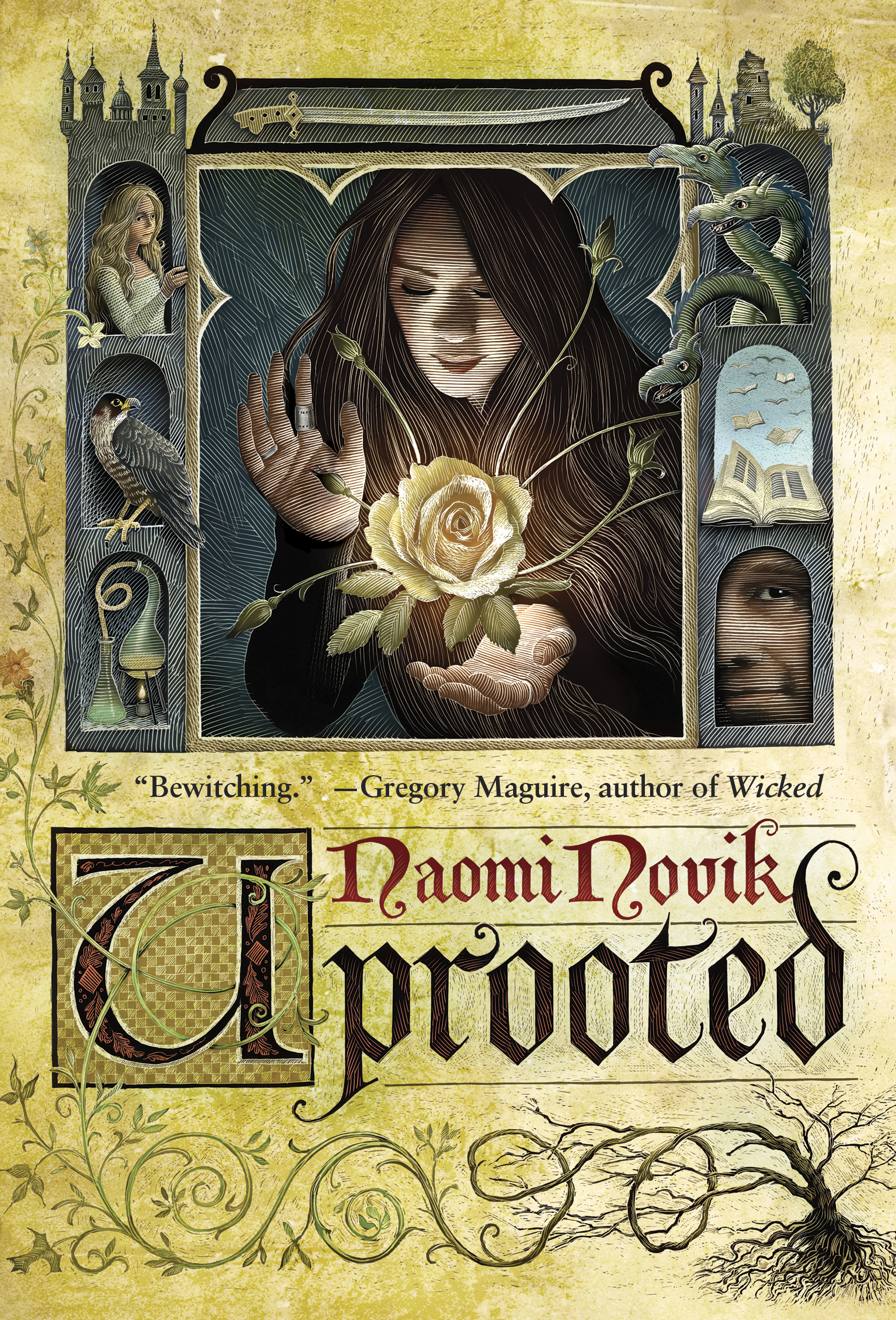
Alright folks, buckle up! Your favorite fantasy blogger here is fresh off an absolute ride of a book. I’m talking about Naomi Novik’s “Uprooted,” and let me tell you, if you thought you knew fairy tales, you’re in for a twisty, thorny surprise! 🌲✨ This isn’t your grandma’s Sleeping Beauty, trust me. It’s got teeth, and roots, and more magic than you can shake a poisoned apple at. Let’s dive in!
Plot Synopsis: The Thorny Path Ahead (SPOILERS!)
Okay, deep breaths, because this book is a journey, and it doesn’t shy away from getting dark. We start in a valley protected by a mysterious wizard known only as the Dragon. Every ten years, the Dragon takes a seventeen-year-old girl to his tower as tribute. The valley folks accept this because the Dragon protects them from the Wood, a creeping, malevolent forest that swallows people and twists them into corrupted horrors. The popular story is that he eats the girls, but the valley knows better: he keeps them for ten years, and they return changed, often wealthy, but unwilling to stay in the valley.
Our protagonist is Agnieszka, a clumsy, messy girl who is completely unremarkable compared to her best friend, Kasia. Kasia is everything special: beautiful, brave, clever, kind – everyone knows the Dragon will choose her. But on the Choosing Day, in a shocking twist that sets the entire story in motion, the Dragon picks Agnieszka instead.
Agnieszka is dragged unwillingly to the tower. Life there is miserable at first. The Dragon (whose real name is Sarkan, which means Dragon in the magic tongue) is a cold, arrogant wizard who views Agnieszka as useless. He expects her to serve him, but she’s terrible at everything. He discovers, however, that she possesses uncontrolled, wild magic – not the structured, formal magic he practices. Initially, attempting to teach her structured spells drains her and leaves her weak.
While Sarkan is away answering a summons (and accidentally picking up a painful claw-wound from a Chimera), the Wood makes a major strike against Agnieszka’s village, Dvernik. It corrupts the cattle, turning them vicious. Agnieszka, using her newfound magic and stolen potions (including dangerous fire-heart and stone-spell) from Sarkan’s lab, rushes back to Dvernik. She helps the villagers burn the corrupted cattle and saves a man, Jerzy, from a similar fate by turning him to stone.
Sarkan returns, injured by a mantis, and is quickly corrupted. Agnieszka uses Jagga’s healing spells (from a quirky, forgotten spellbook she found) and some dangerous purging magic to save him. This further reveals her affinity for wild, intuitive magic and makes Sarkan begrudgingly accept her as a student, shifting focus to healing and less structured spells.
A shocking truth is revealed: the Wood isn’t just corrupting people; it’s taking them and sometimes turning them into heart-trees, which power the Wood’s spread. Kasia was taken by Walkers (Wood creatures) during the Dvernik attack and planted in a heart-tree. Agnieszka, determined to save her, convinces Sarkan to help. Using a powerful, dangerous spell called the Summoning (from Luthe’s Summoning, a book Sarkan had initially forbidden), they dive into the Wood’s inner reality. Agnieszka finds Kasia trapped within a heart-tree, conscious but lost in the Wood’s illusion. She pulls Kasia out using her wild purging magic, nearly burning her to death in the process. They return to the tower, having also killed the heart-tree through the purging spell.
Kasia is alive but transformed: her body is unnaturally strong and resilient, like polished wood, yet she shows no signs of corruption. Prince Marek, son of the King, arrives, having heard rumors of a woman freed from the Wood. He forces trials upon Kasia, who passes them, proving she isn’t corrupted. Marek reveals his true motive: finding his mother, Queen Hanna, who disappeared into the Wood twenty years ago with a Rosyan prince. He believes she may also be alive and uncorrupted, offering a deal: help him save the Queen, and Kasia will be safe from trial.
They embark on an expedition into the Wood with Marek’s soldiers and the Falcon (Solya), a powerful court wizard. The Wood resists fiercely, sending mantises and walkers. Soldiers die horribly, many turned into corrupted things or simply killed. They reach a heart-tree and, using the Summoning and Agnieszka’s purge, attempt to free the Queen. They succeed, but the Queen is a hollow shell, unresponsive and empty. However, her rescue and the death of that heart-tree alert the Wood’s true power.
Returning to Kralia, the Queen faces trial for corruption. Agnieszka testifies, casting an illusion of the battle and the Queen’s rescue to sway the court. The Queen, briefly regaining lucidity, testifies that she was kidnapped by Prince Vasily and trapped in the Wood, not a willing participant. This sparks outrage against Rosya.
Disaster strikes Kralia: the King is killed by a monster (a Tsoglav from a corrupted bestiary book gifted by Rosya), Father Ballo is killed, and the palace is attacked by more Wood creatures. Alosha, another powerful wizard (“the Sword”), fights them. Agnieszka uses lightning to kill a Tsoglav. Alosha realizes the scope of the Wood’s plan: eliminate the royal family and key wizards, plunge Polnya into chaos and war with Rosya, weakening both nations so the Wood can easily expand. Alosha gives Agnieszka her killing sword and tells her to find and kill the source of the Wood’s power.
Agnieszka, Kasia, and the royal children (Sigmund’s son Stashek and daughter Marisha, whose mother the Princess is also killed) flee Kralia, pursued by Marek and Solya, who believe Agnieszka is the traitor. They reach the tower, which Sarkan has quickly fortified with earthen walls using his magic and the Baron of the Yellow Marshes’ soldiers. Marek lays siege.
During the battle, Agnieszka and Sarkan defend the tower, using magic to counter Marek and Solya’s attacks (stone-turning cannon crew, reflecting arrows, raising dead bodies). They manage to hold the tower until dawn. A parley seems possible, but Marek’s desperation to win the throne (with Sigmund dead) and his belief that Agnieszka is holding the children hostage makes him reject surrender. The Queen, still a puppet, enters the fray, leading Marek’s charge.
They breach the tower’s defenses. Agnieszka realizes the Queen is a hollow vessel, controlled by the Wood’s true essence. They retreat to the tomb below the tower. As the Queen and Marek’s men corner them, Agnieszka and Sarkan cast a final Summoning. The Queen attacks, revealing she is the Wood, or the Wood’s essence inhabits her. Kasia uses Alosha’s sword to strike the Queen, pinning the essence. The Sword begins to drink the essence, causing the Queen’s body to burn and crumble, but the essence escapes as smoke, having survived the attack. Marek is killed by the Queen before her collapse.
The battle ends with massive casualties. Agnieszka, Kasia, Solya, the Baron’s men, and the royal children survive. Marek is dead, the King is dead, the Crown Prince is dead, the Princess is dead. Polnya is left vulnerable.
Agnieszka knows the Wood’s essence escaped. She decides to return to the Wood to confront it at its source, leaving Kasia to take the children to their grandparents in Gidna with Solya and the remaining soldiers. Agnieszka enters the Wood alone.
She is drawn to a hidden grove of heart-trees. She encounters Linaya, a woman made of wood, the Wood-queen’s sister. Linaya explains their people were the valley’s original inhabitants, connected to the Spindle’s power. They dwindled and changed into trees to survive the harshness and isolation, but some didn’t change completely or kept human memories, leading to corruption. The Wood-queen (whose human name was also Linaya, revealed later) was imprisoned by the tower people for trying to help her people transition, but she broke free, killed them, and used their power and her own rage to create the corrupted Wood as a defense, spreading her misery.
Agnieszka confronts the Wood-queen, now just a raging essence hiding in a dying heart-tree. Agnieszka, understanding the Wood-queen’s pain and Linaya’s pity, offers her a choice: continue her rage and destruction, or accept peace and change fully into a heart-tree like her sister. Using her unique connection to the valley’s power and the ability to understand the Wood-queen’s deeper self (gained from being imprisoned in the tree), Agnieszka helps her make the final transition, feeding her a special fruit and water from the Spindle, and guiding her with a modified spell.
The Wood-queen becomes a peaceful heart-tree, tangling with her sister’s tree. The corrupted Wood begins to heal. Agnieszka stays in the Wood, tending the grove, finding corrupted heart-trees and healing them (either by helping souls transition or, if too far gone, burning them), using her magic and knowledge. She finds her place, connected to the valley’s power and helping the Wood find balance, no longer a destructive force but a quiet, dreaming forest.
Sarkan eventually returns to the tower, which is damaged but standing. He’s uncomfortable with the closeness to the Wood and the lack of structure, but seems drawn to stay because of Agnieszka. The valley is safe again, the choosing ritual ends, and Agnieszka lives in the Wood, visits her family and friends, and occasionally sees Sarkan, hinting at a complex, ongoing relationship.
Character Analysis 🎭
- Agnieszka: Starts as the “unspecial” girl, clumsy and underestimated. Her arc is one of self-discovery and embracing her unique, wild, intuitive magic, which is distinct from Sarkan’s formal system. She’s fiercely loyal, deeply rooted to her home and the people she loves, and this emotional core fuels her power and her actions, making her capable of both terrible destruction and profound healing. Her core strength is her connection to the valley and her refusal to abandon her humanity or her feelings, which contrasts with the older wizards.
- Sarkan (The Dragon): The archetypal mysterious, aloof wizard. He’s centuries old, powerful, brilliant, and deeply isolated. His rigid, formal magic reflects his personality and his attempts to control a dangerous world. His arrogance and impatience are gradually chipped away by Agnieszka’s unpredictable magic and her emotional depth. Despite his cold exterior, he deeply cares about protecting the valley and Polnya, and his bond with Agnieszka evolves from master/apprentice to something complex, intimate, and mutually reliant.
- Kasia: The Golden Girl, seemingly destined for a fairy-tale fate. Her bravery is tested by the horrific reality of being taken by the Wood. Her transformation into a strong, uncorrupted being after her rescue highlights both the danger and resilience found within the Wood’s magic. She remains Agnieszka’s anchor and moral compass, ultimately finding her own strength and purpose separate from the valley and the choosing.
- Prince Marek: The Hero Prince, charismatic and driven by a single, desperate goal: rescuing his mother. His charm hides a ruthless ambition and a chilling capacity for self-deception and violence. His love for his mother is genuine but becomes twisted by the Wood’s influence and his own thirst for glory, ultimately leading to tragedy for himself and others.
- Solya (The Falcon): A politically savvy, powerful court wizard who is initially dismissive of Agnieszka and Sarkan. He represents the calculated, transactional nature of court magic and politics. While not purely evil, his ambition and focus on strategic advantage make him dangerous, and he is easily manipulated by the Wood’s plans.
- Alosha (The Sword): A formidable, ancient wizard who values the safety of the kingdom above all else. Her harsh pragmatism is born of centuries of fighting the Wood and seeing its destructive power. She is weary but dedicated, and recognizes Agnieszka’s potential, though she initially fears her connection to Sarkan and the Wood.
- The Wood-queen: A tragic figure whose motivations are complex and rooted in deep betrayal and loss. She is the manifestation of the corrupted Wood’s power and misery, seeking vengeance and control. Her transformation from a loving sister into a destructive force is central to the story’s exploration of how pain and isolation can twist even innate power.
- Linaya: The Wood-queen’s sister, representing the original, peaceful state of the wood-people’s change. She is a symbol of acceptance and letting go, offering a different path from her sister’s rage.
Thematic Resonance 🌳✨
- Home and Belonging: A central theme is the deep connection to home, specifically the valley and its power. Agnieszka’s identity is intertwined with this place, contrasting with those who are unmoored or seek external validation.
- Different Kinds of Power: The novel explores different types of power – structured vs. intuitive magic, political influence, emotional strength, physical resilience, and the raw, dangerous power of nature and corruption.
- Corruption and Healing: The Wood is a literal representation of corruption, both physical and moral. The story examines how corruption spreads, the difficulty of truly cleansing it, and whether some things are beyond healing.
- Growth vs. Stillness: This is explored through the wood-people’s change into trees, the nature of corruption that freezes or twists, and Agnieszka’s own journey of growth (and resistance to being stunted).
- Memory and History: The past, especially the history of the tower people and the Wood-queen, significantly impacts the present. Characters’ memories and interpretations of events shape their actions, and the Wood itself seems to remember grievances across centuries.
- The Personal vs. The Political: Agnieszka’s personal loyalties and love for her friends and family constantly clash with the larger political concerns of wizards and princes protecting a kingdom. The story questions whether these two realms can truly be separated or if personal feelings can drive action on a grand scale.
World-Building Deep Dive 🗺️🧙♂️
- The Valley: A unique locale defined by its relationship with the Wood and the Spindle river. It’s a place of deep, ancient magic, potentially a source of power itself, which binds its inhabitants and is both a blessing and a curse.
- The Wood: Not just a forest, but a malevolent, expanding entity with its own will. It corrupts living things, creates monsters (Walkers, Mantises), and establishes heart-trees as power sources and anchors for its influence. It seems to be powered by misery and destruction.
- The Tower: Sarkan’s isolated fortress, a place of rigid order and structured magic, built over ancient foundations and potentially connected to the valley’s power source. It serves as both a prison and a sanctuary.
- Kralia: The capital city, a center of political power and formal magic, contrasting sharply with the wildness of the valley. The court is depicted as a place of complex social rules, hidden agendas, and political maneuvering.
- Magic System: Two main types are shown: Sarkan’s structured, precise, rule-bound magic, requiring specific words and gestures; and Agnieszka’s wild, intuitive, emotional, and sometimes messy magic, which works through feeling, intent, and improvisation (Jagga’s style). Potions are also a significant element, requiring skill and often rare ingredients. The magic system is tied to the earth, water (Spindle), and perhaps other natural elements. Affinities (like Agnieszka’s for connection/earth/healing, Solya’s for sight, Alosha’s for forging) are key.
- The Wood’s Magic: Distinct from human magic, it corrupts, twists, and spreads. It can create monsters, influence minds, and resist normal magical attacks. It is tied to the heart-trees and the Wood-queen’s essence.
- The Tower People: An ancient civilization that inhabited the valley before Polnya, connected to the same power, who fought and lost against the Wood. Their history, magic (seen in the tomb and perhaps the tower itself), and ultimate fate are crucial background elements.
Genre Context & Comparisons 📚✨
- Fairy Tale Retelling: Heavily influenced by Polish folklore and classic fairy tales, particularly “Beauty and the Beast” (the Dragon taking a girl, initial fear, isolation) and perhaps elements of “Rapunzel” (the tower) and Baba Yaga (wild witch in the woods, though subverted). It deconstructs typical fairy tale tropes and explores the darker, more complex aspects of these stories.
- Dark Fantasy: Features a pervasive sense of dread, body horror (corruption, transformations), and a tangible, ancient evil. It doesn’t shy away from violence and grim outcomes.
- Fantasy of Manners: While not a primary focus, the sections in Kralia delve into courtly life, social rules, and political intrigue, contrasting with the more primal valley setting.
- Coming-of-Age: Agnieszka’s journey is fundamentally about discovering her identity, power, and place in the world.
- Ecological Fantasy: The Wood can be interpreted as a force of nature pushed too far, reacting violently against human intrusion and destruction, though it’s clearly presented as a malevolent entity rather than just a force of nature.
Influences & Inspirations 💡🎨
- Polish Folklore: Naomi Novik is known for drawing heavily on her Polish heritage, and “Uprooted” is steeped in it, from the Baba Yaga-like Dragon figure (subverted) to the atmosphere and language hints.
- Classic Fairy Tales: As mentioned, several well-known tales are woven in and twisted.
- Environmental Themes: The Wood’s pushback against human encroachment can be seen as reflecting concerns about environmental destruction, though through a fantasy lens.
- War and Conflict: The book’s depiction of war and its brutal costs, both on the battlefield and politically, feels grounded and impactful, potentially drawing on historical conflict dynamics.
Key Takeaways
- True power can be found in unexpected places, often outside of rigid rules and structures.
- Deep connections to home and the people you love are a powerful source of strength, but can also be a vulnerability.
- Corruption isn’t always obvious; it can be subtle, insidious, and twist even good intentions.
- Some forms of evil cannot be defeated by conventional means or simply killed.
- The past is rarely just history; it can actively shape and haunt the present.
- Healing is a process that requires acknowledging pain and loss, not just eliminating symptoms.
- Even in the face of overwhelming darkness, choosing compassion and connection over fear and isolation offers a path forward.
Wrapping It Up
Wow. Just… wow. “Uprooted” is one of those books that grabs you by the throat and doesn’t let go until the very last page. It’s a fairy tale reimagined with grit, heart, and truly terrifying magic. Agnieszka’s journey from clumsy village girl to powerful witch is utterly compelling, and her relationship with Sarkan is a slow-burn masterpiece of prickly banter and undeniable connection. The Wood itself is one of the most effectively chilling fantasy villains I’ve encountered – a tangible, intelligent evil that feels ancient and unstoppable. Novik masterfully blends elements of classic folklore with dark fantasy, creating a world that feels both familiar and utterly unique.