Wall of Storms
Wall of Storms - Full Book Recap and Summary
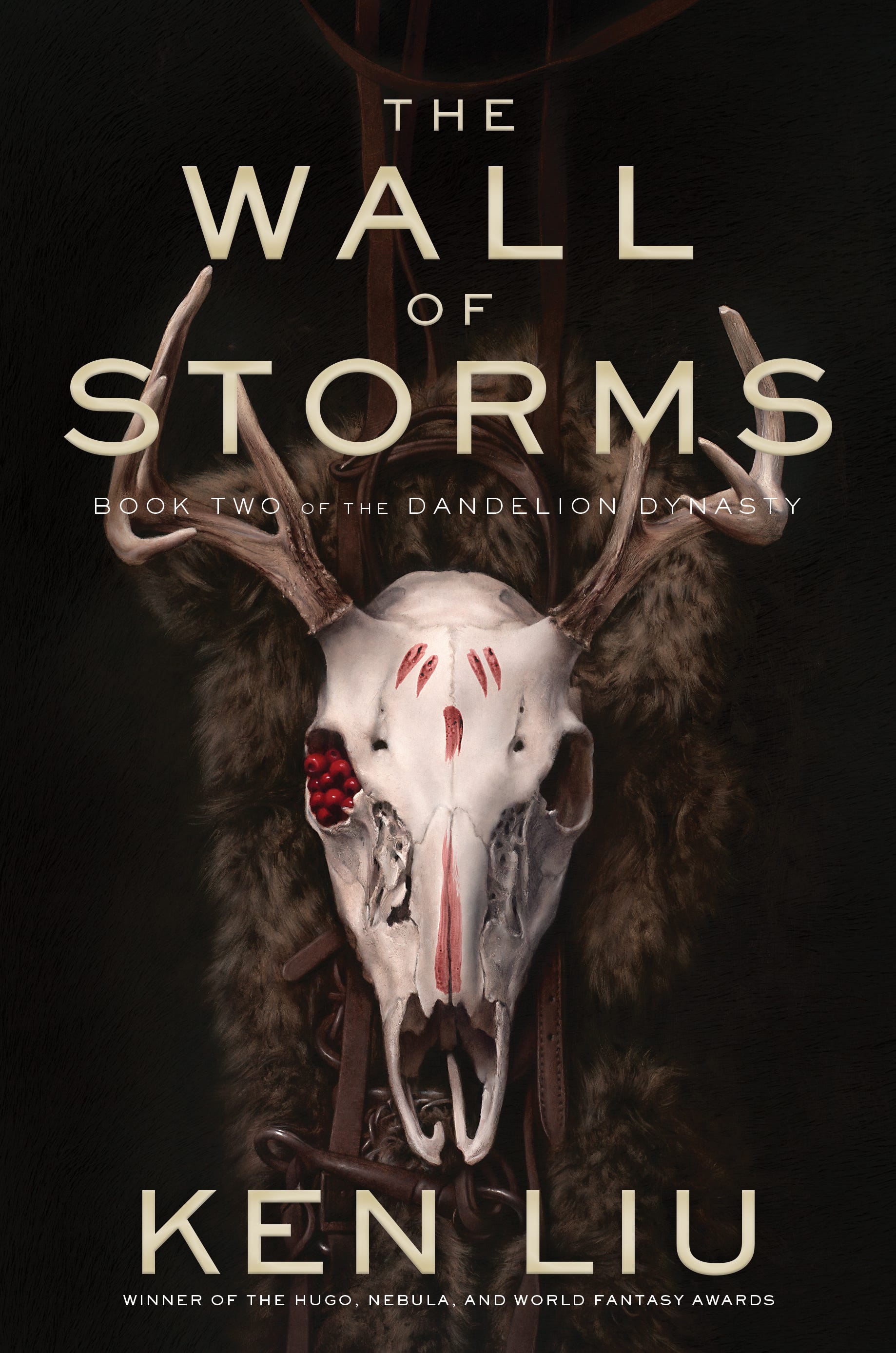
Okay, settle in, grab your tea (or maybe something stronger!), because we’re diving headfirst into Ken Liu’s The Wall of Storms , the absolutely massive and brilliant sequel to The Grace of Kings. If you thought the first book was epic, buckle up – this one takes everything and dials it up to eleven, maybe even twelve! This isn’t just a continuation; it’s an expansion, an explosion of silkpunk goodness, political backstabbing, philosophical throwdowns, and oh yeah, world-altering invasions. Let’s get into it!
(Massive Spoilers Ahead! Seriously, I’m recapping the whole thing!)
Plot Synopsis
Alright, so The Grace of Kings left Kuni Garu as Emperor Ragin of Dara, having defeated the Hegemon Mata Zyndu (RIP, you magnificent, terrifying dude). Dara is technically at peace, but it’s the kind of peace where everyone is holding their breath and eyeing each other suspiciously. Kuni is trying to rebuild the islands, implement his vision of a meritocracy via the Imperial Examinations, and balance the power between the old guard (his war buddies, now nobles with their own fiefs) and the new bureaucratic class he’s fostering.
The book kicks off focusing quite a bit on Kuni’s kids:
-
Timu: The studious, slightly awkward eldest son of Empress Jia. Feels the weight of expectation but struggles to connect with his pragmatic, charismatic father.
-
Théra: Jia’s incredibly sharp, observant, and ambitious daughter. Feels constrained by her gender but possesses a keen political mind.
-
Phyro: Son of Consort Risana, fiery, charming, loves military glory, and very much his father’s son in spirit (and maybe recklessness).
-
Fara: The youngest, daughter of the deceased Consort Fina, often looked after by the others.
Early on, we see the kids chafe under the tutelage of the strict Moralist scholar, Zato Ruthi. In a classic bit of youthful rebellion, Timu, Théra, and Phyro sneak out of the palace disguised as commoners and end up in a tavern, the Three-Legged Jug. This is where they encounter Zomi Kidosu , a brilliant but poor scholar from Dasu who has traveled to Pan for the Grand Examination. Zomi, a disabled veteran (of sorts, her injury is from a divine lightning strike!), bravely defends Emperor Ragin’s honor against a bully pretending to be one of Imperial Farsight Secretary Rin Coda’s spies. In the scuffle, her pass for the all-important Examination is destroyed. The kids, impressed by her courage (and maybe feeling a bit guilty), promise to help her.
Meanwhile, Zomi’s backstory is revealed. Born during a terrible storm (the same one that likely wiped out Emperor Mapidéré’s fleet seeking immortality), she lost her father and brothers at sea or to war. She was struck by lightning as a child, leaving her scarred and with a paralyzed leg. She’s taught by the wandering Luan Zya (!!! Yes, Kuni’s former strategist who refused all titles), who recognizes her potential and gives her a broad, unorthodox education, including engineering principles and various philosophies. He also crafts a special leg brace for her. Luan encourages her to take the Imperial Examinations, seeing it as her path.
Back in Pan, the kids, particularly Théra, pull strings (including persuading a reluctant Marshal Gin Mazoti , Queen of Géjira and Kuni’s top general) to get Zomi a replacement pass, just in time for the grueling three-day Grand Examination. Zomi performs exceptionally well, despite her unconventional background and rough calligraphy, placing among the top ten ( pana méji ) and earning a spot in the Palace Examination.
The Palace Examination sequence is fantastic. We see the pomp and circumstance of Kuni’s court, the simmering tensions between the civil ministers (led by Prime Minister Cogo Yelu ) and the military nobles (led by Gin Mazoti), and the subtle power plays between Empress Jia and Consort Risana. The candidates present their ideas. Kita Thu, a noble descendant, advocates for restoring the old Tiro system (basically, more power to hereditary nobles), which Kuni dismisses politely but firmly. Naroca Huza, a merchant’s son, uses a cool proto-cinematic device to argue for pro-merchant policies, leading to a sharp debate with Empress Jia, who fiercely defends the farmers and criticizes merchant exploitation. This debate also reveals the deep friction between Jia and Gin Mazoti, who had recommended Naroca.
Then comes Zomi. Instead of a conventional presentation, she stages a protest by proxy, highlighting the unfairness of the examination system which favors the wealthy and well-connected from core regions like Haan over talented individuals from poorer regions like Dasu or those from marginalized groups (like women). She boldly critiques the system and even Zato Ruthi himself, arguing that the standards of “talent” are culturally biased. Her radical proposal? Abolish the complex Ano logograms for exams and use the simpler, phonetic zyndari script and vernacular language to truly open the system to all. This causes uproar, but Kuni is intrigued (and maybe a little proud of this firebrand). Before he can assign her a post, news arrives that changes everything.
Out of nowhere, massive Lyucu city-ships appear off the coast of Dasu. These aren’t Mapidéré’s lost fleet returned; these are invaders from a previously unknown land beyond the Wall of Storms. They ride terrifying flying beasts called garinafins that breathe fire and seem nearly invulnerable. The initial encounters are disastrous for Dara. The Lyucu, led by the ruthless Pékyu Tenryo Roatan , swiftly conquer Dasu and Rui. Prince Timu, who was governing Dasu, is captured along with Zato Ruthi (who is killed) and many others. The Lyucu employ brutal tactics, enslaving the population and wiping out resistance. Ra Olu, Timu’s regent, betrays Dara and collaborates with the Lyucu.
The invasion throws Dara into chaos. Kuni is devastated by Timu’s capture and the threat to his empire. Political factions intensify. Jia, seeing the military nobles like Gin potentially wavering or becoming too powerful in wartime, plots secretly. Using Rin Coda (and preying on his insecurities), she subtly encourages minor rebellions (like the revived one by Noda Mi and Doru Solofi in Tunoa, fueled by “magic mirrors” showing the Hegemon), planning to expose them later to consolidate power and discredit potential rivals. This plan tragically backfires when Rin Coda, realizing his complicity in escalating chaos, hangs himself.
The war against the Lyucu goes poorly. Puma Yemu’s raiding tactics fail against the garinafins. Kuni decides to lead the army personally to Arulugi to deal with Théca Kimo, who, pushed by Jia’s machinations and his own fears, has openly rebelled. Kuni uses Than Carucono’s mechanical crubens (underwater boats) for a surprise attack, defeating Kimo’s forces. Kimo is executed despite his past service, showing Kuni’s hardening resolve but also alienating some old allies.
Meanwhile, Gin Mazoti, accused of treason by Jia based on her harboring of Noda Mi and Doru Solofi (who had fled to her after their Tunoa rebellion collapsed), is imprisoned in Pan. Jia uses Zomi Kidosu’s testimony (obtained under duress by threatening to reveal Zomi’s secret about her examination pass) to cement the case against Gin. Kuni, torn between trust in Gin and the evidence presented by Jia (along with his own political calculations and guilt), secretly offers Gin a chance to escape via Dafiro Miro, but Gin refuses, demanding her name be cleared. Honor over life.
With the Lyucu preparing to invade the Big Island and Dara’s forces demoralized and leaderless (Gin is imprisoned, Kuni is grieving and conflicted), things look bleak. We learn the Lyucu backstory: They are descendants of Mapidéré’s lost fleet who intermingled with (or conquered?) the native people of Ukyu/Gondé. Tenryo Roatan, a brilliant and ruthless leader, unified the tribes and learned Dara’s secrets from the captives (including Luan Zya and Oga Kidosu, Zomi’s long-lost father, who were tortured for information). The Lyucu invasion is driven by a desire for a better land and a belief that Dara is weak and corrupt. Luan Zya, before his death, managed to sabotage some Lyucu plans and leave clues about garinafin weaknesses.
Back in Pan, Théra and Zomi, now working together and growing closer (romantically! ), lead the research effort to understand the garinafins using the carcasses recovered by Than Carucono. They make key discoveries:
-
The garinafins use flammable fermented gas (like manure gas) for lift and fire breath, not the rare Kiji gas.
-
Their fire-starting mechanism involves specialized teeth creating sparks via friction/compression (like an Adüan fire rod Zomi learns about).
-
They need a specific berry ( tolyusa , which Zomi realizes is the same as the zomi berries Luan named after her on Crescent Island) for reproduction, and the Lyucu supply is dwindling.
Armed with this knowledge, Théra and Zomi devise new weapons:
-
Silkmotic Bolts: Giant crossbow bolts carrying Ogé jars (Leyden jars charged with atmospheric electricity - “bottled lightning” harvested using kites ) that detonate with explosive powder upon impact, targeting the garinafins’ internal gas sacs.
-
Bamboo Caltrops: Arrows that expand inside the garinafins’ mouths, preventing them from closing their jaws to spark their fire breath. <0xF0><0x9F><0xA7><0x85>
-
Silkmotic Lances: Charged poles used at close range to deliver paralyzing shocks.
Jia, seeing the dire situation, swallows her pride and political maneuvering, releasing Gin Mazoti and asking her to lead Dara’s defense, even offering to abdicate her regency if necessary. Gin, moved by the pleas of the soldiers and perhaps her own sense of duty (and maybe love for Dara, Kuni, or Luan’s memory), agrees to fight but refuses to accept absolution for her “treason” until after the battle.
The climax is the Battle of Zathin Gulf. Gin leads a small, desperate fleet of newly designed airships powered by manure gas against the main Lyucu invasion fleet led by Pékyu Tenryo. Kuni Garu, held hostage on the pékyu’s flagship, makes a final, defiant speech rejecting Lyucu legitimacy and naming Théra his heir before leaping into the sea to his death, freeing his forces to fight without concern for his life.
Gin’s forces use the new weapons with devastating effect. The silkmotic bolts explode garinafins from the inside; the bamboo caltrops neutralize their fire breath; the silkmotic lances deliver deadly shocks. The Lyucu are stunned. However, Tanvanaki, Tenryo’s skilled daughter, leads a counterattack, exploiting the airships’ weaknesses. A brutal air battle ensues. Imperial airships are destroyed, but they inflict heavy losses on the garinafins using suicidal tactics (like exploding manure gas drums).
Noda Mi betrays Dara again , killing Doru Solofi and using his auxiliary fleet to attack the Imperial navy from behind. The battle descends into chaos. Gin Mazoti confronts Pékyu Tenryo on his burning flagship. In a desperate duel, aided by the sacrifice of Dafiro Miro, Gin kills Tenryo but is mortally wounded. Zomi Kidosu uses silkmotic force to animate Gin’s corpse briefly, waving the banner of Dara to rally the troops one last time before the marshal dies.
The remaining Lyucu, leaderless and shocked by their losses, retreat under Tanvanaki’s command. The Battle of Zathin Gulf is technically a Dara victory, but at immense cost: the Emperor is dead, the Marshal is dead, the air force is crippled, the navy is damaged by Noda Mi’s betrayal, and the treasury is empty.
The book ends with an uneasy truce. Tanvanaki (now Pékyu Vadyu) rules Rui and Dasu. She is pregnant with Timu’s child (conceived under duress/manipulation). Dara, now ruled by Empress Jia as regent for the newly crowned (but absent) Empress Üna (Théra), must pay tribute to the Lyucu while desperately trying to rebuild and prepare for the next wave of invaders, as Lyucu reinforcements are expected. Théra, fulfilling a diplomatic bargain made earlier (and perhaps seeing her own path), agrees to marry Takval Aragoz, the Agon prince who brought garinafin eggs to Dara, and sails away with him to help his people rebel against the Lyucu in their homeland, hoping to cut off the threat at its source. Zomi stays behind as Jia’s Farsight Secretary, heartbroken but dedicated to protecting Dara. The future is uncertain, shadowed by the ongoing threat and the immense cost of survival.
Character Analysis
Man, the characters in this book are complex.
-
Kuni Garu/Emperor Ragin: Kuni struggles with the transition from rebel leader to emperor. He’s still charismatic and clever, but burdened by the compromises of rule, guilt over past betrayals (Mata), and his complex family dynamics. He tries to build a better Dara but makes painful choices, ultimately sacrificing himself to free his people to fight. A flawed but deeply human ruler.
-
Empress Jia: Wow. Jia becomes a central, almost terrifying figure. Driven by a desire for stability, a belief in systems over individuals, and fierce maternal protection (especially for Timu), she engages in ruthless political maneuvering. Is she a pragmatic protector or a power-hungry schemer? The book leaves it ambiguous. She’s brilliant, cold, and willing to pay any price for her vision of Dara’s future.
-
Marshal Gin Mazoti: Still the badass general, but facing political irrelevance and suspicion. Her pride is immense, but so is her underlying loyalty and sense of duty. Her arc is tragic – falsely accused, imprisoned, and then sacrificing herself after being seemingly vindicated. Her relationship with Luan remains a poignant undercurrent.
-
Luan Zya: His journey is one of exploration, teaching, and ultimately, sacrifice. He finds wonder beyond Dara but is ensnared by the Lyucu. His refusal to betray Dara under torture and his final act of defiance/atonement are heartbreaking. His bond with Zomi is the book’s intellectual and emotional core.
-
Zomi Kidosu: What a journey! From impoverished scholar to pana méji, to Imperial adviser, to falsely accusing her queen, to redeeming herself through ingenuity and battlefield bravery. Her struggle with her past, her leg, her loyalty, and her burgeoning love for Théra makes her incredibly compelling. She embodies the book’s themes of talent vs. privilege and finding strength in adversity.
-
Princess Théra/Empress Üna: Sharp, observant, and deeply frustrated by the limitations placed upon her. She grows immensely, discovering her own agency, leading research, proving her worth, and ultimately choosing a path far different from the one her father intended, forging an alliance through marriage to fight the Lyucu at their source. Her relationship with Zomi is beautifully developed.
-
Prince Phyro: Still impulsive and glory-seeking, but gains some maturity through his experiences governing Tunoa (albeit with mixed results). His bond with Gin and admiration for military figures contrasts sharply with Timu.
-
Prince Timu: A tragic figure. Burdened by his father’s expectations and his own perceived inadequacies, he tries to live up to Moralist ideals but ultimately falls prey to Lyucu manipulation and Tanvanaki’s complex influence, leading to his devastating betrayal (or coerced capitulation?). His arc explores the crushing weight of legacy and the dangers of rigid ideology.
-
Pékyu Tenryo & Vadyu (Tanvanaki): Compelling antagonists. Tenryo is ruthless, intelligent, and driven by a harsh pragmatism born from his people’s history. Vadyu is equally skilled, ambitious, and perhaps even more complex, showing moments of connection with Timu amidst her strategic cruelty. They represent a culture utterly alien to Dara, forcing a confrontation of values.
Thematic Resonance
Liu packs so much into this volume thematically:
-
The Nature of Power & Leadership: Kuni’s struggles, Jia’s machinations, Gin’s burdens, Tenryo’s ruthlessness – the book constantly examines what it means to rule, the compromises involved, and the different philosophies (might, systems, charisma, duty).
-
Knowledge vs. Wisdom: The Imperial exams test knowledge, but Zomi challenges whether they test wisdom or merely conformity. Luan embodies wisdom gained through experience and empathy, contrasting with scholars who know texts but lack understanding.
-
Innovation vs. Tradition: This is core “silkpunk.” Dara thrives on innovation (airships, engineering), but faces threats rooted in different traditions (Lyucu). Zomi and Théra’s weapon development is key, but even they grapple with the established ways of thinking.
-
Legacy & Family: The weight of the past hangs heavy. Kuni’s relationship with his father and Mata shapes his rule. The children grapple with their parents’ legacies and expectations. Family ties are sources of both strength and devastating conflict.
-
Justice & Fairness: Zomi’s initial arc is all about the unfairness of the system. Jia believes her ruthless actions serve a greater justice (stability). The Lyucu invasion raises questions about historical justice and the rights of conquerors vs. conquered.
-
Truth & Perspective: Characters constantly manipulate narratives (Jia, Tenryo, even Kuni). What seems like betrayal might be sacrifice (Gin’s final act?). The “magic mirrors” are literal tricks playing on belief. Luan’s final poem uses form to hide meaning. Truth is slippery.
-
Gender & Society: Théra’s frustration, Gin’s unique position, Jia and Risana’s different modes of influence, the Lyucu’s different (though not necessarily equal) gender roles – the book consistently explores how societal expectations shape lives and power dynamics.
World-Building Deep Dive
The world of Dara expands significantly here:
-
Geography: We get a better sense of the islands beyond the Big Island – the distinct cultures and challenges of Dasu, Rui, Tunoa, Géjira, Arulugi. Crucially, we learn about the Wall of Storms encircling Dara and the lands beyond (Ukyu/Gondé). The great oceanic current becomes a vital plot point.
-
Silkpunk Technology: This remains a highlight! We see more of the airships (and their vulnerabilities), mechanical crubens , Luan’s high-altitude kite , and importantly, the introduction of silkmotic force (electrostatics) leading to Ogé jars (Leyden jars) and the devastating silkmotic bolts/lances. The blending of organic materials (silk, bamboo, sinew) with sophisticated mechanics is fantastic.
-
Gods & Beliefs: The gods of Dara (Kiji, Tututika, Kana & Rapa, Rufizo, Tazu, Lutho, Fithowéo) continue to have a subtle presence, sometimes offering guidance (Lutho to Luan) or reflecting mortal affairs. The Lyucu have their own pantheon (All-Father, Every-Mother, Péa, Cudyufin, etc.), leading to fascinating syncretism and conflict. The idea of gods being tied to place is introduced.
-
Politics & Society: The tension between Kuni’s centralized empire, the power of the enfeoffed nobles (Gin, Kimo), and the rising bureaucracy (Cogo, Jia) is central. The Imperial Examination system is explored in detail, warts and all. The deci-chief system imposed by the Lyucu is a chilling look at social control.
-
The Lyucu/Agon: We get a deep dive into their history, culture, and technology. Their harsh scrubland origins, reliance on garinafins (flight, fire breath, milk, bonding, vulnerabilities like tolyusa dependence and limited stamina), nomadic society, brutal pragmatism, and unique social structure (including the role of women warriors like Tanvanaki) make them a truly distinct and formidable antagonist culture.
Genre Context & Comparisons
The Wall of Storms firmly cements the Dandelion Dynasty as a landmark work of epic fantasy , specifically within the silkpunk subgenre coined by Liu himself.
-
Epic Scope: Like Martin’s A Song of Ice and Fire or Sanderson’s Stormlight Archive , it deals with massive geopolitical conflicts, intricate magic/technology systems, deep histories, and large casts.
-
Political Intrigue: The complex maneuvering, particularly between Jia and Gin, echoes the political machinations found in ASOIAF or historical epics like Romance of the Three Kingdoms.
-
Unique Aesthetic: “Silkpunk” sets it apart. While sharing epic fantasy’s scale, its technological and cultural base draws heavily from East Asian history and aesthetics, using materials like bamboo, silk, paper, and jade alongside concepts inspired by historical Chinese engineering (like kites, automata, possibly early gunpowder parallels with the flamethrowers). It feels distinct from typical Euro-medieval fantasy.
-
Philosophical Depth: The integration of invented philosophical schools (Moralist, Fluxist, Patternist, Incentivist) adds a layer of intellectual engagement reminiscent of works like Ada Palmer’s Terra Ignota series, though presented more accessibly here.
-
Troper Subversion: While using epic fantasy tropes (empires rising and falling, chosen heirs, invasions), Liu often subverts them (the flawed hero-emperor, the morally ambiguous empress, the complex nature of “barbarian” invaders, technology often being messy and organic).
Influences & Inspirations
Ken Liu wears his influences beautifully woven into the narrative:
-
Chinese History & Literature: This is the most prominent influence. The political intrigue, warring states dynamics, emphasis on bureaucracy and examinations, philosophical debates, and even specific historical echoes (like strategies resembling those from Romance of the Three Kingdoms or The Art of War ) are deeply ingrained. The aesthetic feels strongly rooted in classical Chinese art and engineering concepts.
-
East Asian Mythology & Philosophy: Beyond specific Chinese history, broader East Asian mythological themes and philosophical concerns (like the nature of duty, harmony, change vs. stability) permeate the narrative. The invented philosophical schools clearly echo real historical Chinese schools of thought (Confucianism, Daoism, Legalism, Mohism).
-
Classical Epics: There are hints of classical Western epics in the scope, the focus on heroes and their flaws, and the tragic sense of fate (or The Flow ).
-
History of Technology: Liu’s background shows in the plausible, grounded feel of the “silkpunk” tech. It feels inspired by historical engineering ingenuity, particularly pre-industrial East Asian advancements, but extrapolated in fantastical ways.
Key Takeaways
-
Leadership involves brutal compromises and often comes at a great personal cost.
-
Systems of power (like exams or bureaucracy) often perpetuate biases, even when designed with fairness in mind.
-
Innovation (like silkpunk tech) is crucial for survival but must be adapted wisely.
-
History and legacy weigh heavily, shaping present conflicts and future choices.
-
Perspective is everything; heroes and villains are often defined by who tells the story.
-
Cultural clashes force a re-examination of one’s own values and assumptions.
-
Even in epic conflicts, personal relationships, loyalty, love, and betrayal remain powerful drivers.
Wrapping It Up
Phew! Okay, The Wall of Storms is an absolute beast of a book, but in the best possible way. It’s denser, darker, and even more complex than The Grace of Kings. Ken Liu masterfully juggles intricate politics, fascinating technological invention (hello, silkmotic force!), deep philosophical questions, and heart-wrenching character drama. The scale is truly epic, the world-building is top-notch and unique, and the clash between Dara and the Lyucu is utterly compelling because neither side is presented as purely good or evil. It’s a challenging read sometimes – the plots are intricate, the cast is huge, and Liu doesn’t shy away from tragedy or moral ambiguity. But wow, is it rewarding. If you want epic fantasy that makes you think while delivering incredible action and unforgettable characters, you NEED to read this series. It’s a towering achievement in modern fantasy. Highly, highly recommended!