Words of Radiance
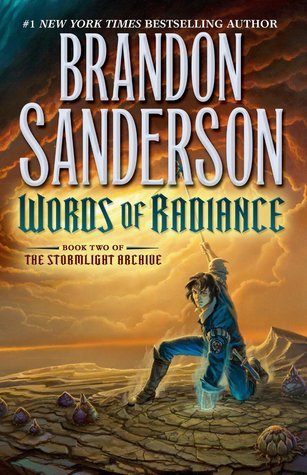
Alright folks, buckle up your Shardplate and hold onto your spheres, because today we’re diving deep into a MONSTER of a book – Brandon Sanderson’s Words of Radiance, the second installment in The Stormlight Archive! If you thought The Way of Kings was epic, well, Roshar just got a whole lot bigger, stormier, and more complicated. This is your friendly neighborhood fantasy fanatic, and trust me, this one’s a wild ride.
MASSIVE SPOILER WARNING AHEAD! Seriously, if you haven’t read this book, turn back now, go read it, and then come join the discussion. We’re going full spoiler mode here because you just can’t talk about this book without getting into the juicy details.
Plot Synopsis: Brace for the Sanderlanche! 🌪️
Okay, let’s try to condense this behemoth. Words of Radiance picks up not too long after The Way of Kings and juggles multiple incredible storylines that start to weave together in classic Sanderson fashion.
Jasnah’s Journey (Prologue & Beyond): We kick off with a flashback to Jasnah Kholin, six years prior, on the night of King Gavilar’s assassination.
- She’s already a sharp, no-nonsense scholar, dabbling in heresy and investigating threats to her family. We see her early, terrifying experiences with Shadesmar – that bizarre cognitive realm of beads and strange spren – and her first encounter with Ivory, her Inkspren.
- She hires an assassin named Liss (secretly the Weeper) to spy on Elhokar’s wife, Aesudan, but also makes a contingency plan, suspecting a deeper plot.
- The climax of the prologue is Jasnah witnessing Szeth, the Assassin in White, murder her father. Crucially, the Parshendi delegation present claims responsibility for hiring Szeth, setting the stage for the War of Reckoning. This is Jasnah’s driving force: to uncover the true nature of the Voidbringers and the Parshendi.
Shallan Davar: From Ward to Radiant (and Spy!) Shallan’s journey is one of immense growth and self-discovery, peppered with trauma and the emergence of her Lightweaver abilities.
- The book opens with Shallan and Jasnah aboard the Wind’s Pleasure, en route to the Shattered Plains. Jasnah begins to instruct Shallan more deeply about Shadesmar and the nature of spren. Shallan is also formally introduced to Pattern, her Cryptic spren, who manifests as an intricate, shifting pattern on surfaces.
- Disaster strikes when assassins, later revealed to be hired by the Ghostbloods (the same group Tyn is part of), attack the ship. Jasnah is seemingly killed, stabbed through the heart and her body thrown overboard.
- Shallan, in a desperate act fueled by Stormlight and Pattern’s guidance, Soulcasts the ship into water to escape, but not before creating an illusion of herself jumping overboard to mislead the assassins.
- She’s miraculously saved by the santhid she’d sketched earlier and washes ashore in the Frostlands. She’s found by Tvlakv, a slaver, and his crew. To survive and reach the Shattered Plains, Shallan adopts the persona of Veil, a more confident and worldly woman, drawing on her acting skills and observations. She also carries Jasnah’s precious research trunk.
- Her caravan is eventually joined by Tyn, a ruthless mercenary woman who takes Shallan (as Veil) under her wing, believing her to be a fellow con artist. Tyn reveals she’s working for the Ghostbloods and was involved in the hit on Jasnah.
- The Ghostbloods task Tyn (and by extension, Veil) with assassinating Amaram. However, Tyn discovers Shallan’s true identity as Jasnah’s ward. In a tense confrontation, Shallan, with Pattern forming into a Shardblade for the first time in her conscious memory, kills Tyn. This is a massive turning point, forcing her to confront her capacity for violence.
- Shallan and her new “soldiers” (the deserters she convinced to help her) join another caravan led by Macob. She continues to use the Veil persona.
- Upon reaching the Shattered Plains, Shallan uses her Davar name and her connection to Jasnah to gain an audience with Dalinar and Adolin. She uses her wit and charm, and a fabricated story about being taken in by Highprince Sebarial, to secure a place for herself and her men.
- As Veil, she infiltrates the Ghostbloods, meeting the enigmatic Mraize and his strange masked associate, Iyatil. She learns the Ghostbloods are also seeking Urithiru and are deeply interested in Amaram’s activities. She discovers Amaram possesses her brother Helaran’s Shardblade and was responsible for his death.
- Throughout her time in the warcamps, Shallan struggles with her burgeoning powers, the trauma of her past, and the multiple identities she’s creating. She begins to unlock memories of killing her mother with Pattern as a Shardblade when she was a child, after her mother tried to kill her upon discovering Shallan’s nascent Surgebinding.
- Her relationship with Adolin blossoms, providing a source of genuine connection amidst the chaos.
- Ultimately, Shallan accompanies Dalinar’s expedition to the center of the Shattered Plains. Using her knowledge of cymatics and ancient maps, she realizes the Plains themselves are a massive pattern. She identifies the central, circular plateau as the location of the ancient city of Stormseat and the Oathgate to Urithiru.
- During the cataclysmic clash of the highstorm and the Everstorm, Shallan, with Adolin’s help, unlocks the Oathgate, transporting the remnants of Dalinar’s armies to the legendary tower city of Urithiru.
Kaladin Stormblessed: The Weight of Oaths Kaladin’s arc focuses on his new role as captain of Dalinar’s guard, the struggles of leadership, his developing Windrunner powers, and his internal battle with depression and hatred.
- Dalinar grants freedom to the men of Bridge Four and makes Kaladin a captain. Kaladin is tasked with training not only his own men but also the hundreds of other former bridgemen.
- He grapples with the responsibility of protecting Dalinar and Elhokar, especially after assassination attempts on the king. He investigates these, suspecting involvement from within the lighteyed ranks.
- His powers grow, but Sylphrena, his honorspren, becomes increasingly concerned about his desire for vengeance against Amaram and his wavering commitment to his oaths. He learns to Lash himself and objects, eventually mastering a form of flight.
- He confronts Dalinar about Amaram, revealing Amaram murdered Kaladin’s squad and stole his Shardblade (which was rightfully Kaladin’s after he won it from a Shardbearer). Dalinar initially dismisses this, trusting Amaram.
- Moash, Kaladin’s close friend in Bridge Four, reveals his own vendetta against King Elhokar, whose negligence led to the death of Moash’s grandparents. Moash is approached by Graves and other conspirators (including Danlan, Adolin’s former flame) to assassinate the king. Kaladin is drawn into their plot, agreeing to help create an opening, believing Elhokar is a detriment to Alethkar.
- Adolin, in a grand gesture, gifts Kaladin a full set of Shards won in a duel. Kaladin, unable to bear holding a Shardblade due to the “screams” he hears (the lingering consciousness of the dead spren), gives the Shards to Moash.
- The climax for Kaladin comes during Adolin’s duel against four Shardbearers. When Adolin and Renarin are about to be overwhelmed, Kaladin, despite his internal turmoil and Syl’s weakening presence, jumps into the arena to defend them. He fights with incredible skill, even catching a Shardblade. This act of selfless protection, particularly of those he doesn’t necessarily like, is crucial.
- However, his earlier decision to aid Moash’s assassination plot causes Syl to “die,” severing their bond and Kaladin’s powers. He is subsequently arrested for publicly accusing Amaram.
- While imprisoned, Adolin joins him in a nearby cell in solidarity. Dalinar eventually secures Kaladin’s release.
- The expedition to the Shattered Plains: Kaladin and Shallan fall into a chasm during a Parshendi attack when a bridge is sabotaged. They survive the fall (Shallan unknowingly uses Stormlight to save them both) and a subsequent highstorm by finding shelter. During this ordeal, they share their traumatic pasts and form a deeper, if complicated, understanding. They also encounter and kill a chasmfiend. Kaladin, without Stormlight, is severely wounded.
- The Battle of Narak: Kaladin, still injured, witnesses the arrival of the Everstorm and the transformation of the Parshendi. He sees Dalinar about to be killed by Szeth. At this critical moment, Kaladin speaks the Third Ideal of the Windrunners: “I will protect even those I hate, so long as it is right.” Sylphrena is reborn, forming into a Shardblade (looking like a spear) in his hand. He explodes with Stormlight, flies, and engages Szeth in a spectacular aerial battle.
- He defeats and kills Szeth, taking his Honorblade. He arrives at Urithiru via the Oathgate with Bridge Four.
Dalinar Kholin: The Blackthorn Reborn (as a Bondsmith!) Dalinar continues his quest to unite Alethkar and prepare for the True Desolation, guided by visions from the Stormfather.
- He issues a proclamation to reform how gemhearts are won, attempting to force cooperation among the highprinces. This is met with resistance, particularly from Sadeas.
- Adolin is permitted to duel again, with the aim of winning Shards from rival highprinces to consolidate power.
- Dalinar learns about the countdown glyphs appearing on his walls, counting down to the arrival of the Everstorm.
- He eventually confronts Amaram with evidence of his treachery (thanks to Kaladin’s earlier accusation and a clever trap), stripping him of his command and revealing him as a murderer. He also learns Amaram was made the leader of his fledgling order of Knights Radiant. Dalinar bonds Taln’s Honorblade.
- He leads the expedition to the Shattered Plains to confront the Parshendi. His forces include his own army, plus those of Roion, Sebarial, and eventually Aladar.
- The Battle of Narak: Faced with the Parshendi’s new stormform and the terrifying Everstorm colliding with an unexpected highstorm, Dalinar’s forces are nearly annihilated. He witnesses Szeth nearly kill Adolin and then attack him.
- At his lowest point, about to be killed by Szeth, Dalinar speaks the Second Ideal of the Bondsmiths: “I will unite instead of divide. I will bring men together.” He bonds the Stormfather himself, gaining Surgebinding abilities. Kaladin arrives to save him from Szeth.
- He leads the survivors through the Oathgate opened by Shallan to Urithiru.
Szeth-son-son-Vallano: Truthless No More Szeth continues his reluctant rampage as the Assassin in White, bound by his Oathstone, now serving Taravangian.
- He is sent to kill Dalinar Kholin.
- His fight with Kaladin during the duel (Adolin vs. four) is his first encounter with another Surgebinder, deeply shaking his belief that he is unique and “Truthless” for claiming the Voidbringers were returning.
- During the Battle of Narak, he attacks Dalinar and Adolin. He is ultimately confronted and killed by Kaladin.
- His spren (the Honorblade) is taken by Kaladin.
- In the epilogue, Szeth is revived by Nalan, Herald of Justice, who also uses Stormlight. Nalan reveals that Szeth was never Truthless; the Shin leaders lied. Nalan gives Szeth the sentient, black Shardblade Nightblood and inducts him into the Skybreakers.
The Parshendi (Listeners) & Eshonai: Eshonai, a Parshendi leader, seeks a way to save her people from the Alethi.
- Venli, her sister, rediscovers “stormform,” an ancient and dangerous form of power linked to their old gods and the Unmade.
- Despite misgivings, Eshonai takes stormform to gain power against the Alethi. This form changes her, making her more aggressive and attuning her to new, violent Rhythms.
- She leads the Listeners to embrace stormform en masse. This transformation is what allows them to summon the Everstorm, a storm that blows from west to east (opposite to highstorms) and transforms any parshmen it touches into new, hostile forms (the singers).
- Eshonai leads the transformed Listeners against Dalinar’s army at Narak. She duels Adolin and is seemingly killed when Adolin shoves her off a chasm edge during their fight.
Key Climax & Ending: The book culminates in the Battle of Narak.
- Dalinar’s armies are caught between the highstorm and the newly summoned Everstorm.
- The Parshendi, now in stormform, attack with new powers, including summoning red lightning.
- Kaladin, having spoken his Third Ideal, battles Szeth in the sky and kills him.
- Dalinar speaks his Second Ideal and bonds the Stormfather.
- Shallan activates the Oathgate to Urithiru, allowing the human armies to escape the cataclysm.
- The book ends with the main characters in Urithiru, the Knights Radiant beginning to re-form. Kaladin is now a full Windrunner of the Third Ideal. Shallan is a Lightweaver. Dalinar is a Bondsmith. Renarin is revealed to be a Truthwatcher. Lift (from an interlude) is an Edgedancer.
- Adolin, in a fit of rage and disillusionment after learning Sadeas will escape justice for another year, murders Highprince Sadeas in the corridors of Urithiru.
- Szeth is revived and joins Nalan and the Skybreakers.
- The Everstorm is now a recurring phenomenon on Roshar, heralding the True Desolation.
Phew! And that’s just the main stuff. There are interludes with characters like Lift (an Edgedancer urchin who can metabolize food into Stormlight and make herself “Awesome”/Slick), Ym (a cobbler Radiant killed by Nalan), Rysn (a Thaylen merchant who loses the use of her legs but gains a Larkin), and Zahel (a mysterious ardent swordmaster who is actually a worldhopper we know from Warbreaker). Each adds layers to this massive world.
Character Analysis: Heroes, Broken and Remade ❤️🩹
Sanderson is a master of character, and Words of Radiance sees our main cast go through the absolute wringer, emerging changed, and often, more powerful.
-
Kaladin Stormblessed: Oh, Kaladin. Still battling his inner demons, his slave brand a constant reminder of his trauma and hatred for lighteyes like Amaram.
- Strengths: Incredible leader, fiercely protective, unmatched spearman (and now Surgebinder). His journey is about learning to trust again, even if it’s just a little, and to accept the burden of his powers and the responsibilities of his Oaths.
- Flaws: His depression is a heavy weight, his hatred can blind him, and his stubbornness can be a massive hindrance. His struggle with the Ideals is central – he wants to protect, but his desire for vengeance and his distrust make it a rocky path. The loss and regaining of Syl is a powerful arc.
- Key Relationship: His bond with Syl is the heart of his powers. His grudging respect for Dalinar grows, while his interactions with Adolin are a fantastic mix of rivalry and reluctant alliance. His near-betrayal orchestrated by Moash is a gut punch.
-
Shallan Davar: If Kaladin is about external battles mirroring internal ones, Shallan is a deep dive into the psyche.
- Strengths: Immensely intelligent, incredibly talented artist, resourceful, and surprisingly resilient. Her ability to create personas (Veil, and later, Radiant) is both a coping mechanism and a powerful tool.
- Flaws: Deeply traumatized by her family’s past, which she represses. This repression manifests in her fractured identities. She’s naive at times, but learns fast. Her journey is about confronting her truths.
- Key Relationship: Pattern is her anchor to her powers and, ironically, to some of her truths. Her burgeoning romance with Adolin is sweet and provides a much-needed contrast to the darkness. Her “death” of Jasnah is a huge motivator.
-
Dalinar Kholin: The Blackthorn is trying to be a new man, but the world keeps demanding the old one.
- Strengths: Unwavering honor (or his interpretation of it), brilliant strategist, a true leader who inspires loyalty. His determination to unite Alethkar against the coming Desolation is his driving force.
- Flaws: Can be rigid, struggles with diplomacy when his temper flares, and his single-minded focus can make him blind to political nuances. His past haunts him, but his visions give him a new, terrifying purpose.
- Key Relationship: Navani is his rock, his confidante, and his intellectual partner. His relationship with his sons, Adolin and Renarin, is complex and loving. His bonding of the Stormfather is a game-changer.
-
Adolin Kholin: More than just a charming duelist.
- Strengths: Exceptional swordsman, loyal to a fault (especially to his father), genuinely good-hearted, and surprisingly self-aware of his own limitations in areas outside of combat and fashion.
- Flaws: Can be impulsive, a bit of a dandy, and his temper can get him into trouble. He struggles with the weight of expectation and the political machinations around him. His murder of Sadeas is a shocking, morally grey act that will have huge repercussions.
- Key Relationship: His devotion to Dalinar is absolute. His romance with Shallan is delightful and brings out a softer side. His rivalry/friendship with Kaladin is also developing.
-
Szeth-son-son-Vallano: The Assassin in White is a tragic figure.
- Strengths: Unmatched in his use of the Honorblade (before Kaladin), bound by a twisted sense of duty.
- Flaws: Believes himself “Truthless,” leading him to commit atrocities. His sanity is shattered. His “death” and recruitment by Nalan sets him on a new, potentially even more dangerous path.
- Key Relationship: His masters. He’s a tool, and his arc is about finding a purpose beyond being a weapon. His conflict with Kaladin is ideologically and physically brutal.
-
Eshonai: A leader trying to save her people, the Listeners.
- Strengths: Brave, skilled warrior, cares deeply for her people.
- Flaws: Her desperation leads her to embrace stormform, which corrupts her and her people, essentially damning them to become the very Voidbringers they once fled. A truly tragic arc.
- Key Relationship: Her sister Venli, whose ambition pushes the Listeners towards stormform.
The character work here is top-notch. We see growth, regression, triumph, and tragedy. Each character feels vital to the unfolding tapestry of Roshar.
Thematic Resonance: Oaths, Truths, and the Cost of Power 💡
Words of Radiance is swimming in themes, man. It’s not just about cool fights and magic.
- Oaths and Responsibility: This is HUGE. Kaladin’s journey is intrinsically linked to the Ideals of the Windrunners. What does it mean to protect? Can you protect some and not others? The weight of his choices and their impact on his bond with Syl is a central conflict. Dalinar, too, is driven by oaths – to his brother, to Alethkar, and eventually, to the Stormfather.
- Truth and Lies (Identity): Shallan’s entire arc is built around this. Her multiple personas, her repressed memories, her artistic ability to capture “truths” in her drawings. Pattern, a Cryptic (liespren!), is her companion. The book explores how lies can be a shield, but also a prison. What is the “true” self when you can be so many?
- Leadership and Sacrifice: Dalinar embodies this. He’s willing to sacrifice his reputation, his relationships, and even his life for what he believes is right. Kaladin struggles with the sacrifices inherent in leadership. What is the cost of saving others?
- Trauma and Healing: Nearly every major character is dealing with significant trauma. Kaladin’s slavery and loss, Shallan’s family horrors, Dalinar’s grief and lost memories. The book explores how trauma shapes them and whether healing is truly possible.
- Unity vs. Division: Dalinar’s primary political goal is to unite the Alethi highprinces. The entire backdrop of the Shattered Plains war is one of fractured alliances and internal strife, making them vulnerable to the greater threat.
- The Nature of Power: Shardblades, Shardplate, Surgebinding – these are immense powers. The book questions who should wield them and for what purpose. Amaram’s corruption shows how power can be misused, while Kaladin and Dalinar represent a more responsible, if flawed, approach.
- Redemption: Can characters find redemption for past sins? Moash’s path veers away from it, Adolin commits a terrible act, Szeth is given a new, twisted chance. It’s a complex question with no easy answers.
Sanderson weaves these themes through every plotline, making the story resonate on a much deeper level than just a fantasy adventure.
World-Building Deep Dive: Welcome to Roshar! 🌏
If there’s one thing Sanderson excels at, it’s crafting unique and intricate worlds, and Roshar is a masterpiece.
-
Geography & Environment:
- Roshar: A rocky world constantly battered by Highstorms that blow from east to west, bringing with them Stormlight and shaping the entire ecosystem. Crem (a sediment left by highstorms) covers everything.
- The Shattered Plains: The primary setting for much of the war. A vast expanse of plateaus separated by deep chasms. The war is fought for gemhearts, large gemstones found within the chrysalises of chasmfiends.
- Urithiru: The legendary lost tower-city of the Knights Radiant, located high in the mountains, accessible (initially) only via the Oathgate on the Shattered Plains. It’s a place of ancient power and mystery.
- Shadesmar: The Cognitive Realm, a sea of glass beads representing thoughts and objects, where spren are more “solid.” Travel here is possible but dangerous.
- Flora & Fauna: Unique life forms adapted to highstorms, like rockbuds (plants that retract into stony shells), chulls (giant, docile crustaceans used as beasts of burden), and skyeels.
-
Magic System & Powers:
- Stormlight: The primary magical energy source, found in gemstones infused during highstorms. Surgebinders draw on it to fuel their powers.
- Surgebinding: The magic of the Knights Radiant, granting control over fundamental forces (Surges) like Gravitation (Kaladin’s Lashings), Illumination (Shallan’s Lightweaving), Transformation (Soulcasting), Adhesion, Abrasion, Division, Progression (healing), Transportation, Cohesion, and Tension. Each Radiant Order has access to two Surges.
- Spren: Cognitive entities that are the personification of ideas, emotions, or natural forces. Some (like Syl and Pattern) can form a Nahel bond with humans, granting Surgebinding. There are countless types, from honorspren and Cryptics to angerspren and creationspren.
- Shardblades & Shardplate: Relics of past Radiants. Shardblades are spren that have “died” (their bond broken) and can be summoned by their bonded user, cutting through nearly anything and severing the soul. Shardplate is magical power armor that enhances strength and resilience, powered by Stormlight.
- Honorblades: Ten swords once wielded by the Heralds, granting Surgebinding abilities to anyone who holds them, without needing a spren bond (e.g., Szeth’s Blade).
- Fabrials: Devices created by artifabrians that use trapped spren in gemstones to produce various effects (e.g., heating, pain, spanreeds for communication, Soulcasters for transforming matter). Navani is a key innovator here.
- The Old Magic: Practiced by the Nightwatcher, grants a boon and a curse.
- Voidbinding: The powers of the enemy, hinted at but not fully explored yet. Stormform seems to be a type of this.
-
Societies & Cultures:
- Alethkar: A militaristic Vorin kingdom, currently fractured by infighting among its ten Highprinces. Society is rigidly hierarchical, based on eye color (lighteyes rule over darkeyes). The War of Reckoning against the Parshendi is their main focus.
- Parshendi (Listeners): A race distinct from the enslaved parshmen. They can change forms by bonding with different spren during a highstorm (e.g., warform, workform, mateform). They are fighting to survive and to prevent the return of their old gods (the Unmade/Voidbringers). The discovery of stormform and the summoning of the Everstorm transforms them into a new, more powerful enemy.
- Parshmen: The docile slave race found throughout Roshar. The Everstorm begins to transform them into “singers,” hostile Voidbringers.
- Shinovar: A sheltered land in the far west, culturally distinct. Szeth’s homeland. They possess several Honorblades.
- Azir: A bureaucratic empire known for its complex laws and paperwork.
- Ghostbloods: A shadowy organization seeking power and knowledge, with agents across Roshar. Mraize is a key figure. They were behind the assassination attempt on Jasnah.
-
History & Mythology:
- Heralds: Ten immortal figures who once led humanity against the Desolations. They abandoned their sacred pact, leaving Taln (Talenel) as the sole Herald to bear the burden of torment until his return signals the True Desolation.
- Desolations: Cyclical periods of immense destruction when Voidbringers ravaged Roshar.
- Knights Radiant: Orders of Surgebinders who fought alongside the Heralds. They eventually “betrayed” humanity in an event called the Recreance, abandoning their Shards and oaths.
- The Almighty (Honor): The primary god of Vorinism, now revealed to be dead, his power splintered. The Stormfather is a major spren connected to him.
- Odium: The malevolent Shard (god) who is the ultimate enemy, seeking to destroy other Shards and conquer the cosmere.
- The Diagram: A complex set of prophecies and plans created by King Taravangian of Kharbranth on a day of super-intelligence, designed to save humanity, often through morally questionable means.
The sheer depth of Roshar is staggering. Every element feels considered and interconnected, creating a world that feels truly alive and ancient.
Genre Context & Comparisons: Epic Fantasy Evolved ⚔️
Words of Radiance sits firmly in the epic high fantasy subgenre, and it’s a shining example of modern epic fantasy.
- Scale & Scope: Like the grand masters (Tolkien, Jordan), Sanderson paints on a colossal canvas. The world is vast, the history deep, the cast of characters enormous, and the stakes are literally world-ending.
- Intricate Magic Systems: This is a Sanderson hallmark. Surgebinding isn’t just hand-wavy magic; it has rules, limitations, and costs. It feels almost like a science, which is a very Sandersonian approach. This sets him apart from authors with softer magic systems.
- Character-Driven Epics: While the plot is huge, the story is deeply rooted in its characters’ internal struggles and growth. This focus on personal journeys within an epic conflict is something he shares with authors like Robin Hobb or George R.R. Martin (though Sanderson is generally more optimistic).
- The “Sanderlanche”: This book definitely delivers the famous Sanderson avalanche ending, where multiple plot threads converge in a rapid-fire, high-octane climax that leaves you breathless. The Battle of Narak is a prime example.
- Comparisons:
- The Wheel of Time (Robert Jordan/Brandon Sanderson): Obvious comparison due to Sanderson finishing the series. Both share immense scope, detailed world-building, and a “chosen one” (or several “chosen ones”) dynamic. Stormlight feels even more ambitious in its magic and ecology.
- A Song of Ice and Fire (George R.R. Martin): While both are epic, Martin focuses more on gritty political realism and moral ambiguity with often tragic outcomes. Sanderson, while not shying away from darkness and difficult choices (Adolin murdering Sadeas is a big one!), generally maintains a thread of hope and heroism.
- Mistborn (Brandon Sanderson): You can see the DNA of Mistborn in Stormlight’s intricate magic, societal critiques, and focus on characters overcoming immense odds. Stormlight is just Mistborn dialed up to eleven (or maybe twenty).
- Originality vs. Tropes: Sanderson plays with classic fantasy tropes (knightly orders, ancient evils, prophecies) but gives them fresh twists. The spren ecology, the unique Rosharan environment shaped by highstorms, and the very specific nature of the Nahel bond and the Radiant Oaths feel highly original.
Words of Radiance isn’t just another epic fantasy; it feels like an evolution of the genre, taking familiar elements and pushing them in new, exciting directions.
Influences & Inspirations: Echoes in the Storm 🎨
Speculating on influences is always a bit of a game, but here are some thoughts:
- Classic Epic Fantasy: The influence of Tolkien and Jordan is undeniable in the sheer scope and ambition. The idea of ancient orders, returning evils, and a world with a deep, mythological history all echo these foundations.
- Anime/Manga: Sanderson has mentioned being a fan. The dynamic action sequences, particularly Kaladin’s aerial combat and the Shardbearer duels, often have a very cinematic, almost anime-like quality in their visual descriptions and power scaling.
- Mythology & Religion: The Heralds, Desolations, the death of a god (Honor), and the various belief systems on Roshar all draw from common mythological and religious archetypes, reinterpreted through Sanderson’s unique lens. The exploration of faith, doubt, and the nature of divinity is a recurring theme.
- Philosophy & Ethics: The struggles with oaths, the definition of justice (Szeth’s arc, the Skybreakers), the morality of leadership, and the nature of truth are all deeply philosophical explorations woven into the narrative.
- Science (Ecology/Physics): While fantasy, Roshar’s unique ecosystem (spren, highstorms, creatures adapted to them) and the “rules” of Stormlight and Surgebinding often feel like they have an underlying scientific logic, even if it’s a fantastical one. This systematic approach to world-building is very Sanderson.
- Psychology: Shallan’s arc, in particular, delves into themes of trauma, dissociative identity, and coping mechanisms. This psychological depth is a strong component of modern fantasy.
It’s clear Sanderson is a well-read and thoughtful author who draws from a wide range of sources, then synthesizes them into something uniquely his own.
Key Takeaways
- Oaths and intent are paramount: Power in Roshar is often tied to commitment and the spirit of one’s vows, not just inherent ability.
- Trauma shapes, but doesn’t have to define: Characters constantly battle their pasts, with varying degrees of success in forging new identities.
- Leadership is a burden of sacrifice and difficult choices, often with no “perfect” outcome.
- The world of Roshar is a living, breathing character in itself, with its unique storms and spren integral to every aspect of life and magic.
- Truth is complex and multifaceted, especially when filtered through perception and belief (as seen with Shallan and the nature of spren).
- The lines between hero and villain can be incredibly blurry; morality is often situational and deeply personal.
- Unity is the key to survival against overwhelming odds, but is incredibly difficult to achieve in a fractured world.
Wrapping It Up 🎉
Whew! What a journey! Words of Radiance is, without a doubt, a monumental achievement in epic fantasy. It takes everything that was great about The Way of Kings and expands upon it exponentially. The characters are richer, the world is deeper, the stakes are higher, and the “Sanderlanche” at the end is one of the most satisfying and jaw-dropping I’ve ever read.
Yes, it’s a doorstopper, and yes, there’s a LOT going on. But every page feels earned, every plot thread meticulously woven. Sanderson manages to balance incredible action sequences with profound character moments and complex thematic explorations. The revelations about the Radiants, the Parshendi, and the true nature of the Desolation are mind-blowing.